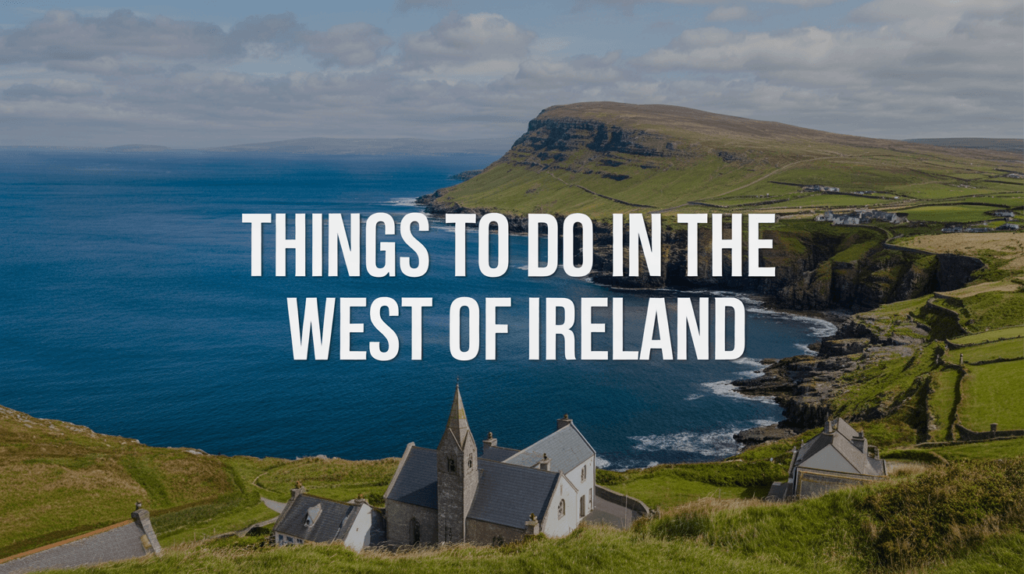
The West of Ireland has always felt like a place where time slows down, and nature takes centre stage. From the rugged beauty of the Wild Atlantic Way to the warm hospitality of the small towns and villages, there’s something magical about this part of the country that leaves a lasting impression.
When I first explored the West, I was struck by the contrast — towering cliffs meeting the roaring Atlantic, quiet countryside roads leading to vibrant towns alive with music, and historic castles standing proudly beside lively modern cafés. It’s a region where every turn seems to reveal a new story, whether it’s a breathtaking view, a hidden beach, or a friendly local sharing a bit of history over a pint.
In this guide, I’ll take you through some of the best things to do in the West of Ireland — from iconic landmarks you can’t miss to hidden gems that make the journey even more special. Whether you’re planning your first trip or returning to explore deeper, the West has endless adventures waiting for you.
Explore Iconic Natural Wonders
1. Cliffs of Moher – County Clare
What it is & Where:
The Cliffs of Moher are Ireland’s most famous sea cliffs, stretching for about 14 km along the Atlantic coast. They rise dramatically up to 214 metres above sea level, located near the village of Liscannor in County Clare.
Why It’s Worth Seeing:
With jaw-dropping views across Galway Bay and the Aran Islands, these cliffs are a UNESCO Global Geopark and one of Ireland’s most visited natural attractions. Puffins and other seabirds make their home here, adding to the experience for nature lovers.
Best Time to Visit:
- Late spring and summer for clear skies and calmer seas.
- Sunset offers breathtaking colours and fewer crowds.
- Early mornings are best if you want quiet trails.
Things to Do There:
- Walk the cliff path for different viewing points.
- Visit O’Brien’s Tower for panoramic views.
- Birdwatching (especially puffins in season).
- Capture stunning photographs along the Atlantic coast.
Visitor Essentials:
- Entry to the main visitor centre: approx. €10–€12 (varies with online booking).
- Opening hours: generally 9 am – 7 pm (seasonal).
- Facilities: Visitor centre with café, exhibition, toilets, and parking.
Travel Tips:
- Easiest to reach by car, though day tours from Galway, Limerick, and Dublin are popular.
- Walking can be windy; wear sturdy shoes and layers.
- Stay on marked paths — the cliffs are steep and can be dangerous.
2. Connemara National Park – County Galway
What it is & Where:
A vast national park covering mountains, bogs, heaths, and woodlands, located near the village of Letterfrack in County Galway. It’s one of Ireland’s most scenic protected areas.
Why It’s Worth Seeing:
Connemara is known for its raw, untouched beauty. The Twelve Bens mountain range dominates the skyline, while the boglands showcase a unique Irish landscape. Wildlife includes wild ponies, red deer, and a wide variety of bird species.
Best Time to Visit:
- Summer for clear hikes and lush green scenery.
- Autumn for colourful landscapes.
- Morning hikes avoid crowds.
Things to Do There:
- Climb Diamond Hill for panoramic views.
- Explore nature trails for all fitness levels.
- Birdwatching and photography.
- Enjoy picnics surrounded by mountains.
Visitor Essentials:
- Free entry.
- Visitor centre open daily (10 am – 5 pm in summer; reduced hours in winter).
- Facilities: Visitor centre with exhibitions, picnic areas, toilets, and parking.
Travel Tips:
- Best accessed by car; buses from Galway City stop in nearby Letterfrack.
- Diamond Hill hike is moderate but manageable for most families.
- Bring waterproofs — weather changes quickly.
3. The Burren – County Clare
What it is & Where:
A unique karst limestone landscape stretching across northwest Clare, near towns like Ballyvaughan and Kilfenora.
Why It’s Worth Seeing:
Known as one of the most extraordinary geological formations in Europe, the Burren features cracked limestone pavements, rare wildflowers, and Neolithic tombs. It’s part of the Burren and Cliffs of Moher UNESCO Global Geopark.
Best Time to Visit:
- Spring for wildflowers blooming among the rocks.
- Summer for hiking and longer days.
- Early morning for peaceful exploration.
Things to Do There:
- Explore Poulnabrone Dolmen (ancient portal tomb).
- Hike Burren trails or join a guided eco-walk.
- Visit the Burren Perfumery or local farms.
- Spot orchids and rare alpine plants.
Visitor Essentials:
- Free to access most areas.
- No central visitor centre fee, but Burren Visitor Centre in Kilfenora has exhibitions (small entry fee).
- Facilities vary by site — limited toilets, parking in some areas.
Travel Tips:
- Best to explore by car, though cycling is popular.
- Walking can be uneven — wear good shoes.
- Bring water and snacks as facilities are sparse.
4. Achill Island – County Mayo
What it is & Where:
Ireland’s largest island, connected to the mainland by a bridge, located off the coast of County Mayo. Known for its rugged coastline, sandy beaches, and mountains.
Why It’s Worth Seeing:
Achill is famed for Keem Bay (often ranked among the most beautiful beaches in the world), its dramatic cliffs, and traditional Irish villages. The island also features the haunting Deserted Village at Slievemore.
Best Time to Visit:
- Summer for beach trips and water activities.
- Winter for wild Atlantic waves and dramatic scenery.
- Sunset at Keem Bay is unforgettable.
Things to Do There:
- Swim or relax at Keem Bay.
- Cycle the Great Western Greenway.
- Explore the Deserted Village.
- Hike Slievemore Mountain.
Visitor Essentials:
- No entry fee.
- Open year-round.
- Facilities: Local shops, cafés, B&Bs, and parking at main beaches.
Travel Tips:
- Best reached by car; bus services run from Westport and Castlebar.
- Some hikes are challenging — bring sturdy boots.
- Weather changes quickly — pack for sun, rain, and wind in the same day.
5. Benbulben – County Sligo
What it is & Where:
A striking flat-topped mountain, part of the Dartry Mountains, located near Drumcliffe in County Sligo.
Why It’s Worth Seeing:
Known as Ireland’s “Table Mountain,” Benbulben is tied to Irish mythology and poetry, particularly W.B. Yeats. Its unique shape makes it one of the most photographed mountains in Ireland.
Best Time to Visit:
- Summer for safe, clear hiking conditions.
- Spring for wildflowers.
- Early morning or late afternoon for best lighting.
Things to Do There:
- Hike Benbulben Loop for scenic views.
- Visit Drumcliffe Churchyard where Yeats is buried.
- Enjoy photography of the mountain from different angles.
- Explore nearby Gleniff Horseshoe Drive.
Visitor Essentials:
- No entry fee.
- Hiking trails open year-round.
- Limited facilities — basic parking at trailheads, cafés in nearby villages.
Travel Tips:
- Car is the easiest way to reach trailheads.
- Benbulben Loop is moderate — suitable for active families.
- Wear hiking boots and bring rain gear.
Dive into Irish History And Heritage
1. Kylemore Abbey – County Galway
What it is & Where:
Kylemore Abbey is a 19th-century castle turned Benedictine monastery, nestled in the heart of Connemara near Letterfrack, County Galway. Surrounded by mountains and reflected in a tranquil lake, it is one of Ireland’s most photographed historic sites.
Why It’s Worth Seeing:
The Abbey combines history, romance, and spirituality. Originally built as a love story by Mitchell Henry for his wife, it later became home to Benedictine nuns fleeing World War I. The Victorian Walled Garden is often called Ireland’s most beautiful garden.
Best Time to Visit:
- Spring and summer for vibrant gardens in bloom.
- Autumn for colourful reflections on the lake.
- Early morning visits are quieter.
Things to Do There:
- Tour the Abbey’s restored rooms.
- Stroll through the six-acre Victorian Walled Garden.
- Visit the Gothic Church and mausoleum.
- Walk scenic woodland and lakeside trails.
Visitor Essentials:
- Entry fee: approx. €15 (adults), discounts for children and families.
- Opening hours: 10 am – 5:30 pm (seasonal variations).
- Facilities: Visitor centre, café, gift shop, toilets, parking.
Travel Tips:
- Best reached by car; buses from Galway City also serve the area.
- Allow at least 2–3 hours to explore.
- Bring a camera — the lakeside views are spectacular.
2. Knock Shrine – County Mayo
What it is & Where:
Knock Shrine is a Roman Catholic pilgrimage site located in the village of Knock, County Mayo. It marks the site of a Marian apparition reported in 1879.
Why It’s Worth Seeing:
It is Ireland’s national Marian shrine, attracting millions of visitors each year. The site holds deep spiritual significance and has been visited by Popes, including John Paul II and Francis.
Best Time to Visit:
- May to October (peak pilgrimage season).
- Quiet visits are best in early mornings or weekdays.
Things to Do There:
- Visit the Basilica of Our Lady, Queen of Ireland.
- Explore the Museum of Knock.
- Walk the Stations of the Cross in the shrine grounds.
- Attend daily Mass or simply enjoy the peaceful atmosphere.
Visitor Essentials:
- Free entry.
- Open year-round, daily from morning to evening.
- Facilities: Basilica, chapels, museum, cafés, shops, parking.
Travel Tips:
- Accessible by car and bus services from Galway, Sligo, and Dublin.
- Suitable for families and those seeking a reflective experience.
- Dress respectfully, as it’s a place of worship.
3. Dunguaire Castle – County Galway
What it is & Where:
A 16th-century tower house located just outside Kinvara village on the shores of Galway Bay.
Why It’s Worth Seeing:
Dunguaire Castle is famous for its connection to Irish writers and poets, including W.B. Yeats and George Bernard Shaw. Today, it is known for its medieval banquets and as one of the most picturesque castles in Ireland.
Best Time to Visit:
- Summer for evening banquets and outdoor events.
- Late afternoon for beautiful light over Galway Bay.
Things to Do There:
- Tour the restored castle interior.
- Attend a medieval banquet with traditional music and storytelling.
- Take photos from the shore with reflections in the bay.
Visitor Essentials:
- Entry fee: approx. €8 (adults), discounts available.
- Opening hours: April – October, 10 am – 4 pm (banquets in evenings).
- Facilities: Gift shop, limited parking nearby.
Travel Tips:
- Easily reached by car (30 minutes from Galway City).
- Banquets require advance booking.
- Wear comfortable shoes — stone steps inside are steep.
4. Donegal Castle – County Donegal
What it is & Where:
A 15th-century stronghold built by the powerful O’Donnell clan, located in Donegal Town.
Why It’s Worth Seeing:
The castle blends Gaelic and Jacobean architecture, symbolising the turbulent history of Donegal. Restored in the 20th century, it provides insight into medieval Irish life and the clan system.
Best Time to Visit:
- Summer for extended opening hours.
- Year-round for history enthusiasts (castle remains open most of the year).
Things to Do There:
- Explore the castle’s great hall and restored rooms.
- Learn about the O’Donnell clan through exhibits.
- Walk around Donegal Town, with shops and pubs nearby.
Visitor Essentials:
- Entry fee: approx. €5 (adults), concessions available.
- Opening hours: Daily, 10 am – 6 pm (last admission usually 45 mins before closing).
- Facilities: Guided tours available, toilets nearby in town.
Travel Tips:
- Located in the heart of Donegal Town — easy to access by car or bus.
- Tours are family-friendly and last about 30 minutes.
- Combine with a visit to Donegal Bay or Slieve League Cliffs.
Experience Traditional Irish Culture
1. Galway City – County Galway
What it is & Where:
A lively harbour city on Ireland’s west coast, known as the cultural capital of the West. It’s located where the River Corrib meets Galway Bay.
Why It’s Worth Seeing:
Galway is world-famous for its vibrant arts, live music, street performers, and festivals. The city is steeped in medieval history yet feels alive with modern energy, making it a perfect blend of old and new Ireland.
Best Time to Visit:
- July for the Galway International Arts Festival.
- September for the Galway Oyster Festival.
- Summer evenings for lively streets filled with music.
Things to Do There:
- Stroll down Shop Street for buskers and pubs.
- Visit the Latin Quarter for colourful buildings and cafés.
- Explore Galway Cathedral and Eyre Square.
- Take part in local festivals and cultural events.
Visitor Essentials:
- No entry fee to explore the city.
- Attractions and shops generally open 9 am – 6 pm (later for pubs/restaurants).
- Facilities: Excellent dining, pubs, accommodation, parking, and transport links.
Travel Tips:
- Easily accessible by train, bus, or car from Dublin, Limerick, and Sligo.
- Walkable city centre — no car needed once you arrive.
- Evenings are lively — perfect for pub culture and live music.
2. Gaeltacht Areas – West of Ireland (Galway, Mayo, Donegal)
What it is & Where:
Gaeltacht regions are areas where Irish (Gaeilge) is the everyday spoken language, mainly found in Galway, Mayo, and Donegal in the West.
Why It’s Worth Seeing:
These areas preserve traditional Irish culture, language, music, and folklore. Visiting a Gaeltacht lets you experience authentic rural life and connect with Ireland’s heritage beyond the tourist trail.
Best Time to Visit:
- Summer, when Irish language schools and cultural festivals are in full swing.
- Year-round for an immersive local experience.
Things to Do There:
- Learn a few phrases of Irish at community centres.
- Attend local festivals with traditional dancing and music.
- Visit small fishing villages, local markets, and beaches.
- Stay in a B&B for a true cultural exchange.
Visitor Essentials:
- No entry fee.
- Local facilities vary — small shops, cafés, and community centres.
- Many locals are bilingual (Irish and English), so communication is easy.
Travel Tips:
- Best explored by car, as public transport is limited.
- Respect local traditions — it’s a living community, not just a tourist attraction.
- Bring curiosity and an open mind — locals often love sharing stories about their heritage.
Outdoor Adventures And Activities
1. Surfing in Lahinch (Clare) & Strandhill (Sligo)
What it is & Where:
- Lahinch: A seaside town on the Wild Atlantic Way in County Clare, near the Cliffs of Moher.
- Strandhill: A coastal village in County Sligo, famous for its waves and surf culture.
Why It’s Worth Seeing:
Both spots are among Ireland’s top surfing destinations. Lahinch is beginner-friendly with surf schools, while Strandhill is known for powerful Atlantic waves and a lively surf scene.
Best Time to Visit:
- Summer for lessons and milder seas.
- Winter for big-wave surfing (experienced surfers only).
- Early mornings often have calmer conditions.
Things to Do There:
- Take a surf lesson or rent a board.
- Enjoy beach walks and sea views.
- Strandhill: Try the famous seaweed baths.
- Lahinch: Explore nearby golf courses and cafés.
Visitor Essentials:
- Surf lessons: approx. €30–€40 per session.
- Facilities: Surf schools, shops, cafés, parking.
- Lifeguards on duty during summer months.
Travel Tips:
- Best reached by car; public buses serve both towns.
- Wetsuits are essential — the Atlantic is cold year-round.
- Families can enjoy the beach even if not surfing.
2. Hiking Croagh Patrick – County Mayo
What it is & Where:
A 764-metre mountain located near Westport, County Mayo, often called “Ireland’s Holy Mountain.”
Why It’s Worth Seeing:
It’s Ireland’s most famous pilgrimage site, where St. Patrick is said to have fasted for 40 days. The summit offers breathtaking views over Clew Bay and its 365 islands.
Best Time to Visit:
- Summer for safe and dry conditions.
- Reek Sunday (last Sunday in July) for the annual pilgrimage.
- Early mornings for fewer crowds.
Things to Do There:
- Hike to the summit (approx. 3–4 hours round trip).
- Visit the small chapel at the top.
- Explore Westport town after your climb.
Visitor Essentials:
- Free to climb.
- No official opening hours (accessible year-round).
- Facilities: Visitor centre at the base with café, shop, parking.
Travel Tips:
- Moderate to difficult hike — wear proper boots.
- Weather changes quickly — bring rain gear and snacks.
- Can be crowded during pilgrimage days.
3. Kayaking in Killary Fjord – Galway/Mayo Border
What it is & Where:
Ireland’s only fjord, stretching 16 km inland along the Galway–Mayo border, surrounded by dramatic mountains.
Why It’s Worth Seeing:
Killary Fjord is a natural wonder, offering calm waters perfect for kayaking, with seals and dolphins often spotted nearby. The surrounding mountains make it one of the most scenic kayaking spots in Ireland.
Best Time to Visit:
- Summer and autumn for calm waters.
- Early mornings for wildlife spotting.
Things to Do There:
- Guided kayaking tours.
- Boat cruises along the fjord.
- Scenic walks on nearby trails.
Visitor Essentials:
- Kayak tours: approx. €40–€50 per person.
- Facilities: Tour centres in Leenane, parking, cafés.
- Suitable for beginners and families (guided tours available).
Travel Tips:
- Best accessed by car; public transport is limited.
- Bring waterproof clothing and a change of clothes.
- Book tours in advance, especially in summer.
4. Cycling the Great Western Greenway – County Mayo
What it is & Where:
A 42 km off-road cycling and walking trail between Westport and Achill Island in County Mayo.
Why It’s Worth Seeing:
The Greenway is Ireland’s longest off-road trail, passing through stunning coastal views, mountains, and rural villages. It’s safe, family-friendly, and traffic-free.
Best Time to Visit:
- Spring and summer for pleasant cycling weather.
- Autumn for colourful scenery.
- Morning rides are quieter.
Things to Do There:
- Cycle or walk sections of the trail.
- Stop at Mulranny or Newport for food.
- Enjoy panoramic views of Clew Bay.
Visitor Essentials:
- Free to access.
- Bike hire available in Westport, Mulranny, and Achill.
- Facilities: Rest stops, cafés, toilets along the route.
Travel Tips:
- Suitable for all ages and fitness levels.
- Bring water, snacks, and sunscreen.
- Public transport and shuttle services are available to return bikes or shorten the route.
Food And Drink Experiences
1. Seafood in Galway & Westport
What it is & Where:
- Galway: A coastal city on Galway Bay, famous for its oysters and fresh seafood.
- Westport: A charming town in County Mayo with excellent seafood restaurants and pubs.
Why It’s Worth Seeing:
The West of Ireland is blessed with some of the freshest seafood in Europe. Galway is renowned for its oysters, celebrated during the Galway Oyster Festival each September, while Westport offers everything from mussels to Atlantic salmon.
Best Time to Visit:
- September for the Galway Oyster Festival.
- Summer for outdoor dining and seafood festivals.
Things to Do There:
- Try Galway oysters fresh from the bay.
- Dine at Westport’s award-winning seafood restaurants.
- Visit local markets for smoked salmon and mussels.
Visitor Essentials:
- Prices vary (restaurants €15–€40 per dish).
- No entry fees — just the cost of dining.
- Facilities: Wide range of pubs, cafés, and fine-dining options.
Travel Tips:
- Book ahead for popular seafood restaurants.
- Don’t miss the chance to try oysters with a pint of Guinness.
- Local food tours are available in Galway.
2. Local Specialties – Galway Oysters, Clare Smoked Salmon and Sligo Craft Beers
What it is & Where:
- Galway Oysters: Harvested fresh from Galway Bay.
- Clare Smoked Salmon: Locally smoked in traditional smokehouses.
- Sligo Craft Beers: Produced by local breweries in County Sligo.
Why It’s Worth Seeing:
These local foods and drinks showcase the West’s culinary traditions. Oysters and smoked salmon highlight the connection to the Atlantic, while craft beers represent modern Irish creativity.
Best Time to Visit:
- Autumn for oyster season.
- Summer for smoked salmon and craft beer festivals.
Things to Do There:
- Sample oysters at the Galway Oyster Festival.
- Visit smokehouses in Clare for tastings.
- Tour Sligo’s breweries and try local craft beers.
Visitor Essentials:
- Prices: Oysters €2–€4 each, smoked salmon packs €10–€20, craft beer pints €5–€6.
- Facilities vary — festivals, breweries, and smokehouses offer tours.
Travel Tips:
- Pair oysters with stout or white wine.
- Buy smoked salmon to take home — many shops vacuum seal it.
- Look out for local beer on tap — many pubs now feature Sligo brews.
Scenic Drives And Road Trips
1. The Wild Atlantic Way – West Coast of Ireland
What it is & Where:
The Wild Atlantic Way is a 2,500 km coastal driving route stretching from Donegal to Cork, with some of its most spectacular sections running through the West of Ireland (Galway, Mayo, Clare, Sligo, Donegal).
Why It’s Worth Seeing:
It’s one of the longest defined coastal touring routes in the world. Along the western stretch, you’ll see towering cliffs, remote beaches, fishing villages, and breathtaking Atlantic views. Each section offers discovery points with unique stories and photo opportunities.
Best Time to Visit:
- Summer for longer days and safer driving.
- Autumn for quieter roads and stunning coastal colours.
- Sunrise and sunset drives for dramatic light over the ocean.
Things to Do There:
- Stop at discovery points like the Cliffs of Moher, Killary Fjord, and Slieve League.
- Enjoy coastal walks and hidden beaches.
- Take photos of the winding coastal roads.
Visitor Essentials:
- No entry fee — it’s a public driving route.
- Facilities vary — towns and villages along the way offer cafés, shops, and petrol stations.
Travel Tips:
- A car is essential to fully explore.
- Drive slowly — the roads are winding and narrow in places.
- Allow at least 3–5 days to cover the western section properly.
2. Sky Road – Clifden, County Galway
What it is & Where:
A 16 km looped drive starting and ending in Clifden, County Galway, overlooking Clifden Bay and the Connemara coastline.
Why It’s Worth Seeing:
This short but stunning drive offers panoramic views of the Atlantic, islands, and mountains. It’s one of Connemara’s most photographed routes and a must-do if you’re in Galway.
Best Time to Visit:
- Late afternoon for golden light over the bay.
- Summer for clear visibility.
Things to Do There:
- Stop at designated viewpoints for sweeping photos.
- Picnic along the roadside overlooking the ocean.
- Explore Clifden town for food and shopping.
Visitor Essentials:
- Free to drive.
- Facilities in Clifden: restaurants, cafés, toilets, and parking.
Travel Tips:
- The Upper Sky Road offers the best views.
- Narrow roads — drive carefully and give way to locals.
- Ideal as a short scenic trip (1–2 hours).
3. Atlantic Drive – Achill Island, County Mayo
What it is & Where:
A 40 km coastal drive circling Achill Island, accessible via a bridge from the mainland of Mayo.
Why It’s Worth Seeing:
The Atlantic Drive showcases Achill’s rugged cliffs, sea views, and small villages. Keem Bay, often voted one of the world’s most beautiful beaches, is the highlight of the route.
Best Time to Visit:
- Summer for beach visits and water activities.
- Winter for dramatic Atlantic waves crashing against cliffs.
Things to Do There:
- Stop at Keem Bay for swimming or photography.
- Visit the Deserted Village at Slievemore.
- Enjoy fresh seafood in local pubs.
Visitor Essentials:
- Free to drive.
- Facilities: Cafés, shops, parking at beaches.
Travel Tips:
- A car is essential.
- Roads can be narrow and winding — drive slowly.
- Bring snacks and water, as shops are limited on parts of the route.
4. Donegal Coastal Route – County Donegal
What it is & Where:
A scenic drive along the Wild Atlantic Way in County Donegal, passing beaches, cliffs, and remote villages.
Why It’s Worth Seeing:
Donegal’s coastline is less crowded than Clare or Galway, but equally breathtaking. Highlights include Slieve League Cliffs (taller than the Cliffs of Moher), Silver Strand Beach, and Malin Beg.
Best Time to Visit:
- Summer for safe driving and beach visits.
- Spring and autumn for quiet, peaceful roads.
Things to Do There:
- Hike Slieve League Cliffs for dramatic views.
- Relax at hidden beaches like Silver Strand.
- Visit traditional villages like Glencolmcille.
Visitor Essentials:
- Free to drive.
- Facilities: Small towns with pubs, petrol stations, and shops.
Travel Tips:
- Roads are winding — plan plenty of time.
- A car is necessary to reach remote spots.
- Ideal for travellers looking for an “off-the-beaten-path” experience.
Hidden Gems in the West of Ireland
1. Killary Harbour (Killary Fjord) – County Galway & Mayo Border
What it is & Where:
Ireland’s only fjord, stretching 16 km between County Galway and County Mayo, surrounded by dramatic mountains.
Why It’s Worth Seeing:
The fjord offers breathtaking views of rugged landscapes and calm waters. It’s a paradise for photographers and a unique place where sea and mountains meet.
Best Time to Visit:
- Spring and summer for boat tours and hiking.
- Autumn for vibrant colours on the hillsides.
Things to Do There:
- Take a boat cruise along the fjord.
- Hike the Killary Harbour Walk for panoramic views.
- Spot dolphins and seabirds.
Visitor Essentials:
- Boat cruises have ticketed entry (~€20 per person).
- Free to walk and enjoy viewpoints.
- Facilities: cafés and small restaurants nearby in Leenane village.
Travel Tips:
- Best accessed by car via Leenane.
- Hiking paths are moderate difficulty.
- Bring waterproof clothing — the weather changes quickly.
2. Inishbofin Island – Off the Coast of Connemara, County Galway
What it is & Where:
A small island off the coast of Galway, accessible by ferry from Cleggan.
Why It’s Worth Seeing:
Inishbofin is known for its unspoiled beauty, white sandy beaches, and laid-back island charm. It feels like stepping back in time, away from the bustle of the mainland.
Best Time to Visit:
- Summer for ferries, beach walks, and island festivals.
- Spring for wildflowers and fewer tourists.
Things to Do There:
- Walk the island’s looped trails.
- Visit ruins like Cromwell’s Barracks.
- Swim or kayak in crystal-clear waters.
Visitor Essentials:
- Ferry costs around €20–25 return.
- Facilities: pubs, cafés, and B&Bs on the island.
- No cars needed — best explored on foot or bike.
Travel Tips:
- Check ferry schedules in advance (weather dependent).
- Wear good shoes for walking trails.
- Bring cash, as card payments may not be accepted everywhere.
3. Silver Strand Beach – Malin Beg, County Donegal
What it is & Where:
A secluded horseshoe-shaped beach near Glencolmcille in Donegal.
Why It’s Worth Seeing:
Silver Strand is one of Ireland’s most beautiful hidden beaches, with golden sand and turquoise waters surrounded by cliffs.
Best Time to Visit:
- Summer for swimming and picnics.
- Early morning or evening for peace and quiet.
Things to Do There:
- Relax on the beach.
- Swim or paddle in calm waters.
- Hike surrounding cliffs for panoramic views.
Visitor Essentials:
- Free entry.
- Facilities: small car park, but limited services.
- No cafés or shops nearby — bring your own snacks.
Travel Tips:
- Accessed by a long staircase down to the beach (not wheelchair accessible).
- A car is essential — public transport is very limited.
- Best combined with a trip to Slieve League Cliffs.
4. Aran Islands – Off the Coast of Galway Bay
What it is & Where:
A group of three islands — Inis Mór, Inis Meáin, and Inis Oírr — located in Galway Bay, accessible by ferry or small plane.
Why It’s Worth Seeing:
The Aran Islands are steeped in tradition, with stone walls, thatched cottages, and the Irish language still spoken daily. They’re perfect for experiencing authentic Irish island life.
Best Time to Visit:
- Summer for cycling and island festivals.
- Spring and autumn for fewer crowds.
Things to Do There:
- Explore Dún Aonghasa, a prehistoric stone fort on Inis Mór.
- Cycle around the islands to discover hidden coves.
- Experience traditional music in local pubs.
Visitor Essentials:
- Ferry return tickets cost around €30–35.
- Facilities: guesthouses, cafés, pubs.
- Bike rentals available on arrival.
Travel Tips:
- Book ferry tickets in advance during peak season.
- Best explored by bike or on foot.
- Bring a jacket — the Atlantic winds can be strong.
Practical Travel Tips
1. Getting Around the West of Ireland
Why It Matters:
The West of Ireland is full of winding country roads, remote villages, and breathtaking landscapes — but public transport options are limited outside major towns.
Tips:
- Best Option: Renting a car gives you the freedom to explore at your own pace.
- Public Transport: Bus Éireann and local buses connect bigger towns, but timetables can be sparse.
- Tours: Guided day tours are a good option if you don’t want to drive.
- Driving Advice: Roads are often narrow and winding. Take your time, especially on rural routes.
2. Best Time to Visit
Why It Matters:
Ireland’s weather is famously unpredictable, and timing your visit can shape your experience.
Tips:
- Summer (June–August): Warmest months, great for hiking and festivals, but also busiest.
- Spring (April–May): Mild weather, blooming landscapes, fewer crowds.
- Autumn (September–October): Vibrant colours, quieter attractions, still relatively mild.
- Winter (November–February): Shorter days, fewer tourists, and dramatic coastal scenery.
3. What to Pack
Why It Matters:
Weather in the West can change quickly — you might get sunshine, rain, and wind all in a single day.
Tips:
- Waterproof jacket and layers (a must).
- Comfortable walking or hiking shoes.
- A camera for the landscapes.
- Reusable water bottle and snacks for remote areas.
- Power bank for your phone (signal is patchy in some rural spots).
4. Budgeting & Costs
Why It Matters:
Ireland can be expensive, but there are plenty of ways to save.
Tips:
- Accommodation: Mix hotels with B&Bs or guesthouses for charm and better value.
- Food: Pubs often serve hearty, affordable meals. Try the daily specials.
- Attractions: Many natural wonders (beaches, mountains, coastal trails) are free to enjoy.
- Fuel: Keep the tank topped up in rural areas — petrol stations can be far apart.
5. Staying Connected
Why It Matters:
Navigating rural areas is easier with maps and local info at your fingertips.
Tips:
- Buy a local SIM card for affordable data.
- Download Google Maps offline before heading into remote areas.
- Many cafés and pubs offer free Wi-Fi.
6. Safety And Local Etiquette
Why It Matters:
The West is very safe, but knowing a few cultural tips enhances the trip.
Tips:
- Always greet people in small villages — a simple “hello” or “how are you?” goes a long way.
- Be cautious on narrow country roads — pull in to let others pass.
- Respect nature: take your rubbish with you and stick to marked trails.
- In pubs, it’s common to take turns buying “rounds” of drinks when with friends.
Frequently Asked Questions (FAQs)
1. What is the best time of year to visit the West of Ireland?
The best time is late spring to early autumn (May–September) for milder weather, longer days, and full access to outdoor activities. Summer is ideal for festivals, while spring and autumn are quieter and perfect for scenic drives.
2. How do I get around the West of Ireland?
A rental car is the most convenient option, as public transport is limited outside major towns. For shorter trips, guided day tours or local buses work well. Be prepared for narrow, winding country roads.
3. Are the Cliffs of Moher and other natural sites free to visit?
- Cliffs of Moher: Entry fee applies (€10–€12 for the visitor centre).
- Most other natural attractions like beaches, hiking trails, and scenic drives are free. Always check local sites for parking or guided tour fees.
4. What should I pack for a trip to the West of Ireland?
Pack layers and waterproof clothing as weather changes quickly. Comfortable walking or hiking shoes are essential, along with a camera, snacks, and a power bank. Sunglasses and sunscreen are useful in summer.
6. Are the West of Ireland’s attractions family-friendly?
Absolutely. Many activities, like hiking in Connemara National Park, cycling the Great Western Greenway, and visiting beaches, are suitable for families. Some more challenging hikes, like Croagh Patrick, are better for older children or experienced walkers.
7. How long should I spend exploring the West of Ireland?
- 3–5 days is enough for a short highlights trip (Galway, Cliffs of Moher, Connemara).
- 7–10 days allows for a deeper exploration, including hidden gems, islands, scenic drives, and cultural experiences.
Conclusion
The West of Ireland is a land of breathtaking landscapes, rich history, and vibrant culture. From iconic natural wonders like the Cliffs of Moher and Connemara to hidden gems like Inishbofin and Silver Strand Beach, every corner offers a unique adventure. Whether you’re seeking outdoor thrills, traditional music, or just a peaceful escape in Ireland’s rugged beauty, the West has something for everyone.
Plan carefully, pack for unpredictable weather, and take your time to soak in the views, sounds, and stories of this remarkable region. Once you explore it, you’ll understand why so many visitors fall in love with the West of Ireland — and why it keeps calling them back.

Hi, I’m Tanvir, the founder and author of Explore Ireland Now. With a deep love for Ireland and its rich culture, history, and landscapes, I created this site to share everything that makes this beautiful country worth exploring. Whether you’re a local looking for hidden gems or a traveler planning your next adventure, I provide insightful guides, tips, and recommendations to help you experience Ireland to the fullest.
From stunning landscapes to vibrant cities and quaint villages, Ireland is full of wonders waiting to be discovered. Through my personal experiences and research, I aim to bring you the most up-to-date information and inspiration for your journey.
Thank you for visiting Explore Ireland Now—I hope my content helps you uncover all that this incredible country has to offer! If you have any questions or need travel advice, feel free to reach out.