
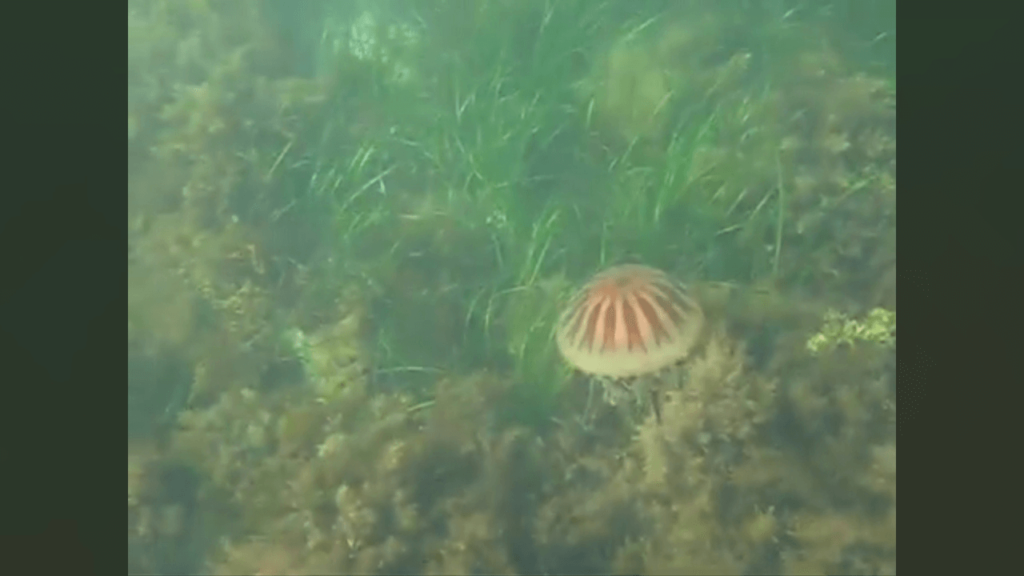
There are five native species of jellyfish in Ireland: the moon, compass, barrel, blue and lion’s mane jellyfish. Most are harmless or cause only a mild, nettle-like sting, but the lion’s mane can give a painful sting, and two visitors, the mauve stinger (Pelagia noctiluca) and the Portuguese man o’ war, can be more serious. Jellyfish are most common in Irish waters from late spring to early autumn.
This guide explains how to identify the jellyfish you may see on Irish beaches, where and when they appear, and what the Irish health authorities advise if you get stung.
What Are Jellyfish?
Jellyfish are soft-bodied marine creatures that belong to the phylum Cnidaria. They have:
- A jelly-like, umbrella-shaped body called a bell.
- Tentacles, which are used for capturing prey and sometimes for defense.
- No bones, heart, or brain.
Jellyfish are not technically fish—they are invertebrates that have been in Earth’s oceans for over 500 million years!
Types of Jellyfish Found in Ireland
Ireland’s waters host five native jellyfish species, plus occasional visitors. Here are the ones you are most likely to hear about:
| Jellyfish Type | Description | Sting Level | When Most Common |
|---|---|---|---|
| Moon Jellyfish | Transparent with four purple rings. | Harmless to humans. | Summer and autumn. |
| Lion’s Mane Jellyfish | Red, orange or brown with masses of long tentacles. | Painful sting; the one to avoid. | Summer. |
| Compass Jellyfish | Pale bell with brown V-shaped markings. | Painful but usually mild. | Summer. |
| Barrel Jellyfish | Large, pale, dome-shaped, with thick frilly arms. | Very mild or none. | Spring and summer. |
| Blue Jellyfish | Blue or purple, like a smaller lion’s mane. | Mild to moderate. | Summer. |
| Mauve Stinger (Pelagia noctiluca) | Small, mauve-pink, glows at night. | Painful; can cause more general symptoms. | Occasional visitor. |
| Portuguese Man o’ War | Blue-purple gas-filled float with long trailing tentacles. | Severe. | Rare; usually washed in by storms. |
Detailed Jellyfish Profiles
Moon Jellyfish
- Behavior: Moon jellyfish are passive drifters, meaning they rely on ocean currents for movement.
- Interesting Fact: They have tiny stinging cells for catching plankton, but these are too weak to hurt people.
- Where to Spot: Harbours, estuaries and sandy beaches all around the coast.
Lion’s Mane Jellyfish
- Behavior: Known for its long, flowing tentacles. The largest specimens in Arctic waters have tentacles over 30 metres long, although those seen in Ireland are much smaller.
- Danger Level: Its sting causes intense pain, redness and swelling, and in rare cases more serious symptoms. Tentacles can sting even when detached or when the jellyfish is washed up dead.
- Where to Spot: All around the coast, and frequently reported on the east coast, including Dublin beaches, in summer.
Compass Jellyfish
- Behavior: Often found near the surface in summer.
- Danger Level: Their sting is usually mild but can cause irritation.
- Where to Spot: Common on southern and western coasts.
Barrel Jellyfish
- Behavior: Often spotted floating lazily in shallow waters or washed up on beaches.
- Interesting Fact: One of the largest jellyfish in Irish waters, with a bell that can reach close to a metre across, but practically harmless to humans.
- Where to Spot: Often seen in large numbers off southern and western beaches, including Cork and Kerry.
Blue Jellyfish
- Behavior: A close relative of the lion’s mane, but smaller and blue or purple.
- Danger Level: Its sting is moderately painful but not dangerous.
- Where to Spot: Around the coast in summer, especially the east and south.
Portuguese Man o’ War
- Behavior: Not technically a jellyfish but a siphonophore—a colony of specialized organisms working together.
- Danger Level: Highly venomous; stings can cause severe pain and symptoms such as muscle spasms, breathing difficulty and heart rhythm problems.
- Where to Spot: Rare, but occasionally washed ashore on southern and western coasts after Atlantic storms, usually in late summer and autumn.
Where Can You Spot Jellyfish in Ireland?
Ireland’s coastline is over 3,000 km long, so there are plenty of places where jellyfish may appear.
Popular Jellyfish-Spotting Locations:
- Wild Atlantic Way: Known for its rugged beauty and rich marine life, with frequent sightings in Galway Bay, Donegal and Kerry.
- East Coast Beaches: Dublin, Wicklow and Wexford beaches often see lion’s mane jellyfish in summer.
- Southern Coast: Cork and Waterford often see barrel and compass jellyfish.
Tip: Check beach notices and ask lifeguards about recent jellyfish sightings.
Why Are Jellyfish Found Along Irish Shores?
Jellyfish blooms, or large gatherings, often occur in Irish waters due to:
- Warmer Sea Temperatures: During summer, waters warm up and jellyfish numbers rise.
- Winds and Currents: Onshore winds and currents push jellyfish into bays and onto beaches.
- Plankton Abundance: Jellyfish feed on plankton, which thrives in Irish coastal waters in summer.
Do Jellyfish in Ireland Sting?
Yes, some do. According to the Health Protection Surveillance Centre (HPSC), jellyfish stings in Ireland are not usually life-threatening and most need only basic first aid and simple pain relief. The lion’s mane causes the most painful stings among native species.
Safety Tips for Encountering Jellyfish
- Avoid Touching Jellyfish: Even dead or stranded jellyfish and loose tentacles can sting.
- Wear Water Shoes: Protect your feet when swimming or walking along the shore.
- Check Beach Notices: Lifeguards often post warnings about jellyfish.
- Keep Children and Dogs Close: Make sure kids and pets don’t pick up or sniff jellyfish on the sand.
What to Do if You Get Stung:
The HPSC (part of the HSE) advises:
- Get out of the water and away from the jellyfish. On a lifeguarded beach, ask the lifeguards for help.
- Rinse with seawater, not fresh water.
- Remove tentacles carefully with gloved hands, tweezers, a clean stick or the edge of a bank card. Don’t rub the area.
- Ease the pain with paracetamol or ibuprofen, an antihistamine cream for itching, and a dry cold pack.
- For a Portuguese man o’ war sting, use hot water at about 45°C for 20 minutes.
- Seek medical help for any serious symptoms, such as difficulty breathing, chest tightness or swelling of the lips, mouth or tongue.
Don’t use vinegar for the types of jellyfish stings found in Ireland, and don’t use alcohol, urine or a tight bandage.
The Most Dangerous Jellyfish in Ireland
While the risk of a serious sting in Ireland is low, a few species should be treated with caution:
1. Lion’s Mane Jellyfish (Cyanea capillata)
The lion’s mane is the native jellyfish most likely to give you a painful sting in Irish waters. It is one of the largest jellyfish in the world, although those found around Ireland are usually much smaller than the giant Arctic specimens.
- Sting Symptoms:
Intense pain, redness and swelling at the site. Rarely, people develop more general symptoms such as nausea or difficulty breathing and need medical care. - Where You’ll Find It:
Most common in summer, and regularly reported on east coast beaches in Dublin and Wicklow.
2. Portuguese Man o’ War (Physalia physalis)
While not technically a true jellyfish, the Portuguese man o’ war is often included in discussions of dangerous jellyfish. It is a colonial organism made up of several polyps that work together as one entity, and its long, trailing tentacles can deliver a very painful sting.
- Sting Symptoms:
Severe pain and welts, and in serious cases muscle spasms, headaches, breathing difficulty and heart rhythm problems. - Where You’ll Find It:
Rarely seen in Irish waters, but strandings occasionally occur on southern and western coasts after storms. Look out for its blue-purple, balloon-like float, and never touch one, even on the beach.
3. Mauve Stinger (Pelagia noctiluca)
This small, mauve jellyfish occasionally appears in large numbers in Irish coastal waters. Its sting can be painful and may cause symptoms such as dizziness, vomiting or difficulty breathing.
Fascinating Facts About Jellyfish
- Age: Jellyfish existed long before the dinosaurs.
- Bioluminescence: Some species, including the mauve stinger, glow in the dark.
- “Immortal” Species: The Turritopsis dohrnii jellyfish can revert to its juvenile form, so in theory it can avoid dying of old age.
- Jellyfish Blooms: These can sometimes disrupt fishing nets, fish farms and power plants.
Tips for Photography and Observation
Want to capture the beauty of jellyfish? Here’s how:
- Use Natural Light: Early morning or late afternoon offers the best light for photography.
- Keep Your Distance: Observe and photograph without touching, even on the beach.
- Bring a Polarizing Filter: Reduces glare from the water surface.
- Visit an Aquarium: Aquariums are a safe way to see jellyfish up close; check current exhibits before you go.
Conservation and the Role of Jellyfish in the Ecosystem
Jellyfish play an important role in marine ecosystems:
- Food Source: For turtles (including the leatherback turtles that visit Irish waters), fish and seabirds.
- Plankton Control: They help balance plankton populations.
Scientists are studying whether overfishing, pollution and warmer seas are making jellyfish blooms more common in some areas.
Jellyfish and Irish Culture
While jellyfish don’t hold significant cultural importance in Ireland, they are a frequent topic among beachgoers, sea swimmers and marine biologists. Their presence highlights the importance of marine conservation.
Plan Your Beach Trip
When to Visit:
- Jellyfish season: Late spring to early autumn, peaking in summer.
What to Bring:
- Beach Essentials: Sunscreen, water shoes, and a basic first-aid kit.
- Camera: For stunning coastal shots.
Key Places to Visit:
| Region | Top Spot | Why Visit? |
|---|---|---|
| West Coast | Galway Bay | Rich marine life. |
| South Coast | Tramore, Waterford | Popular family-friendly beach. |
| East Coast | Malahide Beach, Dublin | Easy access and scenic views. |
Conclusion
Jellyfish in Ireland are both mesmerizing and mysterious. Most species are harmless or cause only a mild sting, but it is worth learning to recognise the lion’s mane and the rare Portuguese man o’ war, and knowing the official first-aid advice. Enjoy these incredible creatures from a respectful distance!
Heading to the coast? See our guides to the best waterfalls in Ireland and outdoor activities in Ireland.
Frequently Asked Questions
Q: Are jellyfish dangerous in Ireland?
A: Most species in Ireland are harmless or have mild stings. The lion’s mane can give a painful sting, and the rare Portuguese man o’ war and the mauve stinger need extra caution.
Q: Can you swim in areas with jellyfish?
A: Yes, but avoid swimming close to jellyfish, consider a wetsuit or rash vest, and follow lifeguard advice.
Q: Should I use vinegar on a jellyfish sting in Ireland?
A: No. Irish health advice is to rinse with seawater, carefully remove tentacles and use a dry cold pack, except for Portuguese man o’ war stings, which should be treated with hot water at about 45°C for 20 minutes.

Hi, I’m Tanvir, the founder and author of Explore Ireland Now. With a deep love for Ireland and its rich culture, history, and landscapes, I created this site to share everything that makes this beautiful country worth exploring. Whether you’re a local looking for hidden gems or a traveler planning your next adventure, I provide insightful guides, tips, and recommendations to help you experience Ireland to the fullest.
From stunning landscapes to vibrant cities and quaint villages, Ireland is full of wonders waiting to be discovered. Through my personal experiences and research, I aim to bring you the most up-to-date information and inspiration for your journey.
Thank you for visiting Explore Ireland Now—I hope my content helps you uncover all that this incredible country has to offer! If you have any questions or need travel advice, feel free to reach out.