Iceland is one of the few places on Earth where nature seems to break all the rules. Vast glaciers sit beside active volcanoes, black sand beaches stretch along dramatic coastlines, and geothermal areas bubble with colorful mineral deposits. The country’s unique geological position on the Mid-Atlantic Ridge has created landscapes that appear almost otherworldly, making Iceland a dream destination for nature lovers, photographers, and adventure seekers.
In this guide, we’ll explore the most unique landscapes in Iceland, what makes them special, and why they deserve a place on every traveler’s bucket list.
Why Iceland’s Landscapes Are So Unique
Iceland’s extraordinary scenery is the result of powerful natural forces working together over millions of years. The island sits between the North American and Eurasian tectonic plates, creating intense volcanic and geothermal activity. At the same time, massive glaciers shape the land through erosion and movement.
This combination of fire and ice has produced landscapes that are difficult to find anywhere else in the world. Visitors can experience lava fields, ice caves, geothermal springs, waterfalls, mountains, and volcanic craters—all within a relatively small country.
The Black Sand Beaches of Reynisfjara
One of Iceland’s most famous landscapes is Reynisfjara Black Sand Beach near the village of Vík.
What Makes It Unique?
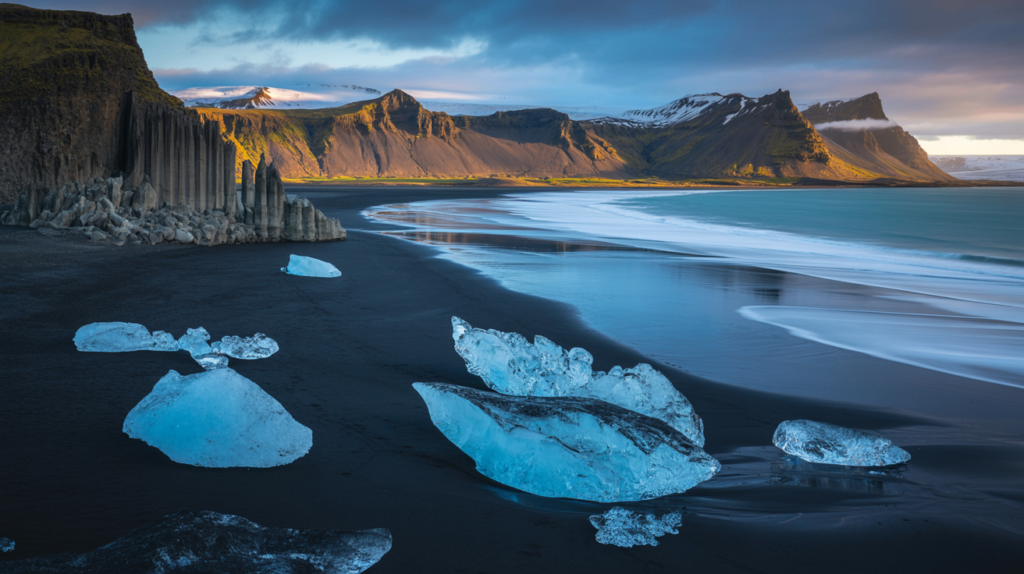
Unlike traditional golden beaches, Reynisfjara features jet-black volcanic sand created from cooled lava that has been broken down by ocean waves over centuries.
Highlights include:
- Towering basalt columns
- Powerful Atlantic waves
- Sea stacks rising from the ocean
- Dramatic cliffs filled with nesting seabirds
The contrast between the black sand, white waves, and dark sea creates a striking landscape that looks almost surreal.
Best Time to Visit
The beach can be visited year-round, but summer offers longer daylight hours and better weather conditions.
Jökulsárlón Glacier Lagoon
Jökulsárlón is often considered one of Iceland’s most breathtaking natural wonders.
A Landscape in Constant Change
This glacial lagoon is filled with enormous icebergs that break away from the nearby glacier and slowly drift toward the ocean.
Visitors can witness:
- Floating blue icebergs
- Seals swimming among the ice
- Reflections of mountains and glaciers
- Ice formations changing daily
Because the icebergs are constantly moving and melting, no two visits are exactly the same.
Diamond Beach
Across the road from the lagoon lies Diamond Beach, where chunks of glacier ice wash onto black volcanic sand, creating the appearance of sparkling diamonds scattered along the shoreline.
The Volcanic Highlands
The Icelandic Highlands remain one of the country’s most remote and untouched regions.
A Martian-Like Landscape
Many visitors describe the Highlands as resembling another planet. The area features:
- Vast lava fields
- Colorful rhyolite mountains
- Volcanic deserts
- Deep canyons
- Geothermal valleys
Roads are only accessible during summer, helping preserve the wilderness character of the region.
Landmannalaugar
Landmannalaugar is one of the most spectacular parts of the Highlands. Its colorful mountains display shades of red, yellow, green, and blue, created by mineral-rich volcanic rock.
Popular activities include:
- Hiking
- Hot spring bathing
- Photography
- Multi-day trekking
Vatnajökull Glacier
Covering approximately 8% of Iceland, Vatnajökull is Europe’s largest glacier by volume.
The Kingdom of Ice
This massive ice cap creates an incredible frozen landscape featuring:
- Ice caves
- Glacier tongues
- Crevasses
- Ice formations
- Snow-covered peaks
The glacier also sits atop several active volcanoes, demonstrating Iceland’s remarkable combination of fire and ice.
Crystal Ice Caves
During winter, naturally formed ice caves develop beneath the glacier. Their translucent blue walls create one of Iceland’s most magical experiences.
Lake Mývatn’s Geothermal Wonderland
Northern Iceland’s Lake Mývatn region showcases some of the country’s most unusual geological formations.
Volcanic Beauty Everywhere
The area includes:
- Pseudocraters
- Lava formations
- Steam vents
- Mud pools
- Geothermal fields
The diverse landscape attracts geologists and nature enthusiasts from around the world.
Dimmuborgir Lava Fields
Known as the “Dark Castles,” Dimmuborgir features strange lava formations that resemble ancient ruins, towers, and arches.
Local folklore even associates the area with trolls and mythical creatures.
The Colorful Mountains of Kerlingarfjöll
Kerlingarfjöll is one of Iceland’s hidden gems.
A Geothermal Mountain Paradise
The mountain range is known for:
- Red rhyolite peaks
- Steaming valleys
- Hot springs
- Vibrant mineral colors
The combination of geothermal activity and colorful rock formations creates a landscape unlike any other in Iceland.
Perfect for Hiking
Numerous trails allow visitors to explore valleys filled with steam vents and bubbling geothermal features.
Snæfellsnes Peninsula
Often called “Iceland in Miniature,” the Snæfellsnes Peninsula contains many of the country’s most iconic landscapes in one region.
Diverse Natural Features
Within a relatively short distance, visitors can experience:
- Glaciers
- Volcanoes
- Lava fields
- Coastal cliffs
- Fishing villages
- Black sand beaches
Snæfellsjökull Volcano
This glacier-covered volcano gained worldwide fame through Jules Verne’s novel Journey to the Center of the Earth.
The mountain dominates the peninsula and creates one of Iceland’s most recognizable views.
The Otherworldly Highlands of Askja
Askja is a volcanic caldera located deep within the central Highlands.
A Landscape Used for Astronaut Training
Because of its resemblance to lunar terrain, NASA astronauts trained here before the Apollo missions.
Features include:
- Vast volcanic plains
- Craters
- Lava fields
- Geothermal lakes
Víti Crater
Víti, meaning “Hell” in Icelandic, contains a stunning turquoise geothermal lake within a volcanic crater.
The vivid blue water contrasts dramatically with the surrounding volcanic terrain.
Stuðlagil Canyon
Once hidden beneath a glacial river, Stuðlagil Canyon has become one of Iceland’s most photographed landscapes.
Nature’s Geometry
The canyon is famous for its:
- Basalt column walls
- Bright blue water
- Dramatic rock formations
The geometric patterns created by the basalt columns demonstrate nature’s remarkable ability to create symmetry and beauty.
The Westfjords: Iceland’s Untamed Wilderness
The Westfjords remain one of Iceland’s least-visited regions.
Rugged and Remote
This isolated area features:
- Deep fjords
- Towering cliffs
- Waterfalls
- Remote beaches
- Wildlife colonies
Because fewer tourists visit the Westfjords, travelers can enjoy a more authentic and peaceful experience.
Dynjandi Waterfall
Often described as Iceland’s most beautiful waterfall, Dynjandi cascades down a mountainside in multiple tiers, resembling a giant bridal veil.
Iceland’s Geothermal Areas
Iceland’s geothermal regions showcase the raw power beneath the Earth’s surface.
Hverir Geothermal Field
Near Lake Mývatn, Hverir offers:
- Bubbling mud pots
- Steam vents
- Sulfur deposits
- Colorful mineral formations
The landscape appears almost alien, with constant geothermal activity shaping the environment.
Geysir Geothermal Area
This region is home to the famous Strokkur geyser, which erupts every few minutes, sending boiling water high into the air.
Best Time to Experience Iceland’s Landscapes
Summer (June to August)
Advantages:
- Long daylight hours
- Easier road access
- Better hiking conditions
- Accessible Highlands
Winter (November to March)
Advantages:
- Northern Lights
- Ice cave tours
- Snow-covered scenery
- Fewer crowds
Shoulder Seasons
Spring and autumn provide a balance between accessibility, lower prices, and fewer tourists.
Photography Tips for Iceland’s Landscapes
To capture Iceland’s beauty:
- Visit popular locations early or late in the day.
- Bring weather-resistant camera equipment.
- Use a tripod for waterfalls and Northern Lights photography.
- Prepare for rapidly changing weather.
- Include people in photos to show the scale of the landscape.
Sustainable Travel in Iceland
Iceland’s natural environments are fragile. Visitors should:
- Stay on marked trails.
- Respect safety barriers.
- Avoid disturbing wildlife.
- Leave no trace.
- Follow local guidelines and regulations.
Responsible tourism helps preserve these landscapes for future generations.
Final Thoughts
The unique landscapes of Iceland offer some of the most extraordinary natural scenery on Earth. From black sand beaches and glacier lagoons to colorful geothermal mountains and volcanic deserts, every corner of the country reveals a different geological wonder. The dramatic interaction between fire, ice, water, and earth has created a destination unlike any other.
Whether you’re exploring a crystal-blue ice cave, standing beside a powerful waterfall, hiking through colorful volcanic mountains, or watching icebergs drift across a glacial lagoon, Iceland delivers unforgettable experiences that showcase the incredible power and beauty of nature.

Hi, I’m Tanvir, the founder and author of Explore Ireland Now. With a deep love for Ireland and its rich culture, history, and landscapes, I created this site to share everything that makes this beautiful country worth exploring. Whether you’re a local looking for hidden gems or a traveler planning your next adventure, I provide insightful guides, tips, and recommendations to help you experience Ireland to the fullest.
From stunning landscapes to vibrant cities and quaint villages, Ireland is full of wonders waiting to be discovered. Through my personal experiences and research, I aim to bring you the most up-to-date information and inspiration for your journey.
Thank you for visiting Explore Ireland Now—I hope my content helps you uncover all that this incredible country has to offer! If you have any questions or need travel advice, feel free to reach out.