
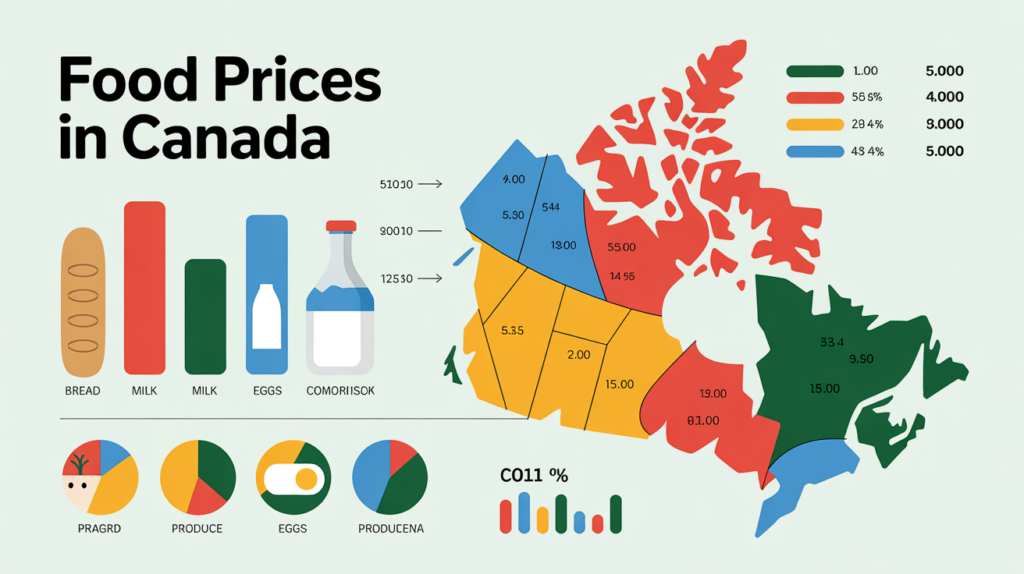
Food prices in Canada have become one of the biggest concerns for households across the country. From grocery shopping to dining out, Canadians are spending more money on food than they did just a few years ago. Rising inflation, transportation costs, climate issues, and global supply chain disruptions have all contributed to higher food prices.
Whether you are a student, a family trying to manage monthly expenses, or someone planning to move to Canada, understanding food prices can help you budget more effectively. In this article, we’ll explore the average cost of groceries, why food prices are increasing, which cities are most expensive, and practical ways to save money on food in Canada.
Why Are Food Prices Rising in Canada?
Several factors have caused food prices in Canada to increase over the past few years.
Inflation
Inflation affects almost every product consumers buy. When fuel, labor, and transportation costs rise, grocery stores pass those costs on to customers. Canada has experienced significant inflation since 2021, which has directly impacted food prices.
Transportation Costs
Canada is a large country, and transporting food across provinces can be expensive. Higher fuel prices make shipping more costly, especially for fresh produce and imported items.
Climate Change and Weather Conditions
Extreme weather conditions such as droughts, floods, and wildfires affect farming and crop production. Lower crop yields often lead to higher prices for fruits, vegetables, and grains.
Global Supply Chain Problems
Many food products sold in Canada are imported from other countries. Supply chain disruptions can delay shipments and reduce availability, which increases prices.
Labor Shortages
Labor shortages in agriculture, food processing, and transportation industries have also contributed to rising food costs.
Average Grocery Prices in Canada
Food prices vary depending on the province, city, and store. However, here are some average grocery prices Canadians may expect in 2026.
Dairy Products
- Milk (1 liter): CAD $2.50 to $3.50
- Cheese (1 kg): CAD $12 to $18
- Butter (454g): CAD $5 to $8
Meat and Protein
- Chicken breast (1 kg): CAD $14 to $20
- Ground beef (1 kg): CAD $12 to $18
- Eggs (12-pack): CAD $4 to $6
Fruits and Vegetables
- Apples (1 kg): CAD $4 to $6
- Bananas (1 kg): CAD $1.50 to $3
- Potatoes (5 lb bag): CAD $5 to $8
- Tomatoes (1 kg): CAD $5 to $8
Pantry Staples
- Bread loaf: CAD $3 to $5
- Rice (1 kg): CAD $4 to $7
- Pasta (500g): CAD $2 to $4
Frozen and Processed Foods
- Frozen pizza: CAD $6 to $10
- Breakfast cereal: CAD $5 to $8
- Chips: CAD $3 to $6
Food Prices in Major Canadian Cities
Food costs can differ significantly between cities.
Toronto
Toronto is one of the most expensive cities in Canada. Grocery prices and restaurant costs are generally higher due to the city’s large population and high living expenses.
Vancouver
Vancouver also has high food prices, especially for fresh produce and housing-related expenses. Imported food items can be particularly expensive.
Montreal
Montreal is usually more affordable compared to Toronto and Vancouver. Many residents find grocery costs slightly lower.
Calgary
Calgary offers moderate food prices, although inflation has affected grocery bills in recent years.
Halifax
Food prices in Halifax can be higher because many products need to be transported long distances.
Restaurant Food Prices in Canada
Eating out in Canada has also become more expensive.
Fast Food
- Burger combo meal: CAD $10 to $15
- Pizza slice: CAD $4 to $6
- Coffee: CAD $2 to $5
Casual Restaurants
- Pasta dish: CAD $15 to $25
- Steak dinner: CAD $25 to $45
- Sushi meal: CAD $20 to $40
Fine Dining
Fine dining experiences in Canada can cost anywhere from CAD $60 to over CAD $200 per person depending on the restaurant and location.
Which Foods Have Increased the Most?
Some food categories have seen sharper price increases than others.
Meat
Beef and chicken prices have increased significantly due to higher feed and transportation costs.
Fresh Produce
Fruits and vegetables, especially imported products, have become more expensive because of climate issues and transportation expenses.
Dairy Products
Milk, butter, and cheese prices have risen steadily in many provinces.
Cooking Oils and Grains
Global supply disruptions have increased prices for cooking oils, wheat products, and rice.
How Canadians Are Coping With High Food Prices
Many Canadians are changing their shopping habits to save money.
Buying Store Brands
Generic or store-brand products are often cheaper than name-brand items while offering similar quality.
Shopping During Sales
Many people use weekly flyers and grocery apps to find discounts.
Buying in Bulk
Bulk purchases can help reduce costs for rice, pasta, frozen foods, and canned goods.
Meal Planning
Planning meals in advance helps families avoid unnecessary purchases and food waste.
Using Coupons and Rewards Programs
Loyalty programs and digital coupons are becoming increasingly popular among Canadian shoppers.
Cheapest Grocery Stores in Canada
Several grocery chains are known for offering more affordable prices.
No Frills
No Frills is popular for budget-friendly groceries and weekly deals.
Walmart
Walmart Canada often offers competitive pricing on groceries and household items.
FreshCo
FreshCo focuses on affordable food prices and price matching.
Costco
Costco can help families save money through bulk purchases, although membership is required.
Is Food More Expensive in Canada Than Other Countries?
Compared to many countries, Canada has relatively high food prices. Factors such as climate, import dependence, and transportation contribute to these costs. However, average incomes in Canada are also generally higher than in many parts of the world.
Compared to the United States, some products may be more expensive in Canada, especially dairy and imported goods. However, healthcare and other social benefits can offset some living expenses for residents.
Tips to Save Money on Food in Canada
Here are practical ways to reduce grocery spending.
- Buy seasonal fruits and vegetables
- Avoid shopping when hungry
- Compare prices between stores
- Use cashback and grocery apps
- Freeze leftovers to reduce waste
- Cook at home more often
- Limit processed and convenience foods
The Future of Food Prices in Canada
Experts predict that food prices in Canada may continue to rise, although the rate of increase could slow down compared to previous years. Climate change, fuel costs, and global economic conditions will likely continue affecting grocery bills.
Consumers are expected to become even more focused on budgeting, smart shopping, and reducing food waste.
Final Thoughts
Food prices in Canada have increased noticeably in recent years, affecting households across the country. Groceries, restaurant meals, and essential food items now cost significantly more than before. While inflation and global issues are major causes, Canadians are finding creative ways to manage their food budgets.
By shopping smarter, comparing prices, and planning meals carefully, families and individuals can reduce the impact of rising food costs. Understanding average food prices can also help newcomers and travelers prepare for living expenses in Canada.
Although food prices remain a challenge, informed consumers can still find ways to eat well without overspending.

Hi, I’m Tanvir, the founder and author of Explore Ireland Now. With a deep love for Ireland and its rich culture, history, and landscapes, I created this site to share everything that makes this beautiful country worth exploring. Whether you’re a local looking for hidden gems or a traveler planning your next adventure, I provide insightful guides, tips, and recommendations to help you experience Ireland to the fullest.
From stunning landscapes to vibrant cities and quaint villages, Ireland is full of wonders waiting to be discovered. Through my personal experiences and research, I aim to bring you the most up-to-date information and inspiration for your journey.
Thank you for visiting Explore Ireland Now—I hope my content helps you uncover all that this incredible country has to offer! If you have any questions or need travel advice, feel free to reach out.