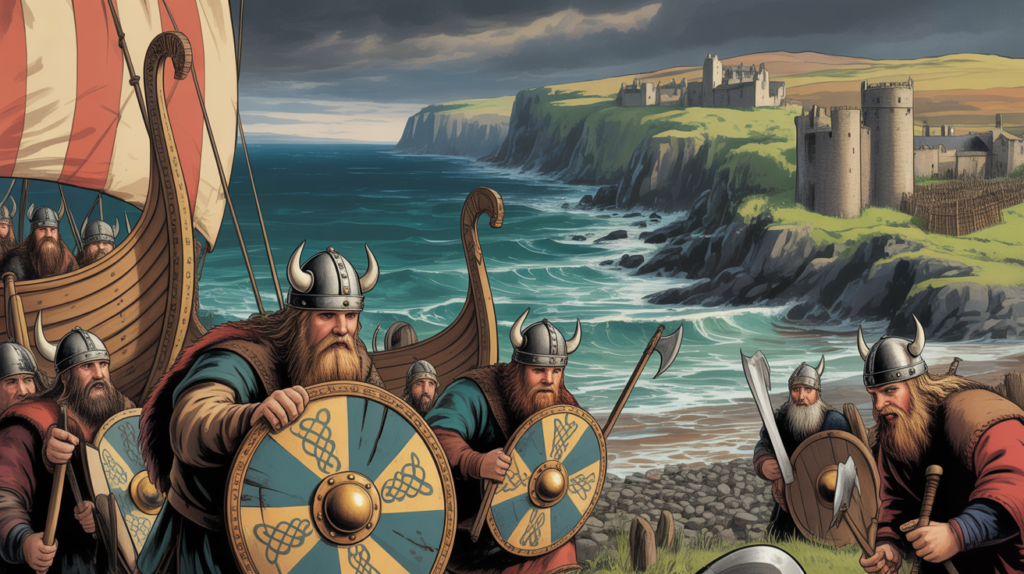
The story of Vikings in Scotland is one of invasion, settlement, trade, and cultural transformation. From fierce raids along the Scottish coast to the establishment of Norse kingdoms in the islands, the Vikings left a lasting mark on Scotland’s history, language, and identity. Today, traces of Viking influence can still be seen in place names, archaeological discoveries, and local traditions across the country.
Who Were the Vikings?
The Vikings were Scandinavian seafarers from Norway, Denmark, and Sweden who traveled across Europe between the late 8th and 11th centuries. Known for their advanced shipbuilding skills and fearless exploration, they raided, traded, and settled in many regions, including Scotland.
Most Vikings who came to Scotland were from Norway. They crossed the North Sea in longships, targeting monasteries and coastal settlements before eventually establishing permanent communities.
The First Viking Raids in Scotland
The Viking Age in Scotland began around the late 8th century. Early raids focused mainly on monasteries because these sites were wealthy and poorly defended.
One of the earliest known Viking attacks in Scotland occurred on the island monastery of Iona in 795 AD. The monastery was an important religious center founded by Saint Columba. Viking raiders attacked Iona several times, causing fear throughout the Christian world.
These raids marked the beginning of centuries of Norse influence in Scotland.
Viking Settlements in Scotland
While early Viking activity involved raiding, the Norse eventually settled in many parts of Scotland. They established farming communities, trading centers, and local kingdoms.
Areas Strongly Influenced by Vikings
Several regions of Scotland experienced heavy Viking settlement:
- The Orkney Islands
- The Shetland Islands
- The Hebrides
- Caithness
- Parts of mainland western Scotland
The Northern Isles became especially important Norse territories. Orkney and Shetland remained under Scandinavian control for hundreds of years.
The Kingdom of the Isles
The Vikings established a powerful maritime kingdom known as the Kingdom of the Isles. This Norse-Gaelic kingdom included the Hebrides and parts of western Scotland.
The rulers of the Kingdom of the Isles controlled important sea routes and became major political figures in the region. Their culture blended Scandinavian traditions with Gaelic customs, creating a unique Norse-Gaelic identity.
This fusion influenced Scottish culture for generations.
Viking Influence on Scottish Culture
The Vikings had a major impact on Scottish society. Their influence can still be found in many aspects of Scottish life.
Language and Place Names
Many Scottish place names come from Old Norse words. This is especially common in northern and western Scotland.
Examples include:
- Lerwick
- Stornoway
- Wick
- Uist
Words related to geography, farming, and fishing often have Norse origins.
Maritime Skills
The Vikings were expert sailors, and their maritime knowledge influenced coastal Scottish communities. Fishing techniques, boat designs, and sea trade routes benefited from Norse expertise.
Law and Government
Norse systems of local governance also shaped some Scottish island communities. Assemblies similar to Viking “things” were used for legal decisions and dispute resolution.
Conflict Between Scots and Vikings
Relations between Vikings and Scots were not always peaceful. Battles and political struggles occurred frequently as Scottish kings attempted to regain control over Viking-held territories.
One of the most famous conflicts was the Battle of Largs in 1263. This battle involved forces led by the Scottish king Alexander III and Norwegian king Haakon IV. Although the battle itself was not decisive, it weakened Norwegian influence in Scotland.
A few years later, the Treaty of Perth in 1266 officially transferred the Hebrides and the Isle of Man from Norway to Scotland.
This marked the decline of Viking political power in Scotland.
Viking Life in Scotland
Daily life for Vikings in Scotland revolved around farming, fishing, and trade. Settlers raised livestock, grew crops, and built longhouses using local materials.
Archaeological discoveries have revealed:
- Viking tools
- Jewelry
- Weapons
- Burial sites
- Longships
These discoveries help historians understand how Norse settlers adapted to Scottish environments.
Women also played important roles in Viking society. They managed households, participated in trade, and sometimes traveled with settlers to new lands.
Archaeological Discoveries
Scotland contains many important Viking archaeological sites.
Jarlshof, Shetland
Jarlshof is one of Scotland’s most famous archaeological sites. It contains remains from multiple historical periods, including Viking longhouses and settlements.
The Lewis Chessmen
The famous Lewis Chessmen were discovered on the Isle of Lewis in the 19th century. These medieval chess pieces are believed to have Norse origins and are among the most iconic Viking-era artifacts found in Scotland.
Scar Boat Burial
The Scar boat burial in Orkney revealed a remarkably preserved Viking burial site, providing valuable insights into Norse funeral customs.
Religion and the Vikings
Early Vikings followed Norse pagan beliefs centered around gods such as Odin and Thor. Over time, however, many Vikings in Scotland converted to Christianity.
This religious shift helped Vikings integrate more easily with local Scottish communities. Churches and Christian burial practices gradually replaced older pagan traditions.
The Legacy of Vikings in Scotland
The Viking legacy remains deeply embedded in Scottish culture. Many Scottish island communities still celebrate their Norse heritage through festivals, storytelling, and traditional events.
In Shetland, the annual Up Helly Aa festival honors Viking history with torchlit processions and the burning of a Viking-style galley.
Modern Scotland continues to embrace this fascinating chapter of its past, attracting visitors interested in Viking archaeology, history, and heritage tourism.
Why Viking History Matters
Understanding Viking history in Scotland helps explain how the country developed culturally and politically. The Norse presence shaped trade, language, architecture, and regional identities.
Rather than simply being invaders, the Vikings became settlers, rulers, and contributors to Scottish society. Their influence helped create the rich and diverse history Scotland is known for today.
Conclusion
Viking history in Scotland is a story of exploration, conflict, settlement, and cultural exchange. From the first raids on coastal monasteries to the rise of Norse kingdoms in the islands, the Vikings transformed many parts of Scotland forever.
Their legacy lives on in Scottish traditions, archaeological treasures, and the enduring Norse influence visible across the country. Whether exploring ancient ruins in Orkney or learning about Viking warriors in museums, the history of the Vikings remains one of the most captivating parts of Scotland’s past.

Hi, I’m Tanvir, the founder and author of Explore Ireland Now. With a deep love for Ireland and its rich culture, history, and landscapes, I created this site to share everything that makes this beautiful country worth exploring. Whether you’re a local looking for hidden gems or a traveler planning your next adventure, I provide insightful guides, tips, and recommendations to help you experience Ireland to the fullest.
From stunning landscapes to vibrant cities and quaint villages, Ireland is full of wonders waiting to be discovered. Through my personal experiences and research, I aim to bring you the most up-to-date information and inspiration for your journey.
Thank you for visiting Explore Ireland Now—I hope my content helps you uncover all that this incredible country has to offer! If you have any questions or need travel advice, feel free to reach out.