
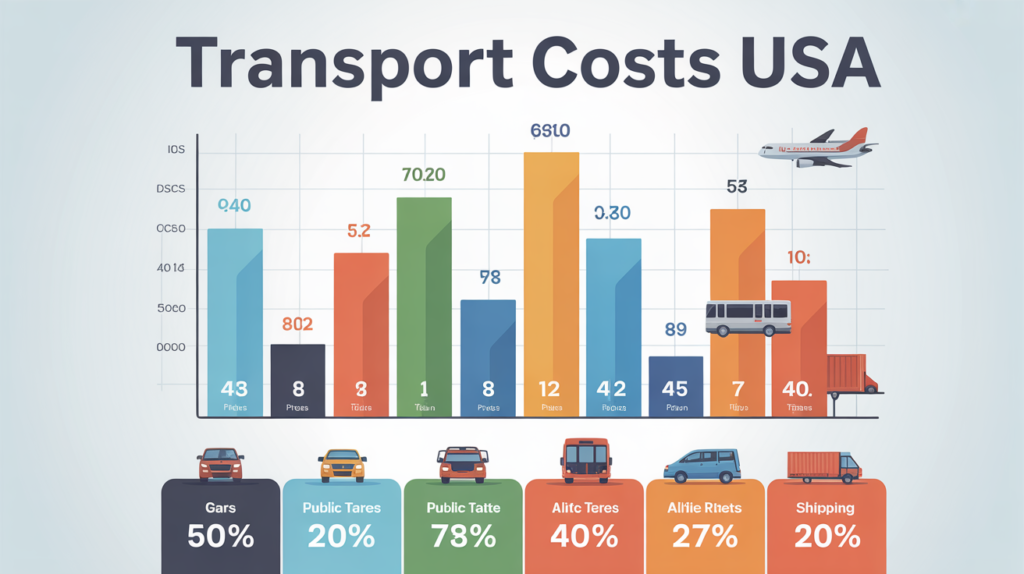
Transport costs in the USA affect nearly every aspect of daily life, from commuting to work and shipping products across the country to planning vacations and running businesses. Because the United States is such a large country with diverse transportation systems, transport expenses can vary greatly depending on location, fuel prices, vehicle ownership, and public transportation availability.
Understanding transportation costs in the USA can help individuals and businesses make smarter financial decisions. In this article, we will explore the major factors influencing transport costs, average transportation expenses, public transit options, freight transportation, and tips for reducing transportation spending.
Understanding Transportation Costs in the USA
Transportation costs refer to the money spent on moving people or goods from one place to another. In the USA, these expenses can include:
- Fuel costs
- Vehicle maintenance
- Car insurance
- Public transportation fares
- Air travel expenses
- Freight and shipping charges
- Tolls and parking fees
For many American households, transportation is one of the largest monthly expenses after housing.
Average Household Transportation Costs
According to national consumer spending reports, transportation typically accounts for around 15% to 20% of an average household budget in the USA. The exact amount depends on several factors, including where people live and how often they travel.
Monthly Transportation Expenses
An average American household may spend money on:
- Gasoline
- Car payments
- Repairs and maintenance
- Insurance
- Registration fees
- Parking costs
Families with multiple vehicles often face much higher transportation costs than individuals living in cities with strong public transportation systems.
Fuel Costs in the USA
Fuel prices play a major role in transportation expenses. Gasoline prices fluctuate based on:
- Global oil prices
- Seasonal demand
- Government taxes
- Regional supply conditions
Some states have significantly higher fuel prices than others. For example, fuel prices in California are usually much higher than in states like Texas.
Impact of Fuel Prices
When fuel prices rise:
- Commuting becomes more expensive
- Shipping costs increase
- Airline ticket prices may rise
- Product prices can increase due to higher transportation expenses
Businesses that rely heavily on transportation are especially affected by fuel cost fluctuations.
Car Ownership Costs
Owning a vehicle in the USA is often necessary, especially in suburban and rural areas where public transportation is limited.
Major Car Ownership Expenses
Car Payments
Many Americans finance their vehicles through monthly loan payments. New vehicles generally come with higher monthly costs.
Insurance
Car insurance rates vary depending on:
- Driver age
- Driving history
- State laws
- Vehicle type
- Coverage level
Young drivers and people living in large cities usually pay higher insurance premiums.
Maintenance and Repairs
Regular maintenance includes:
- Oil changes
- Tire replacements
- Brake repairs
- Battery replacement
Unexpected repairs can add substantial costs over time.
Registration and Taxes
Vehicle registration fees and taxes differ by state and can add hundreds of dollars annually.
Public Transportation Costs
Public transportation is more common in large metropolitan areas like New York City, Chicago, Boston, and Washington, D.C.
Types of Public Transportation
Common public transportation systems in the USA include:
- Buses
- Subways
- Light rail
- Trains
- Ferries
Average Public Transit Costs
Public transit fares vary by city. Monthly transit passes may range from affordable to expensive depending on the transportation network and local government subsidies.
Using public transportation can reduce expenses related to:
- Fuel
- Parking
- Vehicle maintenance
- Insurance
However, public transit is not equally available across all parts of the country.
Air Travel Costs in the USA
Air travel is a major transportation method because of the country’s large size. Domestic flights connect major cities and smaller regional airports.
Factors Affecting Airfare
Airline ticket prices depend on:
- Travel season
- Fuel prices
- Route popularity
- Booking time
- Airline competition
Flights during holidays and summer months are usually more expensive.
Additional Air Travel Expenses
Travelers may also pay for:
- Checked baggage
- Seat selection
- Airport parking
- Rental cars
- Hotel transportation
Budget airlines may offer lower ticket prices but charge extra fees for additional services.
Freight Transportation Costs
Freight transportation is essential for businesses in the USA. Goods move through:
- Trucks
- Railroads
- Cargo ships
- Air freight
Trucking Costs
Trucking is the most common freight method in the country. Truck transportation costs depend on:
- Fuel prices
- Driver wages
- Distance
- Cargo type
- Tolls
The trucking industry plays a major role in the American economy.
Rail Transportation Costs
Rail transport is often used for heavy goods such as:
- Coal
- Grain
- Chemicals
- Industrial equipment
Rail shipping can be more cost-effective for long-distance freight.
Air Freight Costs
Air freight is faster but significantly more expensive than truck or rail transport. It is commonly used for:
- Electronics
- Medical supplies
- Perishable products
Urban vs Rural Transportation Costs
Transportation costs vary greatly between urban and rural areas.
Urban Areas
People living in cities may benefit from:
- Public transit systems
- Shorter commute distances
- Rideshare services
- Bike-sharing programs
However, urban residents may face higher:
- Parking fees
- Traffic congestion
- Tolls
Rural Areas
Rural residents often travel longer distances for:
- Work
- Shopping
- Healthcare
- Education
Because public transportation is limited in rural areas, owning a personal vehicle is usually necessary.
Rideshare and Taxi Costs
Services like ridesharing apps have become popular transportation options in many cities.
Factors Affecting Rideshare Prices
Rideshare costs depend on:
- Distance traveled
- Demand levels
- Time of day
- Traffic conditions
Prices often increase during peak hours and bad weather through surge pricing systems.
Shipping and Delivery Costs
Online shopping has increased shipping demand across the USA.
Factors Influencing Shipping Costs
Shipping costs are affected by:
- Package weight
- Delivery speed
- Distance
- Fuel surcharges
Businesses often pass transportation and delivery expenses on to consumers.
Transportation Infrastructure and Costs
Road quality, bridges, highways, and public transportation systems all influence transportation costs.
Infrastructure Challenges
Poor infrastructure can lead to:
- Vehicle damage
- Traffic delays
- Increased fuel consumption
- Higher maintenance expenses
Government investments in infrastructure can improve transportation efficiency and lower long-term costs.
How Inflation Impacts Transportation Costs
Inflation affects nearly every part of transportation, including:
- Fuel
- Vehicle prices
- Labor costs
- Airline tickets
- Shipping services
When inflation rises, transportation costs often increase across multiple industries.
Tips to Reduce Transportation Costs
There are several ways individuals and businesses can reduce transportation expenses.
Use Public Transportation
In cities with reliable transit systems, public transportation can save money on fuel, parking, and maintenance.
Carpooling
Sharing rides with coworkers or friends helps reduce fuel and commuting costs.
Maintain Vehicles Properly
Regular maintenance improves fuel efficiency and prevents costly repairs.
Compare Fuel Prices
Using fuel price comparison apps can help drivers find cheaper gas stations.
Plan Trips Efficiently
Combining errands into one trip reduces unnecessary driving and fuel use.
Consider Fuel-Efficient Vehicles
Hybrid and electric vehicles can reduce long-term fuel expenses.
Future Trends in USA Transportation Costs
Transportation costs may continue evolving due to:
- Electric vehicle adoption
- Improved public transportation
- Rising fuel prices
- Autonomous vehicle technology
- E-commerce growth
Many cities are investing in sustainable transportation systems to reduce congestion and environmental impact.
Conclusion
Transport costs in the USA affect households, travelers, and businesses every day. From fuel prices and car ownership expenses to air travel and freight shipping, transportation plays a major role in the American economy.
Costs vary depending on location, transportation method, and economic conditions. While some expenses are unavoidable, smart planning and efficient transportation choices can help reduce overall costs.
As technology and infrastructure continue to evolve, transportation in the USA may become more efficient and potentially more affordable in the future.

Hi, I’m Tanvir, the founder and author of Explore Ireland Now. With a deep love for Ireland and its rich culture, history, and landscapes, I created this site to share everything that makes this beautiful country worth exploring. Whether you’re a local looking for hidden gems or a traveler planning your next adventure, I provide insightful guides, tips, and recommendations to help you experience Ireland to the fullest.
From stunning landscapes to vibrant cities and quaint villages, Ireland is full of wonders waiting to be discovered. Through my personal experiences and research, I aim to bring you the most up-to-date information and inspiration for your journey.
Thank you for visiting Explore Ireland Now—I hope my content helps you uncover all that this incredible country has to offer! If you have any questions or need travel advice, feel free to reach out.