Iceland is one of the most beautiful countries in the world, but it is also known for being expensive. One of the biggest expenses travelers and residents face is transportation. Whether you are planning a short vacation, a road trip around the Ring Road, or a long-term stay, understanding transport costs in Iceland can help you budget better and avoid surprises.
From rental cars and fuel prices to buses and domestic flights, transportation expenses in Iceland vary depending on the season, travel style, and location. In this guide, you’ll learn everything you need to know about transport costs in Iceland and how to save money while exploring the country.
Why Transportation in Iceland Is Expensive
Transportation costs in Iceland are higher than in many other countries for several reasons:
- Iceland imports most vehicles and fuel
- The country has a small population
- Harsh weather increases maintenance costs
- Distances between towns can be long
- Tourism demand drives prices up, especially in summer
Despite the higher costs, transportation in Iceland is generally reliable and safe.
Average Transport Costs in Iceland
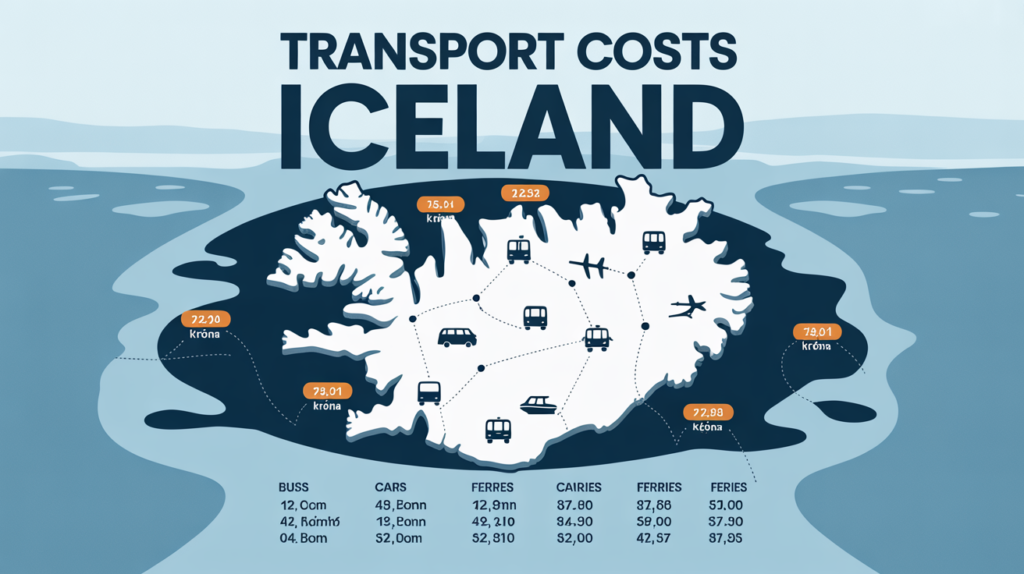
Here is a quick overview of common transportation expenses in Iceland:
| Transport Type | Average Cost |
|---|---|
| Public bus ticket in Reykjavik | $4–$5 |
| Airport transfer | $25–$40 |
| Car rental per day | $60–$200+ |
| Petrol per liter | $2.20–$2.80 |
| Taxi starting fare | $6–$8 |
| Domestic flight | $80–$250 |
| Campervan rental | $100–$300 per day |
Prices can change depending on the season and demand.
Public Transportation Costs in Iceland
Public transport in Iceland mainly consists of buses. There are no trains or metro systems in the country.
Reykjavik Bus System
The bus network in Reykjavik is operated by Strætó. It is the cheapest transportation option for travelers staying in the capital area.
Bus Ticket Prices
- Single adult fare: around $4–$5
- Day pass: around $12
- 3-day pass: around $30
Buses are clean and dependable, but routes outside Reykjavik are limited compared to larger European cities.
Intercity Buses
Long-distance buses connect Reykjavik with popular destinations such as:
- Akureyri
- Vik
- Egilsstaðir
- Ísafjörður
These trips can be expensive.
Typical Long-Distance Bus Costs
| Route | Approximate Price |
|---|---|
| Reykjavik to Vik | $35–$50 |
| Reykjavik to Akureyri | $80–$120 |
| Reykjavik to Jökulsárlón | $90–$150 |
For travelers without a car, buses are useful but not always budget-friendly.
Car Rental Costs in Iceland
Renting a car is one of the most popular ways to explore Iceland. It gives you flexibility and access to remote attractions.
Average Rental Prices
Rental prices depend heavily on season and vehicle type.
Economy Cars
- Winter: $60–$100 per day
- Summer: $120–$200 per day
SUVs and 4×4 Vehicles
- Winter: $120–$180 per day
- Summer: $180–$350 per day
4×4 vehicles are recommended if you plan to drive on F-roads or visit the Highlands.
Additional Rental Expenses
You may also need to pay for:
- Insurance coverage
- Extra drivers
- GPS rental
- Wi-Fi devices
- Parking fees
These extras can significantly increase your total transport costs in Iceland.
Fuel Costs in Iceland
Fuel is one of the biggest transportation expenses for road trippers.
Petrol and Diesel Prices
Iceland often has some of the highest fuel prices in Europe.
Average fuel prices:
- Petrol: $2.20–$2.80 per liter
- Diesel: $2.10–$2.60 per liter
A full tank for a standard car may cost $90–$140.
Fuel Budget for a Ring Road Trip
The Ring Road is approximately 1,332 kilometers long.
Estimated fuel cost for a full Ring Road journey:
- Small car: $250–$400
- SUV or campervan: $400–$700
Fuel stations can also be limited in remote areas, so planning ahead is important.
Taxi Costs in Iceland
Taxis are available in Reykjavik and larger towns, but they are very expensive.
Typical Taxi Prices
| Taxi Service | Approximate Cost |
|---|---|
| Starting fare | $6–$8 |
| Per kilometer | $2–$3 |
| Keflavik Airport to Reykjavik | $140–$180 |
Because of the high costs, most travelers avoid taxis unless absolutely necessary.
Airport Transportation Costs
Most international visitors arrive at Keflavik International Airport, located about 50 kilometers from Reykjavik.
Airport Bus Transfers
Airport shuttle buses are the most common option.
Average cost:
- One-way: $25–$40
- Round-trip: $50–$70
Car Rentals at the Airport
Many travelers rent a car directly from the airport to save on transfer costs.
Campervan Travel Costs in Iceland
Campervans are popular because they combine transportation and accommodation.
Campervan Rental Prices
- Basic campervan: $100–$180 per day
- Large campervan: $180–$350 per day
Additional Campervan Expenses
You may need to budget for:
- Campsite fees
- Fuel
- Insurance
- Cooking supplies
Although campervans are expensive upfront, they can save money on hotels and restaurants.
Domestic Flight Costs in Iceland
Domestic flights are useful for reaching remote regions quickly.
Popular domestic flight routes include:
- Reykjavik to Akureyri
- Reykjavik to Ísafjörður
- Reykjavik to Egilsstaðir
Average Domestic Flight Prices
- One-way ticket: $80–$250
- Round-trip ticket: $160–$450
Flights are faster than buses but can become expensive during peak tourist season.
Cycling Costs in Iceland
Some travelers explore Iceland by bicycle during summer.
Bike Rental Costs
- Standard bike: $30–$50 per day
- Touring bike: $50–$100 per day
Cycling is affordable compared to renting a car, but Iceland’s weather and strong winds can make it challenging.
Parking Costs in Iceland
Parking is usually free in rural areas but often paid in Reykjavik and popular tourist spots.
Average Parking Prices
- Reykjavik city center: $2–$5 per hour
- Tourist attractions: $5–$15 per visit
Some national parks also charge parking fees.
Seasonal Differences in Transport Costs
Transportation costs in Iceland vary greatly by season.
Summer
Summer is the most expensive period because:
- Tourist demand is high
- Rental cars sell out quickly
- Accommodation prices rise
Winter
Winter can be cheaper for rentals and flights, but weather conditions may require:
- 4×4 vehicles
- Extra insurance
- Flexible travel plans
Cheapest Ways to Travel Around Iceland
If you want to reduce transportation expenses, consider these tips:
Travel During the Off-Season
Visiting Iceland in spring or autumn can significantly lower rental and flight costs.
Share Transportation
Splitting rental car and fuel costs with friends or other travelers can save a lot of money.
Book Early
Rental cars and flights are usually much cheaper when booked months in advance.
Use Public Buses
Buses are slower but can reduce overall travel expenses if you stay near major towns.
Choose Fuel-Efficient Vehicles
Small cars consume less fuel and are often cheaper to rent.
Is Renting a Car Worth It in Iceland?
For many travelers, yes.
A rental car allows you to:
- Visit waterfalls and remote landscapes
- Travel at your own pace
- Avoid expensive tours
- Access less crowded areas
However, if you only plan to stay in Reykjavik, public transportation and guided tours may be more cost-effective.
Budget Breakdown for a Week in Iceland
Here’s an example transportation budget for one traveler on a 7-day trip:
| Expense | Estimated Cost |
|---|---|
| Airport transfer | $60 |
| Car rental | $700 |
| Fuel | $250 |
| Parking | $40 |
| Total | $1,050 |
Budget travelers using buses may spend much less.
Final Thoughts on Transport Costs Iceland
Transportation is one of the biggest travel expenses in Iceland, especially for visitors planning road trips or exploring beyond Reykjavik. Rental cars, fuel, and domestic flights can quickly increase your budget, but they also provide access to Iceland’s incredible natural attractions.
For travelers who want freedom and flexibility, renting a car is often worth the expense. Budget-conscious visitors can save money by using buses, traveling off-season, booking early, and sharing transportation costs.
With proper planning, you can manage transport costs in Iceland and still enjoy everything this amazing country has to offer.

Hi, I’m Tanvir, the founder and author of Explore Ireland Now. With a deep love for Ireland and its rich culture, history, and landscapes, I created this site to share everything that makes this beautiful country worth exploring. Whether you’re a local looking for hidden gems or a traveler planning your next adventure, I provide insightful guides, tips, and recommendations to help you experience Ireland to the fullest.
From stunning landscapes to vibrant cities and quaint villages, Ireland is full of wonders waiting to be discovered. Through my personal experiences and research, I aim to bring you the most up-to-date information and inspiration for your journey.
Thank you for visiting Explore Ireland Now—I hope my content helps you uncover all that this incredible country has to offer! If you have any questions or need travel advice, feel free to reach out.