Spain is one of the best countries in Europe to explore by train. With its modern high-speed rail network, scenic regional routes, and convenient city connections, traveling by train in Spain is not just practical—it’s an experience in itself. Whether you’re planning your first trip or looking to refine your travel strategy, this guide will walk you through everything you need to know about train travel in Spain.
Why Choose Train Travel in Spain?
Train travel in Spain offers a unique blend of comfort, speed, and convenience. Compared to buses or rental cars, trains are often faster, more relaxing, and better connected to city centers.
Key Benefits:
- Speed: High-speed trains can reach up to 300 km/h
- Comfort: Spacious seats, quiet cabins, and onboard amenities
- Convenience: Stations are centrally located in major cities
- Eco-friendly: Lower carbon footprint compared to flights
- Scenic views: Enjoy beautiful landscapes without the stress of driving
If you want to travel efficiently between cities like Madrid, Barcelona, Seville, and Valencia, trains are often the best choice.
Understanding Spain’s Train Network
Spain’s railway system is extensive and well-developed. It includes high-speed lines, long-distance trains, and regional connections.
1. High-Speed Trains (AVE)
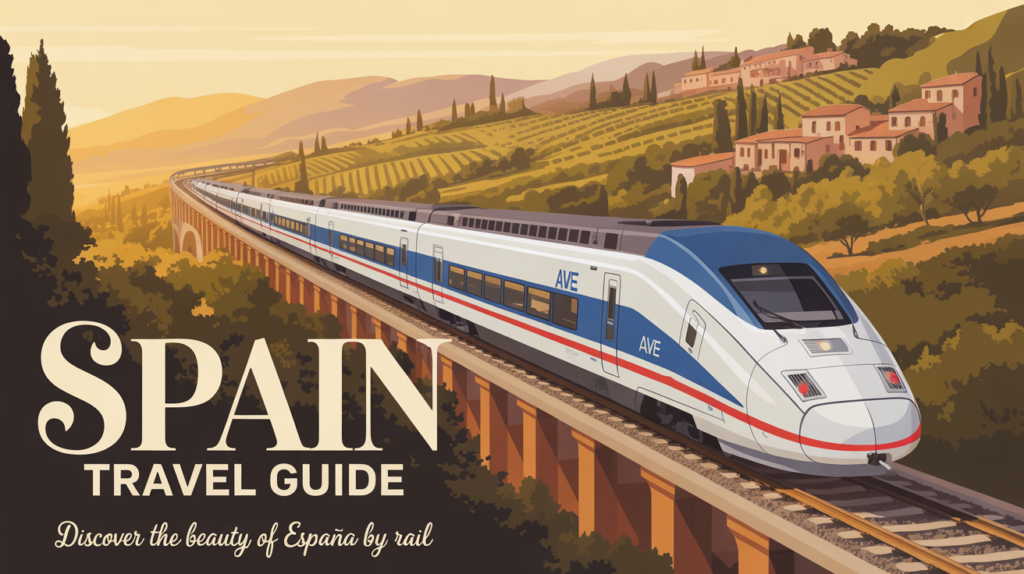
The AVE (Alta Velocidad Española) is Spain’s flagship high-speed train service. It connects major cities quickly and comfortably.
Popular Routes:
- Madrid to Barcelona – around 2.5–3 hours
- Madrid to Seville – about 2.5 hours
- Madrid to Valencia – roughly 1.5–2 hours
Features:
- Comfortable seating with extra legroom
- Power outlets and Wi-Fi (on most trains)
- Quiet and smooth ride
- Food and drink services
AVE trains are ideal if you’re short on time and want a premium experience.
2. Long-Distance Trains
These trains connect cities that may not be on the high-speed network.
Types:
- Alvia: Combines high-speed and conventional tracks
- Euromed: Mediterranean coastal routes
- Intercity: Slower but budget-friendly options
They are a great alternative when AVE routes are unavailable or too expensive.
3. Regional and Local Trains
For shorter distances and smaller towns, regional trains are your go-to option.
Types:
- Media Distancia: Medium-distance routes
- Cercanías: Suburban commuter trains in big cities
These trains are slower but very affordable and useful for exploring beyond major tourist hubs.
Booking Train Tickets in Spain
Booking tickets is straightforward, but knowing a few tips can save you money and stress.
When to Book
- High-speed trains: Book 2–8 weeks in advance for best prices
- Regional trains: Usually don’t require early booking
- Peak seasons: Book early during holidays and summer
Prices increase closer to the departure date, especially for AVE trains.
Where to Book
You can buy tickets through:
- Official railway websites
- Third-party travel platforms
- Train station ticket counters or machines
Mobile tickets are widely accepted, so you don’t always need to print them.
Ticket Classes
Most trains offer different classes:
Standard (Turista)
- Comfortable seating
- Affordable pricing
First Class (Preferente)
- Wider seats
- Complimentary meals (on some routes)
- Lounge access at certain stations
If you’re traveling long distances, upgrading to first class can be worth it.
Spain Rail Pass: Is It Worth It?
If you plan to travel extensively, a rail pass might save you money.
Types of Passes:
- Multi-day passes within a set period
- Flexible passes for selected travel days
Pros:
- Flexibility
- Convenience for multiple trips
Cons:
- Seat reservations may cost extra
- Not always cheaper than individual tickets
Tip: Compare the total cost of individual tickets vs. a rail pass before deciding.
Major Train Routes in Spain
Here are some of the most popular and worthwhile train routes:
Madrid to Barcelona
This is Spain’s busiest and most famous route. The high-speed train makes it quick and comfortable.
Madrid to Seville
A great way to travel from the capital to Andalusia. Fast and scenic.
Barcelona to Valencia
A coastal journey with beautiful Mediterranean views.
Seville to Granada
Perfect for exploring southern Spain’s historic cities.
Train Stations in Spain
Spanish train stations are generally modern, clean, and easy to navigate.
What to Expect:
- Security checks for high-speed trains
- Clear signage in Spanish and English
- Shops, cafes, and waiting areas
- Digital departure boards
Arrive at least 20–30 minutes early for high-speed trains to allow time for security screening.
Tips for a Smooth Train Journey
1. Validate Your Ticket
Some regional trains require ticket validation before boarding.
2. Keep an Eye on Platforms
Platforms may be announced close to departure time, so stay alert.
3. Travel Light
While there’s luggage space, it’s easier to manage smaller bags.
4. Bring Snacks
Although many trains offer food, having your own snacks is always a good idea.
5. Learn Basic Spanish Phrases
Even though many staff speak English, a few Spanish phrases can be helpful.
Luggage Rules
Spain’s trains are relatively relaxed when it comes to luggage.
General Guidelines:
- No strict weight limits (within reason)
- You must handle your own luggage
- Store bags in overhead racks or designated areas
For high-speed trains, there are size limits, but they are usually generous.
Safety and Comfort
Train travel in Spain is considered very safe.
Safety Tips:
- Keep valuables close
- Watch your belongings in busy stations
- Avoid leaving bags unattended
Comfort Tips:
- Choose window seats for scenic routes
- Bring a light jacket (air conditioning can be strong)
- Download entertainment for longer trips
Scenic Train Journeys in Spain
If you want more than just transportation, Spain offers stunning train routes.
Northern Spain (Green Spain)
Travel through lush landscapes, mountains, and coastal views.
Andalusia Routes
Enjoy rolling hills, olive groves, and historic towns.
Coastal Routes
Mediterranean views between cities like Barcelona and Valencia are unforgettable.
Traveling Between Airports and City Centers
Many Spanish cities have train connections directly from airports.
Examples:
- Madrid Airport to city center via commuter train
- Barcelona Airport to central stations
This makes it easy to start your journey right after landing.
Comparing Train Travel vs Other Transport
Train vs Plane
- Train: City-center to city-center, less hassle
- Plane: Faster for very long distances
Train vs Bus
- Train: More comfortable and faster
- Bus: Cheaper but slower
Train vs Car
- Train: Stress-free and no parking issues
- Car: More flexible for rural areas
Best Time to Travel by Train in Spain
Spring (March–May)
- Mild weather
- Fewer crowds
Summer (June–August)
- Busy and expensive
- Book early
Autumn (September–November)
- Pleasant weather
- Great for sightseeing
Winter (December–February)
- Fewer tourists
- Possible discounts
Common Mistakes to Avoid
- Booking tickets too late
- Not checking station names (some cities have multiple stations)
- Arriving too late for high-speed train security checks
- Assuming all trains are high-speed
Planning ahead helps you avoid unnecessary stress.
Final Thoughts
Train travel in Spain is one of the easiest and most enjoyable ways to explore the country. With its fast connections, comfortable trains, and scenic routes, it offers a perfect balance of efficiency and experience.
Whether you’re hopping between major cities or exploring hidden gems, Spain’s rail system makes travel simple and enjoyable. With a bit of planning—booking tickets early, choosing the right routes, and understanding how the system works—you can turn your journey into a highlight of your trip.
So pack your bags, grab your tickets, and get ready to discover Spain—one ट्रेन ride at a time.

Hi, I’m Tanvir, the founder and author of Explore Ireland Now. With a deep love for Ireland and its rich culture, history, and landscapes, I created this site to share everything that makes this beautiful country worth exploring. Whether you’re a local looking for hidden gems or a traveler planning your next adventure, I provide insightful guides, tips, and recommendations to help you experience Ireland to the fullest.
From stunning landscapes to vibrant cities and quaint villages, Ireland is full of wonders waiting to be discovered. Through my personal experiences and research, I aim to bring you the most up-to-date information and inspiration for your journey.
Thank you for visiting Explore Ireland Now—I hope my content helps you uncover all that this incredible country has to offer! If you have any questions or need travel advice, feel free to reach out.