Planning a trip to London can feel exciting and overwhelming at the same time. The city is packed with famous landmarks, historic streets, museums, shopping districts, parks, and food from almost every corner of the world. Whether you are visiting for the first time or returning for another adventure, having a proper London travel plan can help you save time, avoid stress, and enjoy the city more comfortably.
London is one of the most visited cities in the world because it offers something for every type of traveler. History lovers can explore castles and royal palaces, food enthusiasts can try global cuisines, families can enjoy attractions and parks, and solo travelers can easily navigate the city using public transport. A good travel plan helps you balance sightseeing, relaxation, and budgeting so your trip becomes memorable instead of exhausting.
In this guide, you will learn how to organize your London trip step by step, including the best time to visit, transportation tips, accommodation ideas, budgeting advice, famous attractions, food recommendations, and a sample itinerary.
Why You Need a London Travel Plan
London is a large and busy city. Without a travel plan, many visitors waste valuable time trying to decide where to go each day. Attractions are spread across different areas, transportation costs can add up quickly, and queues at popular places can become long.
A proper London travel plan helps you:
- Save money on transport and attractions
- Visit nearby attractions together
- Avoid unnecessary travel time
- Manage your daily schedule better
- Prepare for London’s changing weather
- Enjoy a smoother and more relaxing trip
When you know what to expect before arriving, your entire experience becomes more enjoyable.
Best Time to Visit London
London is a year-round destination, but each season offers a different experience.
Spring (March to May)
Spring is one of the best times to visit London. Parks and gardens start blooming, temperatures become comfortable, and tourist crowds are moderate. It is a great season for walking tours and outdoor sightseeing.
Summer (June to August)
Summer is the busiest tourist season. Days are longer, attractions stay lively, and outdoor events are common. However, hotels and flights are usually more expensive during this period.
Autumn (September to November)
Autumn brings cooler weather and beautiful colors to London’s parks. Crowds become smaller compared to summer, making it a good time for travelers who prefer a calmer experience.
Winter (December to February)
Winter in London can be cold and rainy, but the city looks magical during Christmas. Holiday lights, festive markets, and winter decorations attract many visitors in December.
How Many Days Do You Need in London?
The ideal trip length depends on your travel style and interests.
- 3 Days: Enough to see major landmarks
- 5 Days: Perfect for first-time visitors
- 7 Days or More: Best for exploring hidden gems and nearby destinations
If this is your first trip, five days is usually the best balance between sightseeing and relaxation.
Budget Planning for London
London is known for being expensive, but careful planning can help you control costs.
Accommodation Budget
- Budget hostels: Affordable for solo travelers
- Mid-range hotels: Comfortable for families and couples
- Luxury hotels: Available in central tourist areas
Staying slightly outside the city center can reduce accommodation expenses significantly.
Food Budget
London has options for every budget.
- Street food markets are affordable
- Cafes offer budget breakfast deals
- Restaurants range from casual dining to luxury experiences
You can save money by mixing restaurant meals with supermarket snacks and quick takeaway options.
Transportation Budget
Public transportation is usually the cheapest and easiest way to move around London. Using an Oyster Card or contactless payment can reduce transport costs compared to buying paper tickets.
Attraction Budget
Many famous museums in London are free to enter. However, attractions like observation decks, palace tours, and special exhibitions often require paid tickets.
Booking tickets online in advance can sometimes help you save money and avoid long lines.
Where to Stay in London
Choosing the right area is an important part of your London travel plan.
Central London
Best for first-time visitors who want easy access to famous attractions. Hotels here are more expensive, but transportation time is shorter.
South Bank
Known for riverside views, entertainment, and cultural attractions. This area offers a lively atmosphere with good transport connections.
Kensington
A quieter and elegant neighborhood with museums, cafes, and parks. Popular among families and couples.
Camden
Perfect for travelers who enjoy music, markets, and nightlife. Camden has a creative and youthful vibe.
Paddington
A convenient area for travelers arriving by train or airport transfer services. It also provides good access to multiple underground lines.
Transportation in London
London’s transportation system is one of the best in the world.
London Underground
The Underground, also known as the Tube, is the fastest way to travel across the city. Stations are clearly marked, and trains run frequently.
Tips for using the Tube:
- Download a London transport map
- Avoid rush hours when possible
- Stand on the right side of escalators
- Use contactless cards or Oyster Cards
London Buses
Buses are cheaper than the Tube and offer scenic city views. Double-decker buses are also a fun experience for tourists.
Walking
Many attractions are closer than they appear on the map. Walking allows you to discover hidden streets, cafes, and historic buildings.
Taxis and Ride Sharing
Black cabs are iconic but can be expensive. Ride-sharing services are often cheaper for longer trips or late-night travel.
Top Attractions to Include in Your London Travel Plan
London offers endless attractions, but some places should definitely be part of your itinerary.
Buckingham Palace
One of London’s most famous landmarks, Buckingham Palace is the official residence of the British monarch. Visitors often gather to watch the Changing of the Guard ceremony.
Tower of London
This historic castle has served as a royal palace, prison, and treasury. It is also home to the Crown Jewels.
Big Ben and Houses of Parliament
Big Ben is one of the most recognizable symbols of London. The nearby Westminster area is full of historic importance.
London Eye
The London Eye offers panoramic views of the city skyline. Evening rides provide especially beautiful views.
Tower Bridge
Often mistaken for London Bridge, Tower Bridge is one of the city’s most photographed landmarks.
British Museum
This museum contains artifacts from around the world, including ancient Egyptian treasures and Greek sculptures. Entry to the main museum is free.
Natural History Museum
Perfect for families and science lovers, this museum features dinosaur skeletons, gemstones, and interactive exhibits.
Hyde Park
A peaceful escape from busy city streets. Visitors can enjoy boating, walking, cycling, and picnics.
Camden Market
One of London’s most popular markets for street food, vintage fashion, crafts, and music culture.
Covent Garden
Known for shopping, entertainment, restaurants, and street performances.
Food to Try in London
London’s food scene is incredibly diverse.
Traditional British Foods
- Fish and chips
- Full English breakfast
- Sunday roast
- Shepherd’s pie
International Cuisine
London is famous for multicultural dining options, including:
- Indian curries
- Chinese cuisine
- Middle Eastern food
- Italian restaurants
- Turkish kebabs
Street Food Markets
Markets are excellent for affordable and delicious meals.
Popular food markets include:
- Borough Market
- Camden Market
- Brick Lane Food Stalls
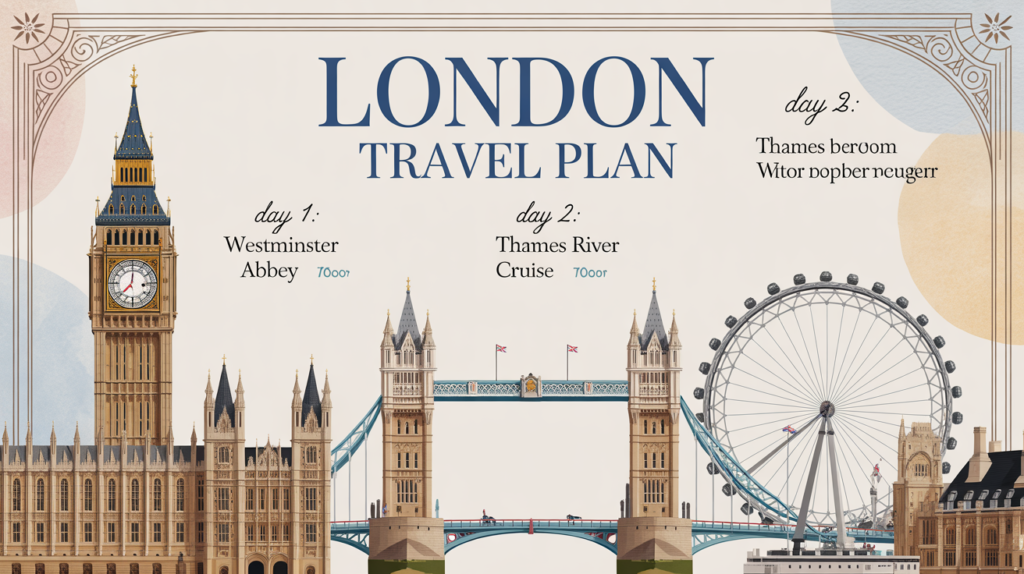
Sample 5-Day London Travel Plan
Day 1: Classic London Landmarks
Start your trip with the city’s most famous attractions.
Visit:
- Buckingham Palace
- Westminster Abbey
- Big Ben
- London Eye
Spend the evening walking along the South Bank.
Day 2: History and Museums
Explore London’s rich history.
Visit:
- Tower of London
- Tower Bridge
- British Museum
End the day with dinner at a traditional British pub.
Day 3: Markets and Shopping
Discover London’s creative side.
Visit:
- Camden Market
- Oxford Street
- Covent Garden
Enjoy live street performances and local food.
Day 4: Parks and Culture
Take a slower and more relaxing day.
Visit:
- Hyde Park
- Kensington Gardens
- Natural History Museum
You can also enjoy afternoon tea at a local cafe.
Day 5: Hidden Gems and Local Experiences
Spend your final day exploring lesser-known places.
Ideas include:
- Notting Hill
- Greenwich
- Shoreditch street art
- Thames river cruise
Tips for Saving Money in London
London can be expensive, but these tips can help reduce costs.
Use Free Attractions
Many museums and galleries are completely free.
Buy Attraction Passes Carefully
Tourist passes can save money if you plan to visit many paid attractions in a short period.
Stay Outside Tourist Areas
Hotels outside central London are usually cheaper.
Use Public Transport
Avoid relying heavily on taxis.
Eat at Markets
Street food markets often provide better value than tourist restaurants.
Safety Tips for Travelers
London is generally safe, but travelers should still stay careful.
- Keep valuables secure in crowded places
- Be aware of pickpockets on public transport
- Use licensed taxis or trusted ride-sharing apps
- Follow local transport rules
- Keep emergency contacts saved on your phone
It is also helpful to carry a portable charger while exploring the city all day.
What to Pack for London
London weather can change quickly, even during summer.
Recommended items include:
- Comfortable walking shoes
- Light waterproof jacket
- Umbrella
- Portable charger
- Travel adapter
- Reusable water bottle
Layered clothing works best because temperatures can change throughout the day.
Day Trips from London
If you have extra time, several destinations near London are worth visiting.
Windsor
Famous for Windsor Castle and royal history.
Oxford
Known for its historic university and beautiful architecture.
Bath
Popular for Roman baths and Georgian buildings.
Stonehenge
One of the world’s most famous prehistoric monuments.
Brighton
A seaside city known for beaches and a relaxed atmosphere.
Common Mistakes to Avoid
Many travelers make similar mistakes during their first London trip.
Trying to See Too Much
London has endless attractions, but packing too many activities into one day can become exhausting.
Ignoring Transport Zones
Understanding transport zones helps avoid unnecessary travel costs.
Underestimating Walking
Even with public transport, London involves a lot of walking.
Not Booking Popular Attractions Early
Some attractions sell out during busy seasons.
Forgetting Weather Preparation
Rain can happen unexpectedly, so always carry a light umbrella or waterproof jacket.
Final Thoughts
A well-organized London travel plan can completely change your experience in the city. Instead of rushing from place to place, you can enjoy London more comfortably and confidently. From royal landmarks and world-class museums to vibrant markets and peaceful parks, the city offers endless opportunities for unforgettable memories.
The key to a successful London trip is balance. Mix famous attractions with local experiences, busy sightseeing days with relaxing moments, and planned activities with free exploration time. Whether you are traveling solo, with family, or with friends, London has something special waiting for you.
By planning your accommodation, transportation, budget, and daily itinerary in advance, you can focus less on stress and more on enjoying everything this incredible city has to offer.

Hi, I’m Tanvir, the founder and author of Explore Ireland Now. With a deep love for Ireland and its rich culture, history, and landscapes, I created this site to share everything that makes this beautiful country worth exploring. Whether you’re a local looking for hidden gems or a traveler planning your next adventure, I provide insightful guides, tips, and recommendations to help you experience Ireland to the fullest.
From stunning landscapes to vibrant cities and quaint villages, Ireland is full of wonders waiting to be discovered. Through my personal experiences and research, I aim to bring you the most up-to-date information and inspiration for your journey.
Thank you for visiting Explore Ireland Now—I hope my content helps you uncover all that this incredible country has to offer! If you have any questions or need travel advice, feel free to reach out.