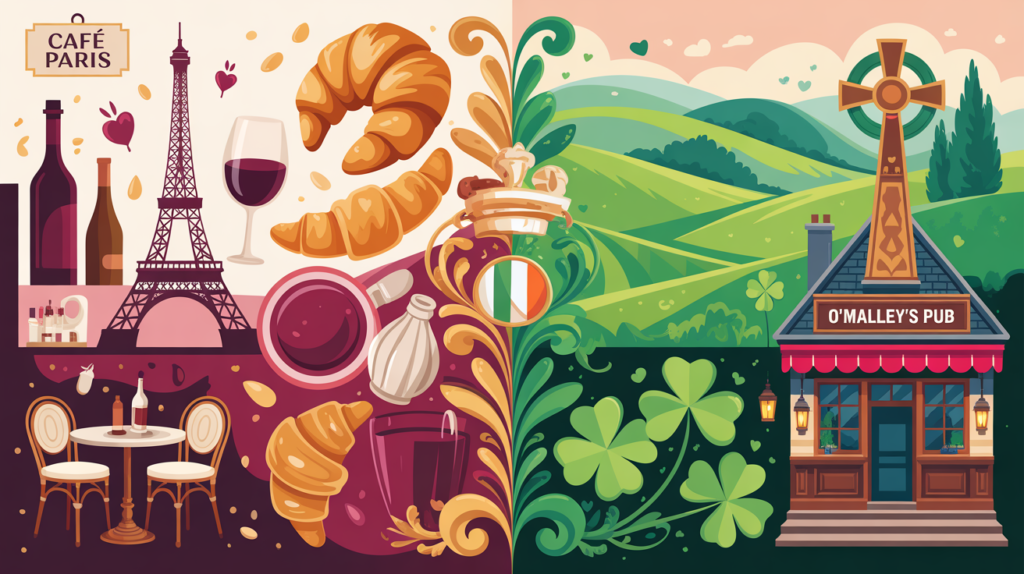
France and Ireland are two of Europe’s most admired countries, each offering a rich history, unique traditions, and strong cultural identities. While both nations share a love for community, storytelling, and great food, their cultures differ in many interesting ways. From language and cuisine to social customs and celebrations, French and Irish culture reflect the history and character of their people.
In this article, we will explore the key differences and similarities between French and Irish culture and discover what makes each country so special.
Overview of French and Irish Culture
French culture is often associated with elegance, art, fashion, fine dining, and romance. France has influenced global culture for centuries through literature, philosophy, architecture, and cuisine.
Irish culture, on the other hand, is deeply rooted in folklore, music, hospitality, and community spirit. Ireland is famous for its warm people, traditional music sessions, and strong connection to history and storytelling.
Despite their differences, both cultures value heritage, family, and national pride.
Language and Communication
One of the biggest cultural differences between France and Ireland is language.
In France, French is the official language and plays a central role in national identity. The French take great pride in preserving their language and culture. Conversations in France can sometimes feel formal, especially when meeting someone for the first time.
Ireland primarily speaks English, although Irish Gaelic is also an official language and remains an important part of Irish heritage. Irish communication is often more casual and friendly. Humor and storytelling are common in everyday conversations.
Key Differences
| French Culture | Irish Culture |
|---|---|
| More formal communication | More relaxed communication |
| Strong emphasis on French language | English widely spoken |
| Direct conversational style | Humorous and indirect style |
| Professional etiquette important | Friendly and approachable attitude |
Food and Dining Traditions
Food is a major part of both French and Irish culture, but the styles are very different.
French Cuisine
French cuisine is world-famous for its sophistication and variety. Meals are often treated as special social experiences rather than quick necessities. Multi-course dining, cheese, pastries, wine, and gourmet cooking are central to French food culture.
Popular French dishes include:
- Croissants
- Coq au vin
- Ratatouille
- Crêpes
- Baguettes
Dining etiquette is also important in France. People usually take their time eating and enjoy long conversations during meals.
Irish Cuisine
Traditional Irish food is simpler and heartier. Irish meals often focus on comfort and locally sourced ingredients like potatoes, meat, butter, and seafood.
Popular Irish dishes include:
- Irish stew
- Soda bread
- Boxty
- Colcannon
- Full Irish breakfast
Irish pubs also play an important cultural role. They are social gathering places where people enjoy music, conversation, and community.
Music and Entertainment
Music is deeply important in both countries, though the styles differ greatly.
French Music and Arts
France has a long tradition of classical music, opera, cinema, and visual arts. Paris is known globally for museums, theaters, and artistic innovation. French music often emphasizes lyrical beauty and emotional expression.
Irish Music Tradition
Ireland is famous for traditional folk music featuring instruments such as:
- Fiddle
- Tin whistle
- Bodhrán
- Uilleann pipes
Live music sessions in pubs are a major part of Irish social life. Singing and storytelling are often informal and community-driven.
Irish dance has also become internationally popular thanks to shows like Riverdance.
Social Life and Hospitality
Irish people are often viewed as extremely friendly and welcoming. Conversations with strangers are common, especially in smaller towns and villages. Hospitality is a defining feature of Irish culture.
French society can appear more reserved initially, especially in urban areas like Paris. However, once relationships are formed, friendships can become deep and long-lasting.
Social Differences
In France:
- Personal privacy is respected
- Formal greetings matter
- Social etiquette is important
- Fashion and presentation are valued
In Ireland:
- Casual conversations are common
- Humor is central to communication
- Community gatherings are important
- People are generally very approachable
Festivals and Celebrations
Both countries celebrate unique cultural festivals that reflect their traditions.
French Festivals
France hosts many famous cultural events, including:
- Bastille Day
- Cannes Film Festival
- Tour de France
- Nice Carnival
These events often focus on art, history, and national pride.
Irish Festivals
Ireland is known for lively and community-focused celebrations such as:
- St. Patrick’s Day
- Galway International Arts Festival
- Fleadh Cheoil
- Puck Fair
Irish festivals frequently include music, dancing, and local traditions.
Fashion and Lifestyle
France is globally recognized for fashion and luxury. Cities like Paris are considered fashion capitals, and personal style is highly valued in French culture.
Ireland tends to have a more relaxed and practical approach to fashion. Comfort, weather resistance, and casual clothing are more common in everyday life.
Lifestyle differences are also noticeable:
| France | Ireland |
|---|---|
| Café culture is popular | Pub culture is popular |
| Long dining experiences | Social gatherings over drinks |
| Fashion-focused society | Casual and relaxed atmosphere |
| Urban sophistication | Community-centered lifestyle |
History and Cultural Identity
French identity is strongly connected to art, philosophy, revolution, and intellectual achievement. France has historically played a major role in shaping European politics and culture.
Irish identity is deeply tied to resilience, independence, and storytelling. Ireland’s history of colonization, emigration, and cultural preservation has shaped a strong sense of national pride.
Both countries place enormous importance on preserving their traditions and historical heritage.
Similarities Between French and Irish Culture
Although there are many differences, French and Irish culture share several similarities:
- Strong national pride
- Appreciation for good food and drink
- Rich literary traditions
- Deep historical roots
- Love of music and celebration
- Importance of family and friendship
People in both countries also value enjoying life and spending time with loved ones.
Which Culture Is More Friendly?
This question depends largely on personal experience.
Irish culture is generally viewed as more openly friendly and conversational, especially toward visitors. French culture may seem more formal at first, but many travelers discover warmth and kindness once they understand local customs and etiquette.
Neither culture is better than the other — they simply express hospitality differently.
Travel Experience in France vs Ireland
Travelers often describe France as elegant, artistic, and sophisticated, while Ireland feels cozy, welcoming, and deeply connected to nature.
France Is Ideal For:
- Art lovers
- Food enthusiasts
- Fashion fans
- Architecture lovers
- Luxury travel
Ireland Is Ideal For:
- Nature lovers
- Pub culture enthusiasts
- Music lovers
- Road trips
- Friendly local experiences
Both destinations offer unforgettable experiences.
Final Thoughts
French and Irish culture are beautifully unique in their own ways. France offers sophistication, artistic heritage, and culinary excellence, while Ireland provides warmth, music, storytelling, and strong community spirit.
Experiencing both cultures allows travelers to appreciate the diversity of Europe and understand how history, geography, and tradition shape national identity.
Whether you prefer the charming cafés of France or the lively pubs of Ireland, both cultures have something extraordinary to offer.

Hi, I’m Tanvir, the founder and author of Explore Ireland Now. With a deep love for Ireland and its rich culture, history, and landscapes, I created this site to share everything that makes this beautiful country worth exploring. Whether you’re a local looking for hidden gems or a traveler planning your next adventure, I provide insightful guides, tips, and recommendations to help you experience Ireland to the fullest.
From stunning landscapes to vibrant cities and quaint villages, Ireland is full of wonders waiting to be discovered. Through my personal experiences and research, I aim to bring you the most up-to-date information and inspiration for your journey.
Thank you for visiting Explore Ireland Now—I hope my content helps you uncover all that this incredible country has to offer! If you have any questions or need travel advice, feel free to reach out.