Scotland is known for its beautiful landscapes, rich history, and delicious traditional cuisine. But if you are planning to live in, study in, or travel around Scotland, understanding food prices is essential for managing your budget. Whether you shop at supermarkets, eat out occasionally, or prefer cooking at home, food costs in Scotland can vary depending on the city, shopping habits, and lifestyle choices.
In this guide, we will explore average food prices in Scotland, supermarket costs, restaurant prices, factors affecting food expenses, and practical ways to save money on groceries.
Average Food Costs in Scotland
Food prices in Scotland are generally considered moderate compared to other parts of the UK. However, costs have increased in recent years due to inflation, transportation expenses, and energy prices.
On average:
- A single person may spend around £150–£300 per month on groceries.
- A family of four can expect to spend between £500–£900 monthly depending on eating habits.
- Students often spend less by using discount supermarkets and cooking at home.
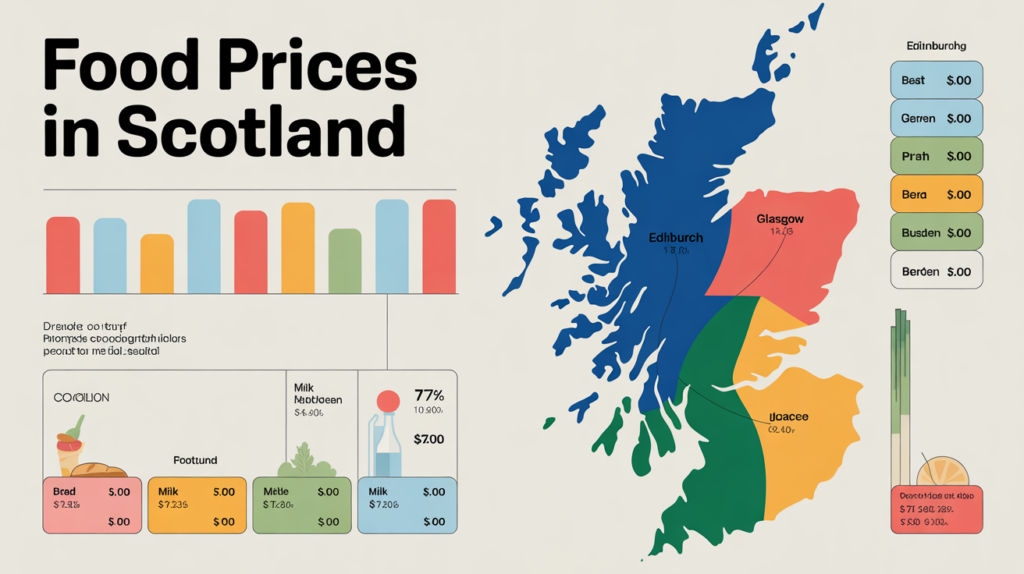
Large cities such as Edinburgh and Glasgow may have slightly higher food prices than smaller towns and rural areas.
Grocery Prices in Scotland
Here are some common grocery prices you may find in Scottish supermarkets:
| Food Item | Average Price |
|---|---|
| Milk (1 litre) | £1.10–£1.50 |
| Bread (loaf) | £1.00–£2.00 |
| Eggs (12 pack) | £2.00–£3.50 |
| Rice (1kg) | £1.50–£3.00 |
| Chicken Breast (1kg) | £6.00–£10.00 |
| Apples (1kg) | £2.00–£3.50 |
| Potatoes (2kg) | £2.00–£4.00 |
| Cheese (500g) | £3.00–£5.50 |
| Pasta (500g) | £0.80–£2.00 |
| Bottled Water (1.5L) | £0.70–£1.50 |
Prices can change based on brand choice, store location, and seasonal demand.
Popular Supermarkets in Scotland
Scotland has several major supermarket chains that cater to different budgets.
Budget-Friendly Supermarkets
These stores are popular among students and families looking to save money:
These supermarkets often offer lower prices on vegetables, frozen food, and household items.
Mid-Range Supermarkets
For a balance between quality and affordability:
These stores frequently provide loyalty card discounts and meal deals.
Premium Grocery Stores
For higher-end products and specialty foods:
Prices are generally higher, but many shoppers appreciate the quality and selection.
Restaurant Prices in Scotland
Eating out in Scotland can range from affordable takeaway meals to luxury fine dining experiences.
Fast Food Prices
Typical fast food costs include:
- Burger meal: £6–£10
- Pizza takeaway: £10–£18
- Fish and chips: £8–£15
- Coffee: £3–£5
Casual Restaurant Prices
At a standard restaurant, you may pay:
- Main course: £12–£25
- Three-course meal for two: £40–£80
- Soft drink: £2–£4
Fine Dining Costs
High-end restaurants in cities like Aberdeen or Edinburgh can cost significantly more, especially at award-winning establishments.
Traditional Scottish Foods and Their Prices
Scotland offers many famous local dishes that visitors often want to try.
Haggis
Haggis is one of Scotland’s most iconic foods. A supermarket haggis may cost £3–£8, while restaurant servings are usually more expensive.
Scottish Salmon
Fresh Scottish salmon is highly regarded worldwide. Prices usually range from £5–£12 depending on portion size and quality.
Shortbread
Traditional Scottish shortbread is widely available and costs around £1–£5 per pack depending on the brand.
Scotch Pie
A popular snack in Scotland, Scotch pies are affordable and often cost between £1.50–£4.
Why Food Prices Vary in Scotland
Several factors affect food prices across Scotland:
Location
Urban areas often have slightly higher prices than smaller towns. Remote Highlands and island communities may also face higher costs due to transportation challenges.
Inflation
Like many countries, Scotland has experienced rising food prices due to inflation and supply chain disruptions.
Seasonal Availability
Fresh fruits and vegetables can become more expensive during winter months when imported produce is required.
Imported Goods
Imported international products usually cost more than locally produced foods.
How Students Save Money on Food in Scotland
Scotland is home to many international students, and saving money on food is important for managing living expenses.
Popular money-saving strategies include:
- Shopping at discount supermarkets
- Buying supermarket own-brand products
- Cooking meals at home
- Using student discount apps
- Purchasing food in bulk
- Looking for reduced-price evening items
Many students also use weekly meal planning to avoid unnecessary spending.
Is Food Expensive in Scotland Compared to Other Countries?
Compared to many European countries, food prices in Scotland are moderate. Grocery shopping can be affordable if you buy local products and avoid frequent restaurant meals.
However, visitors from countries with lower living costs may still find Scottish food prices relatively expensive, particularly in tourist-heavy areas.
Tips for Saving Money on Food in Scotland
If you want to reduce your food expenses while living or traveling in Scotland, consider these practical tips:
Shop at Discount Stores
Stores like Aldi and Lidl usually offer the best prices for everyday groceries.
Use Loyalty Cards
Many supermarkets provide discounts through loyalty programs and mobile apps.
Buy Seasonal Produce
Seasonal fruits and vegetables are often fresher and cheaper.
Avoid Convenience Stores
Small convenience shops typically charge higher prices than large supermarkets.
Cook at Home
Preparing meals at home can significantly reduce your monthly food spending.
Final Thoughts
Food prices in Scotland depend heavily on your lifestyle, shopping habits, and location. While restaurant dining and premium groceries can be expensive, there are many affordable options available for students, families, and travelers.
By shopping smartly, comparing supermarket prices, and cooking at home when possible, you can comfortably manage your food budget while enjoying Scotland’s diverse and flavorful cuisine.

Hi, I’m Tanvir, the founder and author of Explore Ireland Now. With a deep love for Ireland and its rich culture, history, and landscapes, I created this site to share everything that makes this beautiful country worth exploring. Whether you’re a local looking for hidden gems or a traveler planning your next adventure, I provide insightful guides, tips, and recommendations to help you experience Ireland to the fullest.
From stunning landscapes to vibrant cities and quaint villages, Ireland is full of wonders waiting to be discovered. Through my personal experiences and research, I aim to bring you the most up-to-date information and inspiration for your journey.
Thank you for visiting Explore Ireland Now—I hope my content helps you uncover all that this incredible country has to offer! If you have any questions or need travel advice, feel free to reach out.