Iceland is known for its stunning waterfalls, volcanoes, glaciers, and Northern Lights, but it is also famous for being one of the most expensive countries in the world. Many travelers are surprised when they see the cost of groceries, restaurant meals, and everyday food items. Understanding food prices in Iceland can help visitors budget properly and avoid unnecessary surprises during their trip.
In this guide, you’ll learn about the average cost of groceries, restaurant meals, fast food, drinks, and tips to save money while eating in Iceland.
Why Food Is Expensive in Iceland
Several factors contribute to the high cost of food in Iceland:
- Iceland imports many food products because of its cold climate.
- Transportation and shipping costs are high.
- Wages in Iceland are relatively high.
- Taxes and operational expenses increase retail prices.
- Iceland’s small population limits large-scale production.
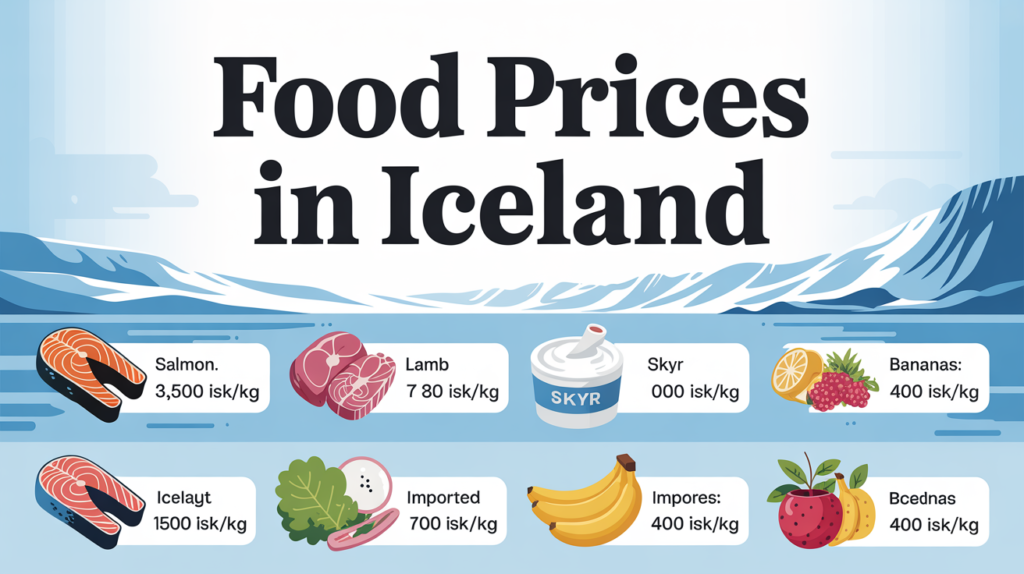
Although some locally produced foods like fish and lamb are more affordable than imported products, overall food costs remain higher than in many other countries.
Average Grocery Prices in Iceland
Supermarket prices vary depending on the store and location. Budget supermarkets are cheaper than convenience stores or shops in tourist areas.
Here are some common grocery prices in Iceland:
| Food Item | Average Price |
|---|---|
| Milk (1 liter) | $1.80–$2.50 |
| Bread loaf | $3–$5 |
| Eggs (12) | $5–$7 |
| Rice (1 kg) | $3–$5 |
| Chicken breast (1 kg) | $15–$22 |
| Beef (1 kg) | $20–$35 |
| Apples (1 kg) | $3–$5 |
| Bananas (1 kg) | $2–$4 |
| Potatoes (1 kg) | $2–$4 |
| Cheese (1 kg) | $12–$20 |
| Bottled water | $2–$4 |
Imported fruits, vegetables, and snacks usually cost more than locally sourced products.
Cheapest Supermarkets in Iceland
If you want to reduce your food expenses, choosing the right supermarket is important.
Budget-Friendly Grocery Stores
- Bonus
- Kronan
- Netto
These stores are usually cheaper than convenience stores and gas station markets.
More Expensive Stores
- 10-11
- Small tourist-area shops
- Gas station convenience stores
Convenience stores may charge significantly higher prices, especially in remote areas.
Restaurant Prices in Iceland
Dining out in Iceland can quickly become expensive, especially in popular tourist destinations like Reykjavík.
Here are some average restaurant prices:
| Meal Type | Average Cost |
|---|---|
| Budget restaurant meal | $20–$35 |
| Mid-range restaurant dinner | $40–$80 per person |
| Fast food combo meal | $15–$20 |
| Pizza | $18–$30 |
| Coffee | $4–$7 |
| Beer | $10–$15 |
Many restaurants also charge extra for drinks, making the final bill even higher.
Fast Food Prices in Iceland
Fast food is slightly cheaper than traditional restaurants but still expensive compared to many countries.
Popular fast-food meals typically cost:
- Burger combo meal: $15–$20
- Hot dog: $4–$7
- Sandwich: $8–$12
- Fries: $5–$7
Icelandic hot dogs are famous among tourists and are often considered one of the more affordable food options.
Food Prices at Gas Stations
Travelers driving around Iceland often stop at gas stations for meals and snacks. However, food at gas stations is usually more expensive.
Typical prices include:
- Sandwiches: $8–$12
- Coffee: $4–$6
- Hot meals: $15–$25
- Snacks: Higher than supermarket prices
Buying groceries before long road trips can save money.
Alcohol Prices in Iceland
Alcohol is heavily taxed in Iceland, making it extremely expensive.
Average prices include:
| Alcohol Item | Average Price |
|---|---|
| Beer at bar | $10–$15 |
| Wine bottle | $20–$40 |
| Cocktail | $15–$25 |
Alcohol can only be purchased from government-run stores called Vínbúðin, except for drinks served in restaurants and bars.
Many travelers buy alcohol at the airport duty-free shop after arrival to save money.
Breakfast Prices in Iceland
Hotels often include breakfast, which can help reduce food expenses. If breakfast is not included, expect to pay:
- Bakery breakfast: $10–$20
- Café breakfast: $15–$30
- Hotel breakfast buffet: $20–$40
Buying yogurt, bread, fruit, and cereal from supermarkets is usually the cheapest option.
Seafood Prices in Iceland
Because Iceland is surrounded by the ocean, seafood is an important part of the local diet.
Popular seafood dishes include:
- Cod
- Salmon
- Arctic char
- Lobster soup
Restaurant seafood meals generally cost between $25 and $60 depending on the restaurant and location.
Fresh fish from supermarkets is often much cheaper than dining out.
Is Food Cheaper Outside Reykjavík?
Food prices outside Reykjavík can sometimes be slightly higher because of transportation costs and limited store options.
Remote tourist destinations often have:
- Fewer supermarkets
- More expensive restaurants
- Higher convenience store prices
Stocking up on groceries in larger towns can help travelers save money during road trips.
Tips to Save Money on Food in Iceland
Traveling in Iceland does not have to destroy your budget. Here are practical ways to spend less on food:
Shop at Budget Supermarkets
Bonus and Kronan usually offer the best prices.
Cook Your Own Meals
If your accommodation has a kitchen, preparing meals yourself can save a large amount of money.
Carry Snacks
Bringing snacks for road trips helps avoid expensive gas station purchases.
Drink Tap Water
Icelandic tap water is clean, safe, and free. Buying bottled water is unnecessary.
Avoid Tourist Restaurants
Restaurants near major attractions are often much more expensive.
Buy Duty-Free Alcohol
Airport duty-free shops offer significantly lower alcohol prices than bars and liquor stores.
Typical Daily Food Budget in Iceland
Your daily food budget depends on your travel style.
| Travel Style | Estimated Daily Food Cost |
|---|---|
| Budget traveler | $20–$40 |
| Mid-range traveler | $50–$100 |
| Luxury traveler | $120+ |
Cooking your own meals can dramatically reduce costs.
Are Food Prices in Iceland Worth It?
Although Iceland is expensive, many visitors feel the experience is worth the cost. Food quality is generally high, ingredients are fresh, and Icelandic seafood and lamb are well known for their taste.
The key is planning ahead and understanding what to expect before arriving.
Final Thoughts
Food prices in Iceland are undeniably high, especially for travelers coming from countries with lower living costs. Groceries, restaurant meals, snacks, and alcohol can quickly increase your travel expenses if you are not prepared.
However, with smart budgeting, shopping at affordable supermarkets, and cooking some meals yourself, it is possible to enjoy Iceland without overspending on food. Whether you are exploring glaciers, waterfalls, or black sand beaches, understanding Iceland’s food costs will help you plan a more comfortable and stress-free trip.

Hi, I’m Tanvir, the founder and author of Explore Ireland Now. With a deep love for Ireland and its rich culture, history, and landscapes, I created this site to share everything that makes this beautiful country worth exploring. Whether you’re a local looking for hidden gems or a traveler planning your next adventure, I provide insightful guides, tips, and recommendations to help you experience Ireland to the fullest.
From stunning landscapes to vibrant cities and quaint villages, Ireland is full of wonders waiting to be discovered. Through my personal experiences and research, I aim to bring you the most up-to-date information and inspiration for your journey.
Thank you for visiting Explore Ireland Now—I hope my content helps you uncover all that this incredible country has to offer! If you have any questions or need travel advice, feel free to reach out.