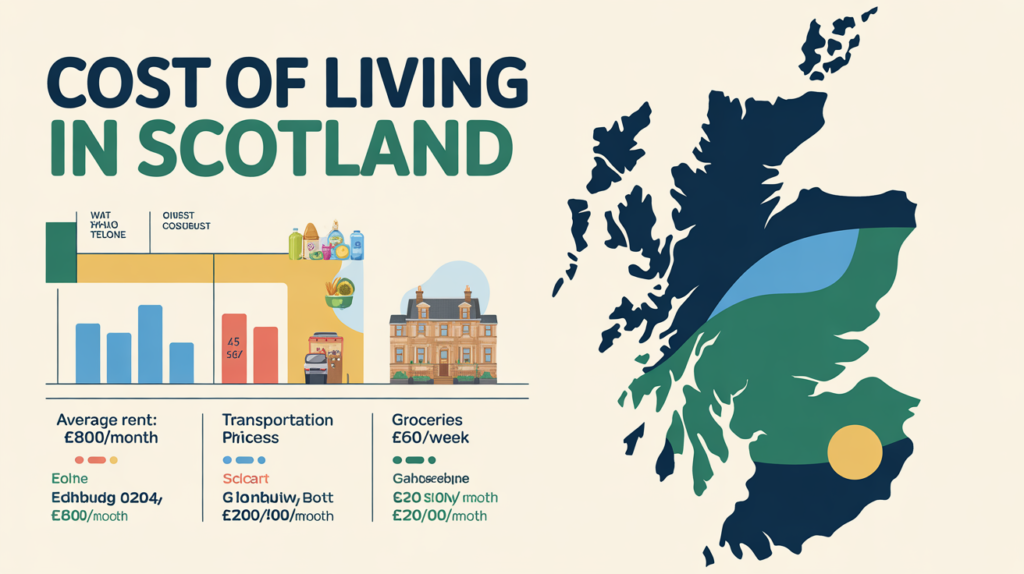
Scotland has become an increasingly popular place to live for students, professionals, retirees, and families looking for a balance between affordability and quality of life. Compared to many parts of England, especially London, Scotland often provides lower housing costs, excellent public services, and beautiful surroundings. However, the actual cost of living depends on where you choose to live and the lifestyle you want to maintain.
From historic cities like Edinburgh to more affordable locations such as Dundee or Inverness, Scotland offers options for different budgets. Before moving or planning a long-term stay, it is important to understand the typical expenses you may face each month.
Average Monthly Expenses in Scotland
A single person living comfortably in Scotland may spend between £1,100 and £1,700 per month, including rent. Families usually require a larger budget, particularly in bigger cities.
Common monthly expenses include:
- Rent and accommodation
- Utility bills
- Groceries
- Public transport
- Internet and mobile services
- Entertainment and dining
- Healthcare and personal expenses
Your total costs will vary depending on your housing choice and spending habits.
Housing Costs in Scotland
Accommodation is usually the largest monthly expense. Rental prices differ significantly between cities and rural areas.
Edinburgh
Edinburgh is Scotland’s capital and one of the most expensive places to live in the country. Renting a one-bedroom apartment in the city centre can cost between £950 and £1,500 per month. Areas outside the centre are generally more affordable.
The city is especially popular among students, tourists, and professionals, which keeps rental demand high throughout the year.
Glasgow
Glasgow is often considered more affordable than Edinburgh while still offering strong job opportunities, nightlife, and cultural attractions. A one-bedroom flat typically costs between £750 and £1,100 per month depending on the location.
Many people choose Glasgow because it provides a lower cost of living without sacrificing city life.
Smaller Scottish Cities
Cities like Dundee, Aberdeen, Perth, and Inverness usually offer cheaper housing options. In smaller towns, rental prices can start from around £550 to £800 monthly for a decent apartment.
Living outside major city centres can help reduce overall expenses significantly.
Utility Bills
Scotland’s colder climate means heating costs can be an important part of monthly spending, especially during winter.
Typical utility bills may include:
- Electricity
- Gas
- Water
- Heating
- Waste collection
For a small apartment, monthly utility costs often range from £120 to £220. Larger homes may cost considerably more during colder months.
Internet services usually cost between £25 and £40 monthly depending on the speed and provider.
Grocery Prices in Scotland
Food prices in Scotland are similar to the rest of the UK, although shopping habits can make a big difference in your budget.
A single adult may spend around £180 to £300 per month on groceries. Families will naturally spend more depending on household size and dietary preferences.
Popular supermarkets include:
- Tesco
- Aldi
- Lidl
- Asda
- Morrisons
- Sainsbury’s
Discount supermarkets like Aldi and Lidl are popular for reducing food costs.
Average Grocery Costs
| Grocery Item | Average Price |
|---|---|
| Bread | £1.20 – £1.50 |
| Milk (1 litre) | £1.10 – £1.30 |
| Eggs (12 pack) | £2 – £3 |
| Chicken breast (1kg) | £6 – £8 |
| Rice (1kg) | £1.50 – £2.50 |
| Apples (1kg) | £2 – £3 |
Cooking at home regularly can help keep food expenses manageable.
Transportation Expenses
Scotland has a reliable public transport system, particularly in larger cities.
Public Transport
Monthly transport passes usually cost between £60 and £100 depending on the city and travel zones.
Transport options include:
- Buses
- Trains
- Trams in Edinburgh
- Glasgow Subway
- Regional rail services
Students and young people may qualify for discounted travel schemes.
Driving Costs
Owning a car in Scotland includes additional expenses such as:
- Fuel
- Insurance
- Parking
- Road tax
- Maintenance
Fuel prices can fluctuate, but many people living in city centres prefer public transport to save money.
Healthcare Costs
One major financial advantage of living in Scotland is access to the National Health Service (NHS).
Residents generally receive:
- Free GP appointments
- Free hospital treatment
- Free emergency care
- Free prescriptions in Scotland
This can greatly reduce healthcare costs compared to countries with private healthcare systems.
Private healthcare is available for those who prefer faster appointments or specialist services.
Education Costs
Scotland is home to several internationally respected universities and colleges. Costs vary depending on residency status and the institution.
International students may pay anywhere from £10,000 to £30,000 annually for tuition, depending on the course and university.
Additional student expenses include:
- Accommodation
- Books and supplies
- Transportation
- Food
- Entertainment
Students often choose shared accommodation to lower living costs.
Entertainment and Lifestyle Expenses
Scotland offers plenty of entertainment options, from museums and festivals to restaurants and outdoor adventures.
Typical leisure costs may include:
- Cinema ticket: £10 – £15
- Gym membership: £25 – £50 monthly
- Restaurant meal: £15 – £30 per person
- Coffee shop drink: £3 – £5
Cities like Edinburgh and Glasgow have active nightlife scenes, which can increase monthly spending if you frequently dine out or attend events.
Cheapest Places to Live in Scotland
Some of the more affordable areas in Scotland include:
- Dundee
- Stirling
- Ayr
- Perth
- Inverness
- Falkirk
These locations often provide lower rent while still offering good transport links and local amenities.
Is Scotland Expensive?
Scotland is generally considered more affordable than many regions in southern England. Housing prices are usually lower, and residents benefit from public healthcare and free prescriptions.
However, living costs have increased in recent years due to inflation, rising energy bills, and housing demand. Edinburgh, in particular, can be expensive for renters.
Overall, Scotland still offers a good quality of life for many people at a lower cost than cities like London.
Tips to Reduce Living Costs in Scotland
Choose Shared Accommodation
Sharing a flat can dramatically reduce rent and utility costs.
Use Public Transport
Monthly travel passes are often cheaper than owning a car.
Shop at Discount Supermarkets
Budget supermarkets can help lower grocery expenses each month.
Compare Utility Providers
Switching providers may reduce electricity and internet bills.
Live Outside City Centres
Housing costs are usually much lower in suburban or smaller town areas.
Final Thoughts
The cost of living in Scotland depends largely on your location and lifestyle choices. Edinburgh tends to be the most expensive city, while Glasgow and smaller towns often provide better affordability.
For many residents, Scotland offers an appealing combination of career opportunities, quality education, public healthcare, and natural beauty. With careful budgeting and smart housing choices, it is possible to enjoy a comfortable lifestyle without the extremely high costs associated with larger UK cities.

Hi, I’m Tanvir, the founder and author of Explore Ireland Now. With a deep love for Ireland and its rich culture, history, and landscapes, I created this site to share everything that makes this beautiful country worth exploring. Whether you’re a local looking for hidden gems or a traveler planning your next adventure, I provide insightful guides, tips, and recommendations to help you experience Ireland to the fullest.
From stunning landscapes to vibrant cities and quaint villages, Ireland is full of wonders waiting to be discovered. Through my personal experiences and research, I aim to bring you the most up-to-date information and inspiration for your journey.
Thank you for visiting Explore Ireland Now—I hope my content helps you uncover all that this incredible country has to offer! If you have any questions or need travel advice, feel free to reach out.