Greece is one of those destinations that feels like it belongs on everyone’s bucket list. With its crystal-clear waters, ancient ruins, sun-drenched islands, and vibrant culture, it’s easy to see why millions of travelers flock here every year. But timing your trip can make a huge difference in your overall experience.
Whether you’re dreaming of exploring the ruins of Athens, relaxing on the beaches of Santorini, or partying in Mykonos, choosing the best time to visit Greece depends on your travel goals, budget, and tolerance for crowds.
In this comprehensive guide, I’ll walk you through Greece’s seasons, weather patterns, travel tips, and personal insights to help you decide the perfect time for your trip.
Understanding Greece’s Climate
Greece has a Mediterranean climate, which means:
- Hot, dry summers
- Mild, wet winters
- Pleasant spring and autumn seasons
This climate makes Greece a year-round destination—but each season offers a completely different experience.
High Season (June to August): Best for Beaches and Island Life
What to Expect
Summer is the most popular time to visit Greece—and for good reason. The weather is at its best for beach lovers:
- Temperatures: 30–35°C (86–95°F)
- Long sunny days
- Warm sea temperatures
- Minimal rainfall
This is when iconic destinations like Crete and Rhodes are at their liveliest.
Pros
- Perfect beach weather
- Vibrant nightlife, especially in Mykonos
- All tourist attractions and ferry routes are fully operational
- Great atmosphere with festivals and events
Cons
- Crowds everywhere, especially in Santorini and Athens
- Higher prices for flights and accommodation
- Extreme heat can make sightseeing uncomfortable
Personal Insight
If you’re someone who thrives in lively environments and wants that “classic Greek summer” vibe—sunsets, beach parties, and buzzing streets—this is your season. But be prepared for the crowds and book everything well in advance.
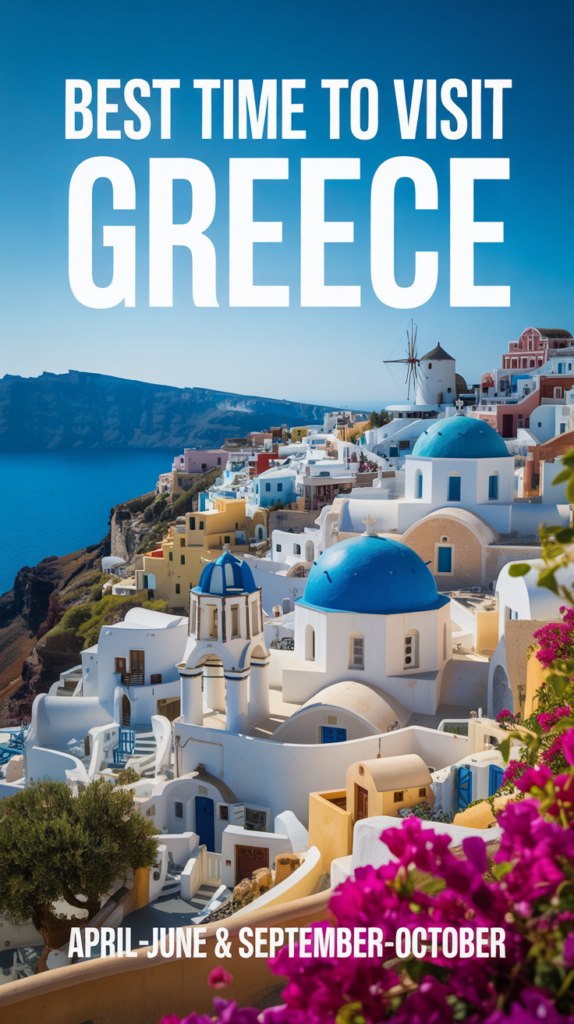
Shoulder Season (April to May & September to October): The Sweet Spot
If you ask experienced travelers, many will say this is the best time to visit Greece.
What to Expect
- Temperatures: 20–28°C (68–82°F)
- Fewer crowds
- Lower prices
- Comfortable weather for sightseeing
Spring brings blooming landscapes, while autumn offers warm seas and fewer tourists.
Pros
- Ideal balance of good weather and fewer crowds
- Lower accommodation and flight costs
- Easier access to popular attractions without long lines
- Great for photography (especially in Santorini sunsets)
Cons
- Some smaller islands may have limited services in early spring
- Sea temperatures might be slightly cooler in April and May
Best Activities
- Exploring ancient sites like the Acropolis of Athens
- Hiking in Naxos
- Island hopping without the summer chaos
Personal Insight
If I had to pick one time to visit Greece, it would be late September. The crowds thin out, the sea is still warm, and everything feels more relaxed and authentic.
Low Season (November to March): Best for Budget and Culture
What to Expect
Winter in Greece is very different from the summer postcard image.
- Temperatures: 10–18°C (50–64°F)
- Increased rainfall
- Quiet islands
- Snow in mountainous regions
Pros
- Cheapest flights and hotels
- Fewer tourists—more local experience
- Great for cultural exploration
- Ideal for city travel, especially Athens
Cons
- Many island hotels and ferries shut down
- Limited nightlife and beach activities
- Weather can be unpredictable
Best Places to Visit
- Thessaloniki for food and culture
- Athens for museums and historical sites
- Mountain villages for a cozy winter vibe
Personal Insight
Winter in Greece feels more “real.” You’ll see how locals live, enjoy authentic food without tourist crowds, and experience a quieter side of the country. However, it’s not ideal if your main goal is beaches.
Month-by-Month Breakdown
January – February
- Coldest months
- Best for budget travelers
- Ideal for museums and history lovers
March
- Early spring begins
- Fewer tourists
- Great for city exploration
April
- Spring blooms everywhere
- Perfect weather for sightseeing
- Greek Orthodox Easter often falls here, offering a unique cultural experience
May
- One of the best months overall
- Warm but not too hot
- Ideal for island hopping
June
- Start of summer
- Great weather, fewer crowds than July/August
July – August
- Peak tourist season
- Hot, crowded, and lively
September
- Warm sea, fewer crowds
- Perfect for a balanced trip
October
- Mild weather
- Great for exploring without heat
November – December
- Quiet season
- Best for budget travel and culture
Best Time Based on Your Travel Style
1. For Beach Lovers
Best time: June to September
Head to islands like Santorini, Mykonos, and Crete for sun-soaked days and clear waters.
2. For Sightseeing and History
Best time: April, May, October
Exploring places like the Acropolis is much more comfortable without extreme heat.
3. For Budget Travelers
Best time: November to March
Flights and hotels are significantly cheaper.
4. For Honeymooners
Best time: May, June, September
Romantic sunsets, fewer crowds, and pleasant weather make these months ideal.
5. For Party Lovers
Best time: July and August
Mykonos is at its peak with world-famous beach parties.
Island vs Mainland: Timing Matters
Greek Islands
Islands like Santorini and Mykonos are highly seasonal:
- Best time: May to September
- Avoid: Winter (many places close)
Mainland Greece
Cities like Athens and Thessaloniki are year-round destinations:
- Best time: March to May, October
- Winter is still enjoyable for cultural trips
Festivals and Events to Consider
Greece has a rich calendar of festivals that can enhance your trip:
- Greek Orthodox Easter – Unique traditions and celebrations
- Athens Epidaurus Festival – Summer performances in ancient theaters
- Local island festivals (Panigiri) – Food, music, and dancing
Planning your trip around these events can add a special cultural touch.
Tips for Choosing the Best Time
Here are a few practical tips:
- Book early for summer travel (at least 3–6 months in advance)
- Travel in shoulder season if you want the best overall experience
- Avoid August if you dislike crowds (it’s peak holiday time in Europe)
- Check ferry schedules if traveling in off-season
- Pack accordingly—light clothes for summer, layers for spring/autumn
Final Thoughts: When Should You Visit Greece?
There’s no single “perfect” time to visit Greece—it depends on what you want.
- Want beaches and nightlife? Go in summer.
- Prefer fewer crowds and mild weather? Choose spring or autumn.
- Traveling on a budget or love culture? Winter is your best bet.
If you’re looking for the ideal balance of everything—good weather, fewer crowds, and reasonable prices—May, June, and September stand out as the best times to visit Greece.
My Personal Recommendation
If I were planning a trip today, I’d choose late September. You still get warm seas, beautiful sunsets in Santorini, and a much calmer atmosphere compared to peak summer. It feels like you’re experiencing Greece the way it’s meant to be—relaxed, welcoming, and unforgettable.
Greece is magical no matter when you visit. The key is aligning your travel timing with your expectations. Once you do that, you’re guaranteed an incredible experience filled with history, beauty, and memories that last a lifetime.

Hi, I’m Tanvir, the founder and author of Explore Ireland Now. With a deep love for Ireland and its rich culture, history, and landscapes, I created this site to share everything that makes this beautiful country worth exploring. Whether you’re a local looking for hidden gems or a traveler planning your next adventure, I provide insightful guides, tips, and recommendations to help you experience Ireland to the fullest.
From stunning landscapes to vibrant cities and quaint villages, Ireland is full of wonders waiting to be discovered. Through my personal experiences and research, I aim to bring you the most up-to-date information and inspiration for your journey.
Thank you for visiting Explore Ireland Now—I hope my content helps you uncover all that this incredible country has to offer! If you have any questions or need travel advice, feel free to reach out.