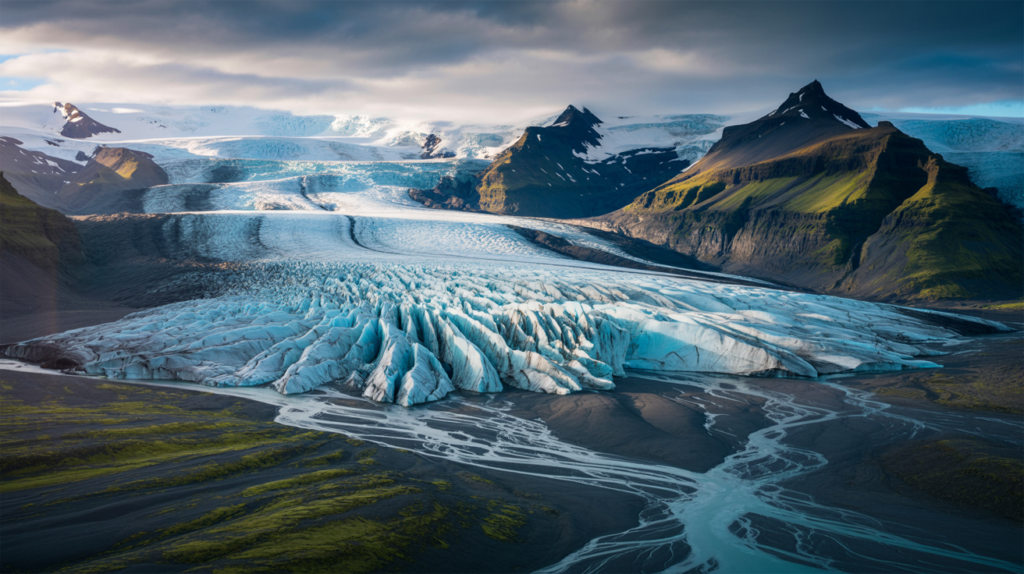
Iceland is often called the “Land of Fire and Ice,” a country where volcanic landscapes and massive ice formations exist side by side. The nation is home to some of Europe’s largest and most spectacular glaciers, attracting travelers from around the world who want to experience ice caves, glacier hikes, snowmobiling adventures, and breathtaking natural scenery.
Whether you are planning a road trip along the Ring Road or searching for unforgettable outdoor experiences, visiting Iceland’s glaciers should be high on your itinerary. From the vast ice cap of Vatnajökull to the accessible beauty of Sólheimajökull, each glacier offers something unique.
In this guide, we explore the best glaciers in Iceland, highlighting what makes each one special and why they deserve a place on your travel bucket list.
Why Visit Iceland’s Glaciers?
Glaciers cover approximately 11% of Iceland’s land area, making them one of the country’s defining natural features. These enormous ice masses have shaped Iceland’s landscape for thousands of years, creating valleys, lagoons, rivers, and dramatic mountain scenery.
Visitors can enjoy:
- Guided glacier hikes
- Ice cave tours
- Snowmobiling adventures
- Glacier climbing
- Photography opportunities
- Scenic viewpoints
- Wildlife spotting nearby
Every glacier provides a different experience, ranging from easy sightseeing stops to challenging outdoor adventures.
1. Vatnajökull Glacier
Overview
Vatnajökull is the largest glacier in Iceland and one of the largest in Europe. Covering around 8% of Iceland’s total landmass, this immense ice cap dominates southeastern Iceland.
The glacier is part of Vatnajökull National Park, a UNESCO World Heritage Site known for its stunning landscapes and geological diversity.
Highlights
- Largest glacier in Iceland
- Stunning blue ice caves
- Glacier hiking opportunities
- Ice climbing tours
- Spectacular glacier lagoons nearby
Best Activities
Visitors can join guided glacier hikes, explore natural ice caves during winter, or take photography tours to capture the glacier’s incredible beauty.
Best Time to Visit
- Ice caves: November to March
- Hiking: Year-round with guided tours
2. Sólheimajökull Glacier
Overview
Sólheimajökull is one of Iceland’s most accessible glaciers and a favorite destination for adventure seekers. Located on the South Coast between Skógafoss and Vík, it is an outlet glacier extending from the larger Mýrdalsjökull ice cap.
Highlights
- Easy access from Reykjavík
- Popular glacier hiking destination
- Stunning crevasses and ice formations
- Suitable for beginners
Best Activities
- Guided glacier walks
- Ice climbing
- Photography
The glacier’s dramatic landscape makes it one of the most photographed glaciers in Iceland.
Best Time to Visit
Accessible throughout the year, though summer offers milder conditions.
3. Jökulsárlón Glacier
Overview
While technically known for the famous Jökulsárlón Glacier Lagoon, the glacier feeding this breathtaking body of water is Breiðamerkurjökull, an outlet glacier of Vatnajökull.
The lagoon is filled with floating icebergs that break off from the glacier and drift toward the Atlantic Ocean.
Highlights
- Floating icebergs
- Crystal-clear lagoon
- Nearby Diamond Beach
- Incredible photography location
Best Activities
- Boat tours
- Kayaking
- Wildlife watching
- Photography
Many visitors consider Jökulsárlón one of the most beautiful places in Iceland.
Best Time to Visit
Year-round, with different scenery depending on the season.
4. Langjökull Glacier
Overview
Langjökull is Iceland’s second-largest glacier and one of the most accessible from Reykjavík. Located in western Iceland, it offers unique experiences not available elsewhere.
Highlights
- Second-largest glacier in Iceland
- Man-made ice tunnel
- Snowmobile tours
- Easy day-trip option
Best Activities
One of the biggest attractions is the “Into the Glacier” experience, where visitors can explore a tunnel carved directly into the glacier.
Other popular activities include:
- Snowmobiling
- Ice cave tours
- Guided excursions
Best Time to Visit
Year-round.
5. Mýrdalsjökull Glacier
Overview
Mýrdalsjökull is Iceland’s fourth-largest glacier and sits atop the active Katla volcano. This combination of ice and volcanic activity creates one of the country’s most fascinating geological environments.
Highlights
- Covers Katla volcano
- Dramatic landscapes
- Natural ice caves
- Snowmobile adventures
Best Activities
- Snowmobiling
- Super Jeep tours
- Ice cave exploration
The glacier’s proximity to Iceland’s South Coast makes it a popular stop for travelers.
Best Time to Visit
Winter is especially popular for ice cave tours.
6. Snæfellsjökull Glacier
Overview
Located on the Snæfellsnes Peninsula, Snæfellsjökull is perhaps Iceland’s most famous glacier-covered volcano.
It gained worldwide fame through Jules Verne’s novel Journey to the Center of the Earth, where it served as the entrance to the fictional underground adventure.
Highlights
- Glacier-covered volcano
- Rich literary history
- Spectacular coastal scenery
- National Park setting
Best Activities
- Hiking
- Sightseeing
- Photography
The surrounding peninsula offers some of Iceland’s most diverse landscapes.
Best Time to Visit
Summer provides the best hiking conditions.
7. Drangajökull Glacier
Overview
Drangajökull is the northernmost glacier in Iceland and one of the least visited. Located in the remote Westfjords region, it offers a peaceful alternative to Iceland’s more popular glaciers.
Highlights
- Remote location
- Fewer tourists
- Incredible wilderness
- Unique Arctic atmosphere
Best Activities
- Hiking
- Wilderness exploration
- Photography
Visitors looking for solitude and untouched nature often consider Drangajökull a hidden gem.
Best Time to Visit
Summer offers the easiest access.
8. Eyjafjallajökull Glacier
Overview
Eyjafjallajökull became internationally famous after its volcanic eruption in 2010 disrupted air travel across Europe.
Today, the glacier remains a fascinating destination for travelers interested in Iceland’s volcanic history.
Highlights
- Famous volcanic glacier
- Stunning South Coast views
- Historical significance
- Scenic hiking routes
Best Activities
- Guided tours
- Hiking
- Sightseeing
The surrounding region features waterfalls, black sand beaches, and dramatic mountain scenery.
Best Time to Visit
Summer offers the best visibility and hiking conditions.
9. Hoffellsjökull Glacier
Overview
Hoffellsjökull is another outlet glacier of Vatnajökull and is known for its dramatic ice formations and nearby geothermal hot tubs.
Highlights
- Less crowded than major glaciers
- Beautiful mountain backdrop
- Natural hot tubs nearby
- Excellent photography opportunities
Best Activities
- Hiking
- Photography
- Relaxing in geothermal pools
Best Time to Visit
Late spring through early autumn.
10. Tungnaárjökull Glacier
Overview
Tungnaárjökull is one of the many outlet glaciers flowing from Vatnajökull. It remains relatively unknown compared to Iceland’s more famous glaciers, making it an excellent choice for travelers seeking unique experiences.
Highlights
- Untouched landscapes
- Limited crowds
- Spectacular views
Best Activities
- Hiking
- Scenic photography
- Nature exploration
Best Time to Visit
Summer is ideal for accessibility.
Best Glacier Activities in Iceland
Glacier Hiking
Glacier hiking is one of the most popular activities in Iceland. Guided tours provide equipment and safety instruction while allowing visitors to explore crevasses, ice formations, and stunning viewpoints.
Ice Cave Tours
During winter, naturally formed ice caves become accessible beneath several glaciers, particularly Vatnajökull. These caves display stunning shades of blue ice.
Snowmobiling
Snowmobiling offers an exciting way to explore large glaciers such as Langjökull and Mýrdalsjökull.
Ice Climbing
For adventure enthusiasts, ice climbing provides a thrilling challenge while offering unique perspectives of Iceland’s icy landscapes.
Tips for Visiting Iceland’s Glaciers
Always Use a Guide
Glaciers can be dangerous due to hidden crevasses and changing conditions. Guided tours are highly recommended.
Dress Properly
Wear:
- Waterproof jacket
- Waterproof pants
- Insulated layers
- Hiking boots
- Gloves and hat
Check Weather Conditions
Icelandic weather can change rapidly. Always check forecasts before heading out.
Bring a Camera
Glaciers provide some of the most photogenic scenery in the world, so bring extra batteries and memory cards.
Best Time to Visit Iceland’s Glaciers
Summer (June–August)
Advantages:
- Longer daylight hours
- Easier road access
- Better hiking conditions
Winter (November–March)
Advantages:
- Ice cave tours
- Snow-covered landscapes
- Northern Lights opportunities
Both seasons offer unique experiences, and many travelers choose to visit during shoulder seasons for fewer crowds.
Conclusion
Iceland’s glaciers are among the most remarkable natural attractions in the world. Whether you want to hike across ancient ice, explore crystal-blue caves, ride a snowmobile across frozen landscapes, or simply admire breathtaking scenery, there is a glacier in Iceland that will exceed your expectations.
From the enormous Vatnajökull Glacier and the accessible Sólheimajökull Glacier to the remote beauty of Drangajökull and the famous Snæfellsjökull volcano glacier, each destination offers a unique glimpse into Iceland’s extraordinary natural heritage.
For travelers seeking unforgettable adventures and stunning landscapes, the best glaciers in Iceland provide experiences that will remain memorable long after the journey ends.

Hi, I’m Tanvir, the founder and author of Explore Ireland Now. With a deep love for Ireland and its rich culture, history, and landscapes, I created this site to share everything that makes this beautiful country worth exploring. Whether you’re a local looking for hidden gems or a traveler planning your next adventure, I provide insightful guides, tips, and recommendations to help you experience Ireland to the fullest.
From stunning landscapes to vibrant cities and quaint villages, Ireland is full of wonders waiting to be discovered. Through my personal experiences and research, I aim to bring you the most up-to-date information and inspiration for your journey.
Thank you for visiting Explore Ireland Now—I hope my content helps you uncover all that this incredible country has to offer! If you have any questions or need travel advice, feel free to reach out.