
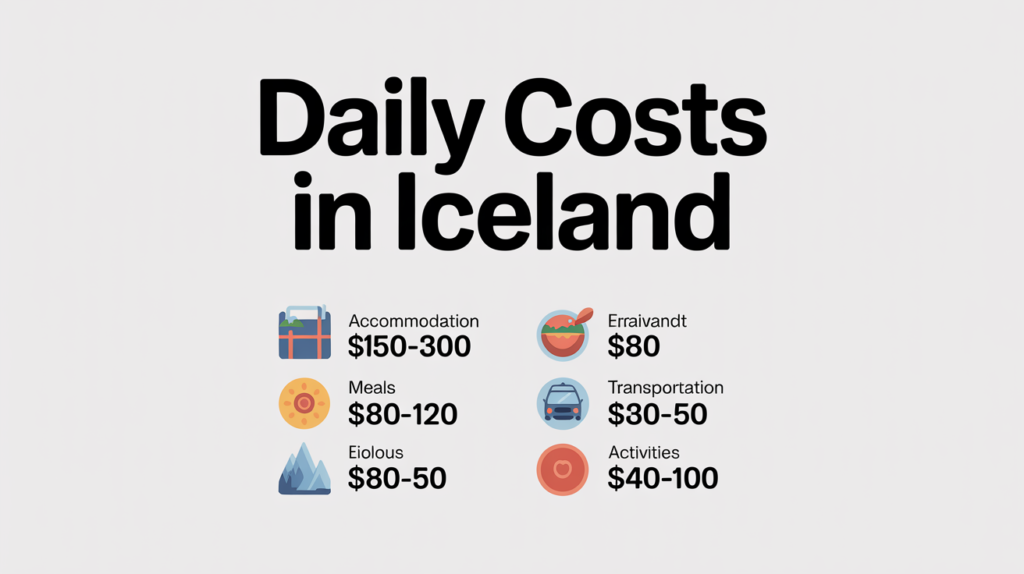
Iceland is one of the most beautiful countries in the world, but it is also known for being expensive. From accommodation and food to transportation and activities, travelers are often surprised by how quickly costs can add up. However, with proper planning, you can still enjoy Iceland without completely draining your budget.
In this guide, you’ll learn about the average daily costs in Iceland, including accommodation, food, transportation, activities, and money-saving tips to help you plan your trip wisely.
Is Iceland Expensive?
Yes, Iceland is considered one of the most expensive countries in Europe. The high cost of living, imported goods, and strong tourism industry all contribute to higher prices. Even basic items like coffee, groceries, and public transportation can cost more than travelers expect.
Still, the total amount you spend depends heavily on your travel style. Budget travelers can manage with careful planning, while luxury travelers may spend hundreds of dollars per day.
Here’s a quick overview of average daily costs per person:
| Travel Style | Daily Budget |
|---|---|
| Budget Traveler | $80–$150 |
| Mid-Range Traveler | $200–$350 |
| Luxury Traveler | $500+ |
These estimates include accommodation, meals, transportation, and some activities.
Accommodation Costs in Iceland
Accommodation is usually the biggest expense for travelers in Iceland. Prices vary depending on the season, location, and type of stay.
Hostel Prices
Budget travelers often stay in hostels to save money.
- Dorm bed in Reykjavik: $40–$70 per night
- Dorm bed outside Reykjavik: $30–$60 per night
Many hostels also have shared kitchens, which can help reduce food costs.
Budget Hotels and Guesthouses
Guesthouses are popular across Iceland and usually offer a comfortable but simple stay.
- Budget guesthouse: $100–$180 per night
- Budget hotel: $120–$220 per night
Prices are usually higher during summer.
Mid-Range Hotels
If you prefer more comfort and privacy, mid-range hotels typically cost:
- $200–$400 per night
These often include breakfast and private bathrooms.
Luxury Hotels
Luxury accommodation in Iceland can be very expensive, especially in popular tourist areas.
- Luxury hotels: $500–$1,000+ per night
High-end resorts with spa facilities may cost even more.
Camping Costs
Camping is one of the cheapest ways to travel around Iceland.
- Campsites: $15–$30 per person per night
Many travelers rent camper vans to combine transportation and accommodation.
Food Costs in Iceland
Food in Iceland is expensive because many products are imported. Eating out regularly can quickly increase your daily budget.
Restaurant Prices
Here are average restaurant costs:
| Food Item | Average Price |
|---|---|
| Fast food meal | $15–$25 |
| Casual restaurant meal | $25–$45 |
| Three-course dinner | $70–$150 |
| Coffee | $5–$8 |
| Beer | $10–$15 |
Even a simple burger meal may cost more than expected.
Grocery Costs
Buying groceries is one of the best ways to save money.
Average grocery prices:
- Bread: $4–$6
- Milk: $2–$4
- Eggs: $5–$8
- Pasta: $3–$5
- Chicken breast: $12–$20 per kg
Popular budget grocery stores include Bonus and Kronan.
Saving Money on Food
Here are some easy ways to lower food costs:
- Stay in accommodations with kitchens
- Buy groceries instead of dining out
- Carry reusable water bottles
- Avoid buying alcohol at bars frequently
- Shop at discount supermarkets
I found grocery shopping especially helpful during longer stays. Preparing breakfast and dinner myself saved a significant amount of money.
Transportation Costs in Iceland
Transportation costs depend on how you plan to explore the country.
Renting a Car
Renting a car is one of the most popular ways to travel around Iceland.
Average rental prices:
- Small car: $50–$120 per day
- SUV or 4×4: $120–$250 per day
Fuel is also expensive.
Fuel Costs
Gas prices in Iceland are usually high.
- Average fuel price: $2–$3 per liter
Driving the Ring Road can require a substantial fuel budget.
Public Transportation
Public transportation is limited outside Reykjavik.
Bus fares in Reykjavik:
- Single ticket: around $4–$5
Long-distance buses between towns can be expensive.
Camper Van Costs
Camper vans are popular among travelers who want flexibility.
- Camper van rental: $100–$250 per day
While not cheap, they can reduce accommodation costs.
Activity Costs in Iceland
Iceland offers incredible natural attractions, but some tours and activities are expensive.
Free Attractions
Luckily, many of Iceland’s best sights are completely free.
Free attractions include:
- Waterfalls
- Black sand beaches
- National parks
- Scenic viewpoints
- Northern Lights viewing
Paid Activities
Here are common activity prices:
| Activity | Average Cost |
|---|---|
| Blue Lagoon entry | $70–$150 |
| Glacier hiking | $100–$250 |
| Whale watching | $80–$150 |
| Ice cave tour | $150–$300 |
| Snowmobile tour | $200–$400 |
Booking in advance can sometimes help you find better deals.
Daily Budget Examples
Budget Traveler
A budget traveler staying in hostels, cooking meals, and using buses may spend:
| Expense | Daily Cost |
|---|---|
| Hostel | $50 |
| Groceries | $20 |
| Transportation | $20 |
| Activities | $20 |
| Total | $110 |
Mid-Range Traveler
A mid-range traveler staying in hotels and eating at restaurants may spend:
| Expense | Daily Cost |
|---|---|
| Hotel | $250 |
| Food | $60 |
| Car Rental | $80 |
| Activities | $70 |
| Total | $460 |
Luxury Traveler
Luxury travelers can easily spend over $700–$1,500 daily depending on hotels and tours.
Best Time to Visit Iceland for Lower Costs
Travel costs change significantly by season.
Cheapest Time
The cheapest months are usually:
- November
- January
- February
- March
Flights and hotels are often cheaper during winter.
Most Expensive Time
Summer is the most expensive period.
- June
- July
- August
Prices rise due to peak tourist demand.
Shoulder Season Benefits
Spring and autumn offer a good balance of:
- Lower prices
- Smaller crowds
- Reasonable weather
Money-Saving Tips for Iceland
Here are practical ways to reduce your travel expenses:
Book Early
Hotels and rental cars become expensive closer to travel dates.
Use Grocery Stores
Cooking your own meals can save hundreds of dollars.
Travel With Friends
Sharing car rentals, fuel, and accommodation lowers costs per person.
Bring Reusable Items
Carrying reusable water bottles and travel mugs helps reduce small daily expenses.
Avoid Airport Purchases
Food and drinks at the airport are especially expensive.
Stay Outside Reykjavik
Accommodation outside the capital is sometimes cheaper.
How Much Money Should You Bring to Iceland?
The amount depends on your travel style and trip length.
One Week Budget Estimates
| Travel Style | Estimated Weekly Cost |
|---|---|
| Budget | $800–$1,200 |
| Mid-Range | $1,800–$3,000 |
| Luxury | $5,000+ |
Flights are not included in these estimates.
Is Iceland Worth the Cost?
Despite the high prices, many travelers believe Iceland is absolutely worth visiting. The country offers breathtaking landscapes, unique natural wonders, and unforgettable experiences that are difficult to find elsewhere.
From waterfalls and glaciers to volcanoes and geothermal lagoons, Iceland provides incredible value in terms of experiences, even if the prices are high.
Personally, I found that careful planning made a huge difference. By mixing free attractions with a few paid experiences and preparing some meals myself, I was able to enjoy Iceland without overspending.
Final Thoughts
Daily costs in Iceland can seem intimidating at first, but understanding average prices helps you plan a realistic budget. Accommodation, food, and transportation are the largest expenses, while many of Iceland’s natural attractions remain completely free.
Whether you travel on a budget or prefer luxury experiences, Iceland offers unforgettable scenery and adventures that make the trip worthwhile. Smart planning, early bookings, and simple money-saving strategies can help you enjoy the country while keeping expenses under control.

Hi, I’m Tanvir, the founder and author of Explore Ireland Now. With a deep love for Ireland and its rich culture, history, and landscapes, I created this site to share everything that makes this beautiful country worth exploring. Whether you’re a local looking for hidden gems or a traveler planning your next adventure, I provide insightful guides, tips, and recommendations to help you experience Ireland to the fullest.
From stunning landscapes to vibrant cities and quaint villages, Ireland is full of wonders waiting to be discovered. Through my personal experiences and research, I aim to bring you the most up-to-date information and inspiration for your journey.
Thank you for visiting Explore Ireland Now—I hope my content helps you uncover all that this incredible country has to offer! If you have any questions or need travel advice, feel free to reach out.