
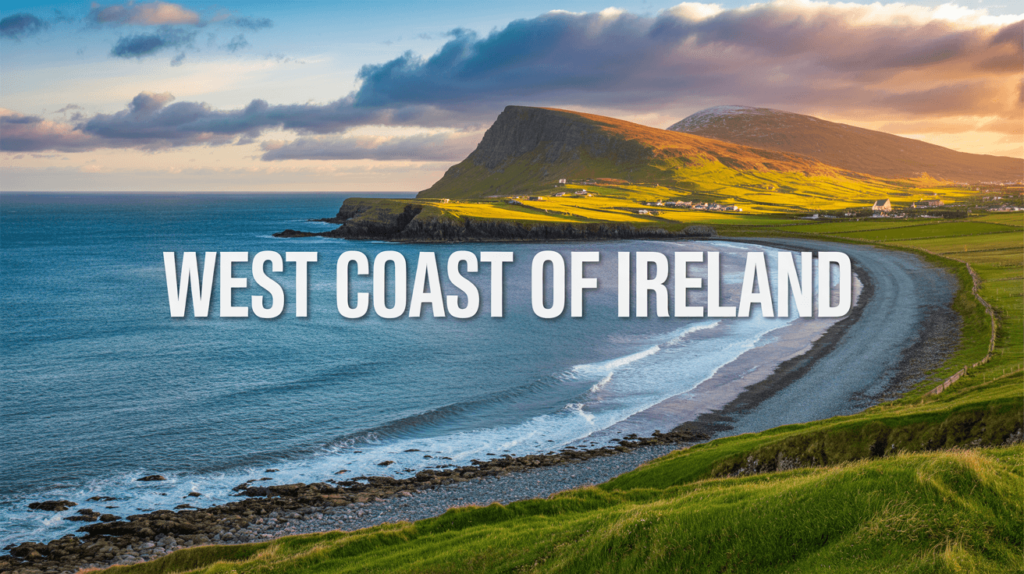
The west coast of Ireland has always felt like a place where time slows down and nature takes the lead. Stretching along the Wild Atlantic Way, it’s a region of rugged cliffs, endless ocean views, and charming villages that seem untouched by the rush of modern life.
When I first visited the west coast, I was struck by the mix of raw beauty and warm hospitality. Standing at the edge of the Cliffs of Moher, with the Atlantic winds brushing against my face, I felt both humbled and inspired. Later, wandering through the colorful streets of Galway and listening to live traditional music in a small pub, I realized the west coast isn’t just about scenery—it’s about soul.
Whether you’re seeking dramatic landscapes, outdoor adventures, or simply a cozy pint in a friendly village, the west coast of Ireland has something unforgettable to offer. In this guide, I’ll take you through its highlights, hidden gems, and experiences that make this part of Ireland truly special.
Where is the West Coast of Ireland?
The west coast of Ireland stretches along the Wild Atlantic Way, a breathtaking route that follows the edge of the island from Donegal in the north to Kerry in the south. This region is often described as the “wild heart” of Ireland, shaped by the Atlantic Ocean with dramatic cliffs, sweeping beaches, and rugged mountains.
Geographically, the west coast mainly includes the counties of Donegal, Mayo, Galway, Clare, Limerick, and Kerry. Each county has its own unique character—Donegal’s untamed landscapes feel remote and wild, Galway brings a lively cultural energy, and Kerry is home to some of the most famous scenic drives in the country.
What makes the west coast so special is how different it feels from the east. Life here moves at a slower pace, and the connection to traditional Irish culture—music, language, storytelling—remains strong. It’s the part of Ireland where you can truly feel the power of nature while also experiencing the warmth of small-town hospitality.
Top Attractions on the West Coast of Ireland
🌿 Natural Wonders
1. Cliffs of Moher
- Quick Description: Ireland’s most iconic natural landmark, these cliffs stretch for 8 km and rise up to 214 meters above the Atlantic. Known worldwide for their dramatic beauty.
- Location: County Clare — nearest towns: Doolin and Liscannor.
- Highlights / Key Features: Breathtaking Atlantic views, O’Brien’s Tower, puffins nesting in spring and summer, UNESCO Global Geopark.
- Things to Do: Walk the cliff paths, visit the visitor centre, take a boat tour from Doolin, photography, birdwatching.
- Best Time to Visit: Sunrise or sunset for magical light and fewer crowds; late spring to early autumn for the best weather.
- Practical Info: Entry fee ~€10 (includes visitor centre and parking); open daily with longer hours in summer; café, gift shop, and toilets on-site.
- Nearby Attractions: The Burren, Doolin Cave, Aran Islands ferry from Doolin.
2. The Burren
- Quick Description: A unique karst limestone landscape that looks almost lunar, filled with rare flora, caves, and ancient monuments.
- Location: County Clare — nearest town: Ballyvaughan.
- Highlights / Key Features: Limestone pavements, Poulnabrone Dolmen (ancient portal tomb), Burren flora (spring orchids), caves like Aillwee.
- Things to Do: Hiking trails, guided eco-walks, explore caves, visit the Burren Perfumery and farmer’s markets.
- Best Time to Visit: Spring for wildflowers; autumn for quiet walks.
- Practical Info: No general entrance fee (open landscapes); some attractions (like Aillwee Cave) have paid entry.
- Nearby Attractions: Cliffs of Moher, Kinvara village, Galway Bay coastal drive.
3. Slieve League Cliffs
- Quick Description: Among the highest sea cliffs in Europe, reaching heights of nearly 600 meters — more than twice the Cliffs of Moher.
- Location: County Donegal — near the village of Teelin.
- Highlights / Key Features: Towering cliffs, panoramic Atlantic views, quieter and less commercialized than Moher.
- Things to Do: Hike the Pilgrim’s Path, take guided tours, enjoy a boat trip to see the cliffs from the sea.
- Best Time to Visit: Summer for clear skies; evenings for dramatic sunsets.
- Practical Info: Free access; visitor centre offers parking, café, and restrooms; donations appreciated.
- Nearby Attractions: Glenveagh National Park, Donegal Castle, Silver Strand Beach (Malin Beg).
4. Connemara National Park
- Quick Description: A wild landscape of mountains, bogs, and lakes often described as Ireland’s most authentic wilderness.
- Location: County Galway — near the village of Letterfrack.
- Highlights / Key Features: The Twelve Bens mountain range, Diamond Hill, native Connemara ponies.
- Things to Do: Hiking (Diamond Hill trails are popular), birdwatching, photography, visit the nearby Kylemore Abbey.
- Best Time to Visit: Spring to autumn for hiking conditions; autumn colors are especially stunning.
- Practical Info: Free admission; visitor centre open April–October with exhibitions, café, and facilities.
- Nearby Attractions: Kylemore Abbey, Clifden town, Sky Road scenic drive.
5. Killary Fjord
- Quick Description: Ireland’s only fjord, stretching 16 km between Galway and Mayo, surrounded by steep mountains.
- Location: Border of County Galway and County Mayo — nearest village: Leenane.
- Highlights / Key Features: Stunning fjord scenery, mussel farms, calm waters, surrounding mountains.
- Things to Do: Take a boat cruise, sea kayaking, hiking the surrounding hills, enjoy seafood in Leenane village.
- Best Time to Visit: Summer for boat cruises; spring and autumn for quieter walks.
- Practical Info: Fjord itself free to explore; Killary Cruises run seasonally with ticketed boat trips.
- Nearby Attractions: Connemara National Park, Delphi Valley, Leenane village.
🏝️ Islands
1. Aran Islands
- Quick Description: A group of three islands (Inis Mór, Inis Meáin, Inis Oírr) famous for their traditional Irish culture, rugged landscapes, and stone fortresses.
- Location: County Galway — accessible by ferry from Doolin or Rossaveal, or by plane from Connemara Airport.
- Highlights / Key Features: Dun Aonghasa (prehistoric stone fort), traditional Irish-speaking communities, iconic Aran sweaters, Atlantic views.
- Things to Do: Cycle or walk around the islands, visit ancient forts, enjoy local music, buy hand-knit woolens.
- Best Time to Visit: Late spring to early autumn for good ferry crossings and lively local festivals.
- Practical Info: Ferry tickets ~€30–40 return; bike rentals widely available; small cafés and guesthouses on the islands.
- Nearby Attractions: Cliffs of Moher (ferry from Doolin), Galway City.
2. Skellig Michael
- Quick Description: A UNESCO World Heritage Site — a steep rocky island with a 6th-century monastic settlement, also featured in Star Wars.
- Location: County Kerry — 12 km off the Iveragh Peninsula, boat trips depart from Portmagee.
- Highlights / Key Features: Beehive huts built by monks, dramatic stone steps, puffin colonies, cinematic views.
- Things to Do: Take a boat trip (landing tours available in summer), photography, birdwatching.
- Best Time to Visit: May to September (when boat trips operate); early morning departures are best.
- Practical Info: Boat trips €100–€130; very limited tickets, must book in advance; steep climb with no facilities on the island.
- Nearby Attractions: Valentia Island, Ring of Kerry scenic drive, Kerry Cliffs.
3. Achill Island
- Quick Description: Ireland’s largest island, connected to the mainland by a bridge — known for its dramatic coastal scenery and Blue Flag beaches.
- Location: County Mayo — connected via Michael Davitt Bridge near Mulranny.
- Highlights / Key Features: Keem Bay (one of Ireland’s most beautiful beaches), Slievemore Deserted Village, rugged cliffs.
- Things to Do: Surfing, hiking, cycling the Great Western Greenway, visiting local seafood restaurants.
- Best Time to Visit: Summer for swimming and water sports; autumn for peaceful coastal walks.
- Practical Info: Free access; car recommended; local B&Bs and restaurants available.
- Nearby Attractions: Westport town, Croagh Patrick, Ballycroy National Park.
4. Inishbofin Island
- Quick Description: A small island with rich history, traditional music, and unspoiled beaches.
- Location: County Galway — ferry from Cleggan.
- Highlights / Key Features: Cromwell’s Barracks, sandy beaches, traditional Irish music sessions, scenic walking routes.
- Things to Do: Walking and cycling trails, swimming, birdwatching, listening to live music in island pubs.
- Best Time to Visit: Summer for lively events and warmer weather.
- Practical Info: Ferry tickets ~€25–30 return; local accommodation includes hostels, B&Bs, and small hotels.
- Nearby Attractions: Connemara National Park, Kylemore Abbey.
5. Clare Island
- Quick Description: The former stronghold of the pirate queen Gráinne Mhaol (Grace O’Malley) — rich in history and rugged scenery.
- Location: County Mayo — ferry from Roonagh Pier near Louisburgh.
- Highlights / Key Features: Grace O’Malley’s castle, 12th-century abbey with medieval frescoes, dramatic sea cliffs.
- Things to Do: Explore historical ruins, hike to Clare Island Lighthouse, enjoy local seafood.
- Best Time to Visit: Summer months when ferries are frequent.
- Practical Info: Ferry tickets ~€20–25 return; local cafés and accommodation available.
- Nearby Attractions: Westport, Croagh Patrick, Achill Island.
🏛️ Historical And Cultural Sites
1. Kylemore Abbey & Victorian Walled Garden
- Quick Description: A 19th-century castle-turned-abbey set beside a serene lake, famous for its restored Victorian walled garden.
- Location: County Galway — near Letterfrack.
- Highlights / Key Features: Gothic abbey architecture, Victorian Walled Garden, lakeside walks, tearoom and craft shop.
- Things to Do: Guided or independent tours of the abbey, stroll through the Walled Garden, photography, enjoy tea at Kylemore Kitchen.
- Best Time to Visit: Spring–autumn when gardens are in full bloom.
- Practical Info: Entry fee ~€15 for adults; open daily (hours vary by season); facilities include café, parking, and gift shop.
- Nearby Attractions: Connemara National Park, Clifden town, Killary Fjord.
2. Dingle Peninsula (Slea Head Drive & Gallarus Oratory)
- Quick Description: A scenic peninsula with ancient stone ruins, traditional villages, and spectacular coastal views.
- Location: County Kerry — nearest town: Dingle (An Daingean).
- Highlights / Key Features: Slea Head Drive, Gallarus Oratory, beehive huts, Mount Brandon, Blasket Islands views.
- Things to Do: Scenic drives, hiking, explore ancient ruins, boat trips to Blasket Islands, enjoy seafood and live music in Dingle town.
- Best Time to Visit: May–September for better weather; mornings/late afternoons for fewer crowds.
- Practical Info: Free to explore; local tour operators provide guided trips; facilities in Dingle town include accommodations, cafés, and parking.
- Nearby Attractions: Inch Beach, Connor Pass, Blasket Islands.
3. Ring of Kerry (Cultural Stops)
- Quick Description: A scenic driving route combining natural beauty with heritage villages and historic sites.
- Location: County Kerry — starting/ending point: Killarney.
- Highlights / Key Features: Kenmare, Cahersiveen, Staigue Fort, small villages, Skellig Michael views.
- Things to Do: Drive the loop, visit historic ruins, enjoy local food, guided cultural tours, hiking in Killarney National Park.
- Best Time to Visit: Summer for scenic drives; May/September for lighter traffic.
- Practical Info: Free public roads; guided tours available; facilities along the route include parking, cafés, and viewpoints.
- Nearby Attractions: Killarney National Park, Valentia Island, Gap of Dunloe.
4. Galway City
- Quick Description: Vibrant cultural hub on the west coast, known for its festivals, music, and historic streets.
- Location: County Galway — western Ireland.
- Highlights / Key Features: Eyre Square, Spanish Arch, Galway Cathedral, lively pubs, street performances, arts and music festivals.
- Things to Do: Explore historic streets, attend Galway International Arts Festival, enjoy live music and seafood.
- Best Time to Visit: Summer for festivals; spring/autumn for fewer crowds.
- Practical Info: City accessible by car, bus, or train; many accommodation options; walking-friendly city centre.
- Nearby Attractions: Connemara, Aran Islands ferry, Claddagh & Salthill.
5. Westport Town
- Quick Description: Georgian heritage town at the foot of Croagh Patrick with charming streets and vibrant pubs.
- Location: County Mayo — near Clew Bay.
- Highlights / Key Features: Westport House, colorful streets, traditional Irish music, proximity to Croagh Patrick.
- Things to Do: Explore town and Westport House, cycling on Great Western Greenway, hike Croagh Patrick, enjoy local food.
- Best Time to Visit: Summer for outdoor activities; spring/autumn for quieter streets.
- Practical Info: Free to explore town; attractions like Westport House have entry fees; parking and accommodations available.
- Nearby Attractions: Croagh Patrick, Achill Island, Clew Bay.
Best Towns And Villages to Visit on the West Coast of Ireland
The West Coast of Ireland isn’t just about natural beauty—it’s also home to charming towns and villages brimming with history, culture, and local hospitality. Each place has its own personality, making it worth exploring even for a short stop.
1. Galway City
- Quick Description: The cultural heart of the west coast, vibrant with arts, music, and historic streets.
- Highlights / Key Features: Eyre Square, Spanish Arch, Galway Cathedral, cobblestone streets filled with street performers and boutiques.
- Things to Do: Attend festivals like the Galway International Arts Festival, enjoy live music in pubs, walk along the Salthill Promenade.
- Best Time to Visit: Summer for festivals and street performances; spring and autumn for fewer crowds.
- Nearby Attractions: Aran Islands ferry, Connemara National Park, Claddagh.
2. Dingle Town
- Quick Description: A colorful fishing town on the Dingle Peninsula, known for its lively pubs, fresh seafood, and friendly locals.
- Highlights / Key Features: Dingle Harbour, local craft shops, traditional Irish music sessions, nearby Slea Head Drive.
- Things to Do: Explore the town’s pubs, take a boat trip to the Blasket Islands, enjoy scenic drives, hike Mount Brandon.
- Best Time to Visit: Late spring to early autumn for better weather and longer daylight; evenings for live music.
- Nearby Attractions: Slea Head, Gallarus Oratory, Inch Beach.
3. Clifden
- Quick Description: Known as the “Capital of Connemara,” Clifden is a small town surrounded by dramatic landscapes and the Atlantic coastline.
- Highlights / Key Features: Sky Road scenic drive, Clifden Castle ruins, traditional shops and cafés.
- Things to Do: Scenic drives, cycling, photography, enjoy local seafood.
- Best Time to Visit: Spring and summer for hiking and clear skies.
- Nearby Attractions: Connemara National Park, Kylemore Abbey, Roundstone village.
4. Westport
- Quick Description: A Georgian heritage town at the foot of Croagh Patrick, known for its charm, outdoor activities, and vibrant town square.
- Highlights / Key Features: Westport House, Great Western Greenway, traditional pubs, Croagh Patrick views.
- Things to Do: Cycle the Greenway, climb Croagh Patrick, explore Westport House and gardens, enjoy local cuisine.
- Best Time to Visit: Summer for outdoor activities; spring/autumn for quieter streets.
- Nearby Attractions: Achill Island, Clew Bay, Killary Fjord.
5. Donegal Town
- Quick Description: A historic town with a strong heritage feel, surrounded by mountains and rivers.
- Highlights / Key Features: Donegal Castle, Abbey Street, local craft shops, traditional music venues.
- Things to Do: Tour Donegal Castle, explore local artisan shops, enjoy music in pubs, visit nearby Slieve League Cliffs.
- Best Time to Visit: Summer for festivals; spring/autumn for quieter exploration.
- Nearby Attractions: Slieve League, Glenveagh National Park, Bundoran.
6. Kinvara
- Quick Description: A picturesque coastal village in County Galway, known for its traditional charm and lively festivals.
- Highlights / Key Features: Dunguaire Castle, Galway Bay views, local seafood restaurants.
- Things to Do: Visit Dunguaire Castle, enjoy coastal walks, attend the annual Crab Festival.
- Best Time to Visit: Summer for festivals and outdoor activities.
- Nearby Attractions: The Burren, Cliffs of Moher, Aran Islands ferry.
7. Letterfrack
- Quick Description: A small village serving as a gateway to Connemara National Park and Kylemore Abbey.
- Highlights / Key Features: Traditional Irish village charm, walking trails, local craft shops.
- Things to Do: Hiking in Connemara National Park, visit Kylemore Abbey, explore local cafés.
- Best Time to Visit: Spring–autumn for hiking and sightseeing.
- Nearby Attractions: Connemara National Park, Kylemore Abbey, Sky Road.
These towns and villages are perfect bases for exploring the West Coast, offering a mix of culture, cuisine, history, and scenic views. Spending time in each gives you a richer experience than just passing through.
Practical Travel Tips for Visiting the West Coast of Ireland
- Transport & Getting Around
- Renting a car is highly recommended for flexibility, especially to reach remote locations and scenic drives.
- Public transport exists but is limited outside major towns; check bus and train schedules in advance.
- Ferries are essential for islands like Aran Islands, Clare Island, and Inishbofin—book tickets early during peak season.
- Accommodation
- Options range from luxury hotels to cozy B&Bs, hostels, and self-catering cottages.
- Book in advance, especially during summer festivals and peak tourist months (June–August).
- Staying in smaller towns like Doolin, Clifden, or Westport can give easier access to nearby natural attractions.
- Weather & Clothing
- Weather is unpredictable: pack layers, waterproof jackets, and sturdy footwear for walking and hiking.
- Even summer evenings can be chilly near the coast, so bring warm clothing.
- Sunscreen and hats are recommended during sunny spells, especially for hiking.
- Timing Your Visit
- Late spring to early autumn (May–September) is ideal for most outdoor activities, island trips, and festivals.
- Early morning or late afternoon provides better light for photography and fewer crowds at popular sites like the Cliffs of Moher.
- Connectivity & Navigation
- Mobile coverage can be spotty in remote areas; consider offline maps or GPS devices.
- Wi-Fi is generally available in towns, cafés, and accommodations.
- Local Etiquette & Safety
- Respect private land when hiking or exploring rural areas; stick to marked trails.
- Tipping is appreciated in restaurants and taxis (around 10%).
- Always check weather forecasts before heading to cliffs, mountains, or islands.
- Money & Payments
- Most towns and attractions accept credit/debit cards, but carry some cash for smaller villages, local markets, and ferry tickets.
- Currency: Euro (€).
- Food & Drink
- Try local seafood, artisanal cheese, and traditional Irish dishes.
- Many pubs feature live music—perfect for soaking up local culture.
- Health & Emergency
- Nearest hospitals and pharmacies are usually in larger towns; plan accordingly for remote areas.
- Keep basic first aid and medications handy for hiking or outdoor adventures.
- Sustainable Travel Tips
- Stick to marked trails to protect delicate landscapes like The Burren and Connemara.
- Support local businesses, B&Bs, and artisans to benefit the communities you visit.
- Reduce single-use plastics; many towns have recycling points.
Frequently Asked Questions (FAQ)
1. What is the best time to visit the West Coast of Ireland?
- The ideal time is late spring to early autumn (May–September) when the weather is milder, daylight is longer, and most attractions and ferries are open.
2. Do I need a car to explore the West Coast?
- While public transport is available in towns, a car is highly recommended to reach remote scenic spots, islands, and coastal drives.
3. Are the Cliffs of Moher open year-round?
- Yes, the cliffs are accessible all year, but the visitor centre has seasonal hours. Early morning or late afternoon visits offer fewer crowds and better light for photography.
4. Can I visit the Aran Islands in winter?
- Ferry schedules are limited in winter, and weather can be rough. Summer months are ideal for a comfortable visit.
5. What outdoor activities are popular on the West Coast?
- Hiking, cycling, surfing, kayaking, wildlife watching, and scenic drives are among the most popular activities.
6. Are there guided tours available?
- Yes, many towns offer guided tours for the Cliffs of Moher, Ring of Kerry, Skellig Michael, and local heritage sites. Guided hikes are also available in Connemara and Mayo.
7. Is it safe to hike on cliffs and mountains?
- Generally yes, but always stick to marked trails, wear sturdy footwear, and check the weather. Some areas, like Skellig Michael, require careful climbing and experience.
8. How much time should I spend on the West Coast?
- Ideally, allocate at least 5–7 days to explore the highlights comfortably, including natural wonders, towns, islands, and scenic drives.
9. What should I pack for a trip to the West Coast?
- Waterproof jacket, layers, sturdy walking shoes, camera, sunscreen, hat, and some cash for smaller villages or ferries.
Conclusion
The West Coast of Ireland is a destination that truly has it all: dramatic cliffs, serene lakes, rugged mountains, charming towns, and islands steeped in culture and history. Whether you’re seeking adventure, relaxation, or a cultural journey, this region delivers unforgettable experiences at every turn.
From walking the Cliffs of Moher to cycling Connemara’s trails, from listening to live music in a cozy pub in Dingle to exploring ancient castles and abbeys, the West Coast invites travelers to slow down, soak in the scenery, and connect with Ireland’s rich heritage.
Plan wisely, pack appropriately, and embrace the unpredictability of the weather—because on the West Coast, every moment is a memory in the making. Your journey here will leave you with breathtaking views, warm memories, and a deep appreciation for Ireland’s wild, beautiful west.

Hi, I’m Tanvir, the founder and author of Explore Ireland Now. With a deep love for Ireland and its rich culture, history, and landscapes, I created this site to share everything that makes this beautiful country worth exploring. Whether you’re a local looking for hidden gems or a traveler planning your next adventure, I provide insightful guides, tips, and recommendations to help you experience Ireland to the fullest.
From stunning landscapes to vibrant cities and quaint villages, Ireland is full of wonders waiting to be discovered. Through my personal experiences and research, I aim to bring you the most up-to-date information and inspiration for your journey.
Thank you for visiting Explore Ireland Now—I hope my content helps you uncover all that this incredible country has to offer! If you have any questions or need travel advice, feel free to reach out.

