
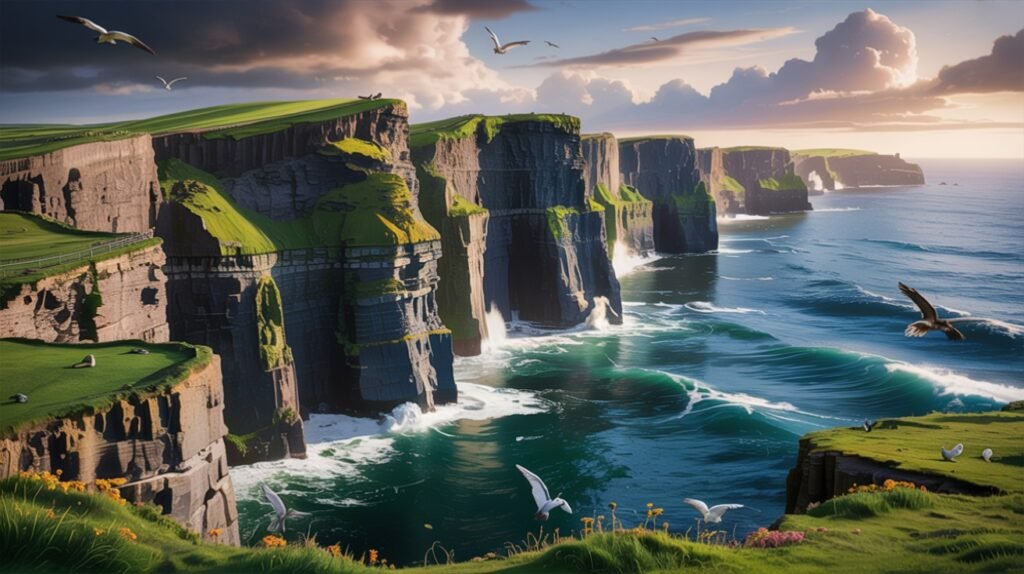
An Ireland bucket list is hard to narrow down, because this compact island packs in Neolithic tombs that predate Stonehenge, towering sea cliffs, medieval castles, lively pubs and a coastal route roughly 2,500 km long.
This guide picks 20 places and experiences worth building a trip around, across both the Republic of Ireland and Northern Ireland. For each one you will find why it earns its spot, plus the practical details that are easy to get wrong, such as which sites need advance booking and which season they operate in.
Prices, opening arrangements and entry rules in this guide were checked against official sources on 25 November 2026. They can change, so confirm on the official links before you book.
Quick Answer: What Belongs on an Ireland Bucket List?
If you only have time for a handful of highlights, start with these six:
- The Cliffs of Moher in County Clare, the best-known sea cliffs on the west coast
- A stretch of the Wild Atlantic Way, such as the Dingle Peninsula
- Newgrange in County Meath, a passage tomb more than 5,000 years old
- The Giant’s Causeway in County Antrim
- The Guinness Storehouse and the historic centre of Dublin
- An evening of live traditional music in a pub
Ireland Bucket List at a Glance
Use this table to see how the 20 entries spread across the island, then jump to the sections that match your route.
| # | Experience | Where | Best for |
|---|---|---|---|
| 1 | Trinity College and the Book of Kells | Dublin | History and books |
| 2 | Guinness Storehouse | Dublin | Brewing heritage, city views |
| 3 | Newgrange and Brú na Bóinne | Meath | Ancient history |
| 4 | Glendalough | Wicklow | Walks and monastic ruins |
| 5 | Rock of Cashel | Tipperary | Medieval architecture |
| 6 | Blarney Castle and Gardens | Cork | Castles and gardens |
| 7 | Killarney National Park and the Ring of Kerry | Kerry | Lakes, mountains, scenic driving |
| 8 | Dingle Peninsula and Slea Head Drive | Kerry | Coastal scenery |
| 9 | Skellig Michael | Kerry | Island monastery, birdlife |
| 10 | Cliffs of Moher | Clare | Sea cliffs |
| 11 | The Burren | Clare | Unusual landscapes |
| 12 | Aran Islands | Galway | Island culture, cycling |
| 13 | Connemara and Kylemore Abbey | Galway | Mountains, lakes, bogland |
| 14 | Galway City | Galway | Music, food, festivals |
| 15 | Wild Atlantic Way | West coast | Road trips |
| 16 | Slieve League | Donegal | Remote cliff scenery |
| 17 | Giant’s Causeway and Causeway Coast | Antrim | Geology and legend |
| 18 | Titanic Belfast | Belfast | Maritime history |
| 19 | A traditional music session | Anywhere | Local culture |
| 20 | A Gaelic games match | Dublin and beyond | Sport and atmosphere |
Dublin, the East and the Heartland
Most trips begin in Dublin, and the east of the country holds some of Ireland’s oldest and most important sites. If you plan to spend several days in the capital, our Dublin travel plan covers the city in more depth.
1. Trinity College and the Book of Kells
The Book of Kells is a lavishly decorated manuscript of the four Gospels, created more than 1,200 years ago and kept at Trinity College Dublin. Visits are usually paired with the Old Library’s Long Room, one of the most photographed interiors in the city.
Check Trinity’s official website for current ticket options and time slots before you go. Our Book of Kells guide explains what to expect, and a walking tour of Dublin is an easy way to see the surrounding streets afterwards.
2. Guinness Storehouse
Set inside the St James’s Gate brewery, the Storehouse tells the story of Ireland’s best-known stout across seven floors. The visit ends at the Gravity Bar, where a complimentary drink comes with 360-degree views over Dublin. Guinness 0.0 and soft drink options are available if you would rather skip the stout.
Pricing varies by date and demand. The official booking page lists online tickets from €20 for selected midweek slots and says online prices are €2 lower than at the door. Booking a time slot in advance also helps you avoid queues.
3. Newgrange and Brú na Bóinne
Newgrange is a passage tomb more than 5,000 years old, part of the UNESCO-listed Brú na Bóinne landscape beside the River Boyne in County Meath. It is a must for anyone interested in prehistory, and a reminder that Ireland’s story starts long before the castles and monasteries.
You cannot simply turn up at the monument. Every visit starts at the Brú na Bóinne Visitor Centre, where a shuttle bus takes you to the tombs for a guided tour. Pre-booking is essential for the monuments, and the Office of Public Works (OPW) warns that tickets from third-party resellers are not valid. Tickets are released 30 days ahead in the main season and 7 days ahead in winter. A Newgrange-only tour takes about two hours, and adding Knowth brings it to about three. Book through the official Heritage Ireland page.
4. Glendalough
Glendalough, “the valley of two lakes”, combines a monastic settlement founded in the sixth century by St Kevin, a tall round tower and well-marked woodland and lakeside trails in the Wicklow Mountains. It suits travellers who want mountain scenery without leaving the Dublin area.
Wear proper footwear, as trails can be wet. For more route ideas, see our guide to the best walking routes in Ireland.
5. Rock of Cashel
The Rock of Cashel rises from a limestone outcrop in the County Tipperary plain and holds a cluster of medieval buildings, including a round tower and a cathedral. Its commanding position reflects its long association with the kings of Munster. It works well as a stop between Dublin and the south-west.
The South and South-West
6. Blarney Castle and Gardens
Blarney Castle near Cork city is famous for the Blarney Stone, which legend says gives anyone who kisses it the gift of eloquence. Reaching the stone usually involves climbing the castle’s narrow stairs, so allow time and expect a queue in busy periods. The grounds are worth exploring too, and our guide to the best gardens in Cork will help you plan more green stops in the county.
7. Killarney National Park and the Ring of Kerry
Killarney National Park wraps lakes, mountains and woodland around the edge of Killarney town. The Ring of Kerry is a scenic circuit of roughly 180 km around the Iveragh Peninsula, with coastal viewpoints and small villages along the way.
Killarney is the natural base for both. If you are choosing where to stay, our list of the best hotels in Killarney is a good starting point.
8. Dingle Peninsula and Slea Head Drive
The Dingle Peninsula in County Kerry is one of the highlights of the Wild Atlantic Way. Slea Head Drive loops around its western tip, passing beaches, ancient stone beehive huts and views towards the Blasket Islands. Build in plenty of stopping time, because the best moments tend to be the unplanned ones. We cover the route in detail in our guide to the best of Slea Head Drive.
9. Skellig Michael
Skellig Michael is a UNESCO World Heritage island off the Kerry coast, home to a remote early monastic settlement. Neighbouring Little Skellig hosts one of the world’s largest gannet colonies. It is a demanding and weather-dependent trip, which is exactly why it appears on so many bucket lists.
Admission to the island itself is free, but access is only by boat operators that hold an OPW permit, and they charge their own fares. Landing tours typically run from May to the end of September, with small boats carrying up to 12 passengers. A typical landing trip takes about five hours in total, including roughly 45 minutes each way by boat. Dogs are not allowed.
Be flexible. Reports show the season has been disrupted in recent years: a permit dispute delayed the start of the 2025 season to 10 June, and the OPW ended the 2026 season early on 21 September because of weather. Check the list of permitted operators on the official Heritage Ireland page and book early. Boat-only tours around the islands are an option if a landing is not possible.
The West Coast and the Wild Atlantic Way
10. Cliffs of Moher
The Cliffs of Moher stretch for around 14 km along the County Clare coast and rise to roughly 214 metres at their highest point. Admission to the Cliffs of Moher Experience covers the visitor centre, parking, the audio guide app and entry to O’Brien’s Tower, according to the official website.
The official site recommends booking online in advance for the best rates, and it prices some slots lower for early and late visits. Third-party listings have shown online adult prices starting at around €8 for off-peak times and about €12 at peak times, with a higher gate price, so treat those figures as a guide and check the official booking page. Without a car, Bus Éireann route 350 serves the cliffs, and long day tours run from Dublin.
11. The Burren
The Burren in north Clare is a rocky limestone landscape of cracked pavements, caves and rare wildflowers. Poulnabrone portal tomb and Aillwee Cave are two of its best-known stops. It sits close to the Cliffs of Moher, so many travellers combine the two in a single day.
12. Aran Islands
The Aran Islands are three Irish-speaking islands off the Galway and Clare coast. Inis Mór, the largest, is known for Dún Aonghasa, a prehistoric stone fort perched on a cliff edge, and for its flat roads that suit cycling. Ferries run from Rossaveal in County Galway and from Doolin in County Clare. Sailings are more frequent in summer, and rough weather can disrupt crossings, so avoid scheduling the islands on your last day.
13. Connemara and Kylemore Abbey
Connemara in County Galway is a region of mountains, lakes and bogland, with some of the most atmospheric driving on the west coast. Kylemore Abbey, a neo-Gothic building beside a lake with a walled garden nearby, is its best-known stop. Leave time for roadside stops, as the scenery changes quickly.
14. Galway City
Galway is compact, walkable and known for live music, street performers and festivals. It is also a practical base for the Cliffs of Moher, the Burren and Connemara. After a day of sightseeing, a hot drink hits the spot, and we have a guide to the best Irish coffee in Galway.
15. The Wild Atlantic Way
The Wild Atlantic Way is a signposted coastal touring route of roughly 2,500 km (about 1,550 miles), running from the Inishowen Peninsula in County Donegal to Kinsale in County Cork. Fáilte Ireland launched it in 2014. It has more than 180 Discovery Points, including 15 “Signature” ones that are considered must-sees.
The route is not designed to be driven in one go, so choose a section that fits your time. Popular picks include Donegal, Mayo, Clare to Kerry, and West Cork. Our guide to the best beaches in Ireland and the roundup of sea swimming spots help you plan coastal stops. You can explore the Discovery Points on the official Discover Ireland page.
16. Slieve League
Slieve League in County Donegal is among the tallest sea cliffs in Europe. It is a strong bucket-list choice if you want dramatic Atlantic scenery in a more remote setting than the better-known Cliffs of Moher. Donegal is a long way from Dublin and the south, so it works best as part of a north-west leg or a longer trip.
Northern Ireland
17. Giant’s Causeway and the Causeway Coast
The Giant’s Causeway is Northern Ireland’s first UNESCO World Heritage Site, a shoreline of roughly 40,000 interlocking basalt columns that legend says were built by the giant Finn McCool. Walking out onto the stones is an easy, memorable experience, and the surrounding Causeway Coast has more stops to add if you have time, including Carrick-a-Rede and the Dark Hedges.
The National Trust looks after the site. A Visitor Experience ticket includes the visitor centre exhibition, audio guide and reserved parking, and recent listed adult prices have been in the mid-teens in pounds. Members get free access, and the National Trust recommends pre-booking for everyone. Check current prices and opening times on the National Trust page. Remember that visitors from outside the UK and Ireland may need a UK ETA to enter Northern Ireland (see the planning section below).
18. Titanic Belfast
Titanic Belfast stands on the site where the ship was designed and built, and tells the story through interactive galleries, a shipyard ride and the SS Nomadic, the vessel that once served Titanic as a tender. Standard admission includes the Nomadic.
The official site lists online adult tickets from £24.95, with walk-up prices higher, and an online-only early riser rate of £19.95 for the first morning slots between 28 March and 31 October 2026. Entry is timed, so book ahead on the official prices page. For a change of scenery afterwards, try Cave Hill Country Park and its views over the city.
Only-in-Ireland Experiences
19. A Traditional Music Session
Traditional music “sessions” are informal gatherings where musicians play fiddles, tin whistles, uilleann pipes and bodhráns, usually in a pub. Look for venues that advertise sessions, arrive early for a seat, stay quiet while the tunes are playing and buy a drink. Galway, Dingle, Doolin and Dublin all have a strong reputation for live music.
20. A Gaelic Games Match
Hurling and Gaelic football are the sports most closely tied to Irish identity, and attending a match gives you a different view of local life. Croke Park in Dublin is the headquarters of the Gaelic Athletic Association (GAA). Fixtures vary through the season, so check the official GAA website for match dates and ticket details before you plan around a game.
Planning Your Ireland Bucket List Trip
Best Time to Visit
Late spring to early autumn gives you the longest daylight hours and access to seasonal sights such as the Skellig Michael landing tours. May and September are often a good balance between weather and crowds. Winter is quieter, but days are short, many attractions run reduced hours and some island crossings are less reliable. Our guide to things to do in summer in Ireland can help if you are travelling in peak season.
How Many Days Do You Need?
| Trip length | A realistic bucket-list route |
|---|---|
| 5 to 7 days | Dublin, Newgrange and one region, such as Galway, the Cliffs of Moher and the Burren |
| 10 days | Add Kerry (Killarney, Dingle and, in season, Skellig Michael) and Cork |
| 14 days | Add Northern Ireland (Belfast and the Causeway Coast) and Donegal |
Rural roads, particularly on the west coast, are slower than they look on a map. It is usually better to see fewer places well than to rush between many.
Getting Around
A rental car gives you the most freedom, especially on the Wild Atlantic Way. Ireland drives on the left, and manual cars are common, so reserve an automatic early if you need one. Public transport works well between major cities, and bus routes such as the 350 to the Cliffs of Moher cover some key sights. Day tours from Dublin are an option if you do not want to drive, though they make for long days.
Money, Booking and Staying Connected
The Republic of Ireland uses the euro, while Northern Ireland uses the pound sterling, so budget for both if you cross the border. Book timed or limited-capacity attractions, including Newgrange, Skellig Michael, Titanic Belfast and the Guinness Storehouse, as early as you can. For mobile data, see our guide to the best SIM options for tourists in Ireland.
Entry Requirements and the UK ETA
You do not need a UK Electronic Travel Authorisation (ETA) to visit the Republic of Ireland. Northern Ireland is part of the UK, so eligible visitors need an ETA before travelling there, whether they arrive directly or via the Republic. British and Irish citizens are exempt. According to Ireland’s official tourism site, an ETA costs £20 per applicant and is valid for two years or until the passport expires, whichever comes first. The UK government says carriers can refuse to board eligible visitors without one from 25 February 2026. Apply through the UK ETA app or on GOV.UK.
Visa rules for the Republic of Ireland depend on your nationality, so check with the official Irish government immigration service before booking. This is general information, not immigration advice.
Ireland Bucket List FAQs
How many days do I need for an Ireland bucket list trip?
Seven days is enough for Dublin, Newgrange and one western region. Ten days lets you add Kerry and Cork, and two weeks makes room for Northern Ireland and Donegal.
What is the best time of year to visit?
May to September offers the longest days and the widest range of open attractions. May and September are often quieter than July and August.
Which bucket-list sites need advance booking?
Newgrange requires pre-booking for the monuments, and Skellig Michael is only reachable with permitted boat operators who should be booked early. Titanic Belfast uses timed entry, and the Guinness Storehouse and Cliffs of Moher both recommend booking online in advance.
Can I visit Skellig Michael all year?
No. Landing tours usually run from May to the end of September, and they can be cancelled or cut short by weather.
Do I need a visa or an ETA to visit Ireland?
A UK ETA is not needed for the Republic of Ireland but is required for Northern Ireland if you are eligible and not a British or Irish citizen. Republic of Ireland visa rules depend on your nationality, so check the official source.
Is it better to drive or use public transport?
Driving is the most flexible option for the Wild Atlantic Way and rural sites. Cities and some major attractions are easier by train, bus or guided tour.
Final Thoughts: Build Your Ireland Bucket List Around Your Pace
You do not need to tick off all 20 entries to have a great trip. Pick the three or four that excite you most, add one or two surprises, and leave room in the schedule for weather, wrong turns and long conversations in pubs. Book the timed sites first, confirm prices on the official links above, and sort out your ETA early if Northern Ireland is on your route.
Whichever route you choose, a well-planned Ireland bucket list works best when it leaves space for the unplanned.

Hi, I’m Tanvir, the founder and author of Explore Ireland Now. With a deep love for Ireland and its rich culture, history, and landscapes, I created this site to share everything that makes this beautiful country worth exploring. Whether you’re a local looking for hidden gems or a traveler planning your next adventure, I provide insightful guides, tips, and recommendations to help you experience Ireland to the fullest.
From stunning landscapes to vibrant cities and quaint villages, Ireland is full of wonders waiting to be discovered. Through my personal experiences and research, I aim to bring you the most up-to-date information and inspiration for your journey.
Thank you for visiting Explore Ireland Now—I hope my content helps you uncover all that this incredible country has to offer! If you have any questions or need travel advice, feel free to reach out.

