When considering a move abroad or comparing career opportunities across Europe, salary is often one of the most important factors. Both Iceland and Ireland are known for strong economies, high living standards, and attractive employment opportunities. However, salaries alone do not tell the full story. Taxes, living costs, housing expenses, and purchasing power all play a major role in determining how far your income can go.
In this guide, we compare salaries in Iceland and Ireland, examine key industries, discuss taxation and living costs, and help you determine which country offers better financial prospects.
Quick Overview
| Factor | Iceland | Ireland |
|---|---|---|
| Average Gross Annual Salary | €60,000–€70,000 | €45,000–€55,000 |
| Minimum Wage | No statutory minimum wage (collective agreements apply) | National minimum wage applies |
| Income Tax | Relatively high | Moderate to high |
| Cost of Living | Very high | High |
| Housing Costs | Extremely high in Reykjavik | Very high in Dublin |
| Unemployment Rate | Generally low | Generally low |
| Major Industries | Tourism, Fishing, Energy, Technology | Technology, Finance, Pharmaceuticals, Healthcare |
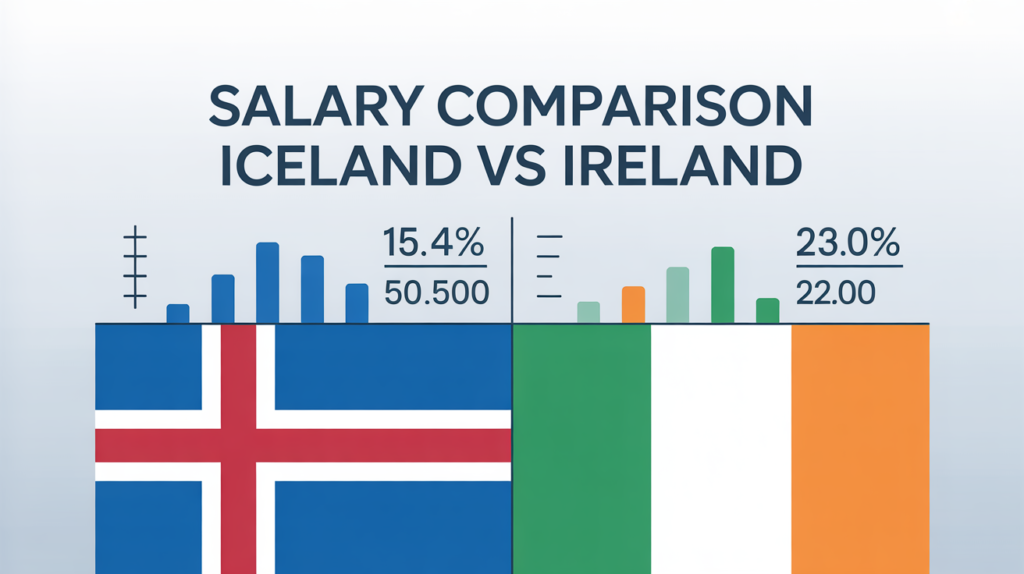
At first glance, Iceland appears to offer higher average salaries. However, a deeper comparison reveals that disposable income and purchasing power can vary significantly.
Average Salary in Iceland
Iceland consistently ranks among the highest-paying countries in Europe. The nation’s strong labor unions and collective bargaining agreements contribute to relatively high wages across many sectors.
Typical Annual Salaries in Iceland
| Profession | Average Salary |
|---|---|
| Software Developer | €65,000–€90,000 |
| Engineer | €60,000–€85,000 |
| Nurse | €50,000–€70,000 |
| Teacher | €45,000–€65,000 |
| Accountant | €55,000–€75,000 |
| Construction Worker | €45,000–€65,000 |
| Hotel Manager | €50,000–€80,000 |
Most workers in Iceland receive salaries that are considerably higher than the European average.
Why Salaries Are High in Iceland
Several factors contribute to Iceland’s strong wage levels:
- Powerful labor unions
- Small labor market
- High productivity
- Strong tourism sector
- Renewable energy-driven economy
- High living costs that push wages upward
Because Iceland has a relatively small population, employers often compete aggressively for skilled workers.
Average Salary in Ireland
Ireland has experienced significant economic growth over the past few decades. The country has become a major hub for multinational corporations, particularly in technology and pharmaceuticals.
Typical Annual Salaries in Ireland
| Profession | Average Salary |
|---|---|
| Software Developer | €50,000–€85,000 |
| Engineer | €45,000–€75,000 |
| Nurse | €40,000–€65,000 |
| Teacher | €40,000–€70,000 |
| Accountant | €45,000–€80,000 |
| Construction Worker | €35,000–€60,000 |
| Hotel Manager | €40,000–€70,000 |
Ireland offers particularly competitive salaries in sectors such as:
- Information Technology
- Financial Services
- Pharmaceutical Manufacturing
- Medical Devices
- Data Analytics
- Cybersecurity
Many international companies have established European headquarters in Ireland, creating strong demand for skilled professionals.
Salary Comparison by Industry
Technology
Technology professionals often earn excellent salaries in both countries.
| Role | Iceland | Ireland |
|---|---|---|
| Junior Developer | €45,000–€60,000 | €35,000–€50,000 |
| Mid-Level Developer | €60,000–€80,000 | €50,000–€70,000 |
| Senior Developer | €80,000–€100,000+ | €70,000–€100,000+ |
Iceland generally pays slightly higher salaries, but Ireland offers more job opportunities due to its larger tech sector.
Healthcare
Healthcare workers are in demand throughout both countries.
| Role | Iceland | Ireland |
|---|---|---|
| Registered Nurse | €50,000–€70,000 | €40,000–€65,000 |
| General Practitioner | €80,000–€130,000 | €90,000–€150,000 |
| Specialist Doctor | €120,000–€200,000+ | €130,000–€250,000+ |
Doctors may find greater earning potential in Ireland, particularly specialists.
Construction
Construction salaries are competitive in both countries due to labor shortages.
| Role | Iceland | Ireland |
|---|---|---|
| Electrician | €50,000–€75,000 | €40,000–€65,000 |
| Plumber | €50,000–€75,000 | €40,000–€65,000 |
| Site Manager | €60,000–€90,000 | €55,000–€85,000 |
Iceland generally pays slightly more, although opportunities may be more plentiful in Ireland.
Tax Comparison
Salary comparisons should always include taxation because gross income does not reflect take-home pay.
Iceland Tax System
Iceland uses a progressive tax structure. Employees typically pay:
- Income tax
- Municipal tax
- Pension contributions
Combined deductions can exceed 35% to 45% for many workers.
Ireland Tax System
Ireland also uses progressive taxation, including:
- Income Tax
- Universal Social Charge (USC)
- Pay Related Social Insurance (PRSI)
Higher earners may see effective tax rates approaching or exceeding 40%.
Which Country Leaves More Money in Your Pocket?
The answer depends on your income level and personal circumstances.
Generally:
- Lower and middle-income workers often retain a similar percentage of earnings.
- High earners may benefit slightly from Ireland’s tax structure in some cases.
- Iceland’s higher gross salaries can offset higher deductions.
Cost of Living Comparison
A high salary is less meaningful if everyday expenses consume most of your income.
Housing
Housing is one of the largest expenses in both countries.
Iceland
Average monthly rent for a one-bedroom apartment in Reykjavik:
- City Centre: €1,500–€2,200
- Outside Centre: €1,200–€1,800
Ireland
Average monthly rent for a one-bedroom apartment:
- Dublin City Centre: €1,800–€2,500+
- Outside Centre: €1,400–€2,000
Dublin’s housing market is among the most expensive in Europe.
Utilities
Utilities tend to be cheaper in Iceland because of abundant geothermal and hydroelectric energy.
Food
Food prices in Iceland are generally higher because many products are imported.
Typical grocery costs are often:
- 10%–30% higher than Ireland
- Significantly higher for imported goods
Transportation
Ireland generally offers:
- More public transportation options
- Greater access to budget airlines
- Better connections to mainland Europe
Iceland often requires car ownership outside Reykjavik.
Purchasing Power Comparison
Purchasing power measures how much goods and services people can buy with their salaries.
Iceland
Advantages:
- Higher average wages
- Strong worker protections
- Lower utility costs
Disadvantages:
- Expensive groceries
- Costly imported products
- Limited housing supply
Ireland
Advantages:
- Large job market
- Strong multinational presence
- Better access to international travel
Disadvantages:
- Extremely expensive housing
- Rising living costs
- Competitive rental market
For many professionals, purchasing power ends up surprisingly similar despite Iceland’s higher salaries.
Benefits Beyond Salary
When evaluating a job offer, consider additional benefits.
Iceland Benefits
Many employers offer:
- Strong pension contributions
- Generous vacation allowances
- Flexible work arrangements
- Excellent work-life balance
Ireland Benefits
Common benefits include:
- Private health insurance
- Pension schemes
- Annual bonuses
- Stock options in multinational companies
Technology workers often receive substantial compensation packages in Ireland that significantly increase total earnings.
Job Opportunities
Iceland
Best opportunities exist in:
- Tourism
- Renewable Energy
- Engineering
- Fisheries
- Healthcare
- Technology
Because the labor market is smaller, openings may be limited.
Ireland
Strong sectors include:
- Technology
- Pharmaceuticals
- Finance
- Healthcare
- Cybersecurity
- Data Science
Ireland generally offers a wider variety of employment opportunities.
Quality of Life and Salary Value
Salary is only one aspect of financial well-being.
Iceland Offers
- Low crime rates
- Exceptional natural beauty
- Excellent environmental quality
- Strong social support systems
Ireland Offers
- English-speaking environment
- Large international workforce
- Vibrant cities
- Easy access to Europe
Many expatriates find both countries provide excellent quality of life despite high living expenses.
Who Earns More: Iceland or Ireland?
In most professions, workers in Iceland earn higher gross salaries than those in Ireland. However, higher living expenses and taxes reduce the gap considerably.
You may earn more in Iceland if you work in:
- Engineering
- Construction
- Tourism Management
- Skilled Trades
You may earn more in Ireland if you work in:
- Technology
- Finance
- Pharmaceuticals
- Senior Healthcare Roles
Final Verdict
When comparing Iceland vs Ireland salaries, Iceland generally offers higher average wages across many industries. However, Ireland provides a larger job market, more career opportunities, and strong earning potential in technology, finance, and pharmaceuticals.
If your goal is simply maximizing gross salary, Iceland often comes out ahead. If you prioritize career growth, international opportunities, and access to multinational employers, Ireland may be the better choice.
Ultimately, the best destination depends on your profession, career goals, lifestyle preferences, and how well you can manage each country’s high cost of living. While Iceland may offer higher paychecks, Ireland often delivers broader career prospects and long-term advancement opportunities.

Hi, I’m Tanvir, the founder and author of Explore Ireland Now. With a deep love for Ireland and its rich culture, history, and landscapes, I created this site to share everything that makes this beautiful country worth exploring. Whether you’re a local looking for hidden gems or a traveler planning your next adventure, I provide insightful guides, tips, and recommendations to help you experience Ireland to the fullest.
From stunning landscapes to vibrant cities and quaint villages, Ireland is full of wonders waiting to be discovered. Through my personal experiences and research, I aim to bring you the most up-to-date information and inspiration for your journey.
Thank you for visiting Explore Ireland Now—I hope my content helps you uncover all that this incredible country has to offer! If you have any questions or need travel advice, feel free to reach out.