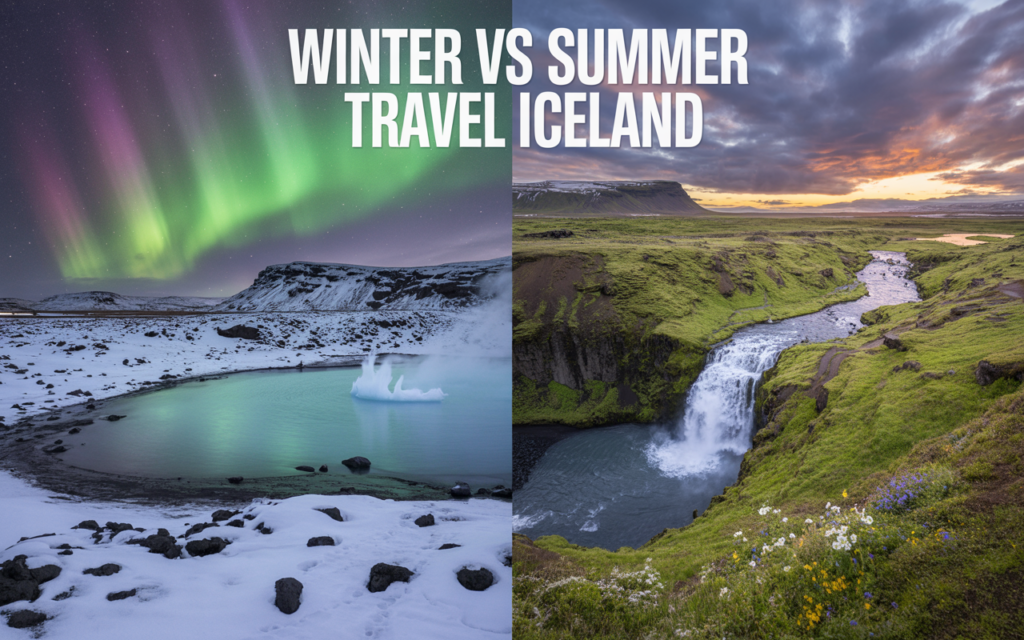
Iceland is one of the world’s most fascinating travel destinations, offering dramatic landscapes, powerful waterfalls, volcanic terrain, glaciers, and unique natural phenomena. However, the experience of visiting Iceland can vary greatly depending on whether you travel during winter or summer. Each season brings its own advantages, challenges, and unforgettable experiences.
If you’re planning a trip and wondering whether winter or summer is the better time to visit Iceland, this guide compares both seasons to help you choose the perfect time for your adventure.
Overview of Iceland’s Seasons
Iceland experiences significant seasonal differences due to its northern location. While winter offers snowy landscapes and the chance to witness the Northern Lights, summer provides long daylight hours and easier access to many attractions.
The best season for your trip depends on your interests, budget, and travel goals.
Winter Travel in Iceland
Winter in Iceland typically runs from November through March. During this time, the country transforms into a magical winter wonderland filled with snow-covered mountains, frozen waterfalls, and icy landscapes.
Advantages of Visiting Iceland in Winter
Northern Lights Viewing
One of the biggest reasons travelers visit Iceland during winter is the opportunity to see the Aurora Borealis, also known as the Northern Lights. The dark winter skies create ideal conditions for viewing this incredible natural phenomenon.
Many visitors consider seeing the Northern Lights a once-in-a-lifetime experience, making winter an attractive option.
Beautiful Snow-Covered Landscapes
Winter gives Iceland a completely different appearance. Mountains, lava fields, and waterfalls become covered in snow, creating stunning scenery that photographers love.
Popular locations such as the Golden Circle and South Coast look particularly magical during this season.
Ice Cave Tours
Natural ice caves form inside Iceland’s glaciers during winter. These brilliant blue caves are only safely accessible during the colder months and provide one of the most unique experiences available in Iceland.
Ice cave tours are among the country’s most popular winter activities.
Fewer Tourists
Winter generally sees fewer visitors compared to the busy summer season. This means attractions are often less crowded, allowing for a more peaceful experience.
Potentially Lower Prices
Flights and accommodations can sometimes be less expensive during winter, especially outside the holiday period around Christmas and New Year.
Disadvantages of Visiting Iceland in Winter
Limited Daylight
Winter days are very short. In December, Iceland may receive only four to five hours of daylight, reducing the amount of sightseeing time available.
Challenging Driving Conditions
Snow, ice, and strong winds can make driving difficult. Road closures occasionally occur due to severe weather.
Travelers planning a road trip need to be prepared for changing conditions.
Weather Unpredictability
Winter weather in Iceland can change rapidly. Sunshine, snow, rain, and strong winds may all occur within a single day.
Summer Travel in Iceland
Summer in Iceland generally lasts from June through August. It is the country’s peak tourist season and offers the most favorable conditions for outdoor exploration.
Advantages of Visiting Iceland in Summer
Midnight Sun and Long Days
One of Iceland’s most remarkable summer features is the Midnight Sun. Around June, daylight can last nearly 24 hours.
The extended daylight allows travelers to explore more attractions, hike longer trails, and enjoy flexible sightseeing schedules.
Easier Road Travel
Most roads remain open during summer, including many highland routes that are inaccessible during winter.
Driving conditions are generally safer and more predictable.
Access to Remote Areas
Many of Iceland’s most remote destinations can only be reached during summer.
Popular locations include:
- The Icelandic Highlands
- Landmannalaugar
- Askja
- Thórsmörk
These areas offer incredible hiking and unique volcanic landscapes.
Better Hiking Opportunities
Summer is the best season for hiking in Iceland. Trails are free of snow, temperatures are milder, and daylight is abundant.
Whether you’re interested in short nature walks or multi-day treks, summer provides ideal conditions.
Warmer Temperatures
Although Iceland never becomes extremely hot, summer temperatures are generally comfortable, ranging from approximately 10°C to 15°C (50°F to 59°F).
Disadvantages of Visiting Iceland in Summer
Larger Crowds
Summer is Iceland’s busiest travel season. Popular attractions can become crowded, especially around the Golden Circle, Reykjavík, and the South Coast.
Higher Travel Costs
Due to increased demand, flights, hotels, rental cars, and tours are usually more expensive during summer.
Booking well in advance is often necessary.
No Northern Lights
The near-constant daylight makes it impossible to see the Northern Lights during summer.
Travelers specifically hoping to experience the aurora should choose a winter visit instead.
Weather Comparison
Winter Weather
- Average temperatures: -1°C to 4°C (30°F to 39°F)
- Snow and ice are common
- Frequent storms and strong winds
- Rapid weather changes
Summer Weather
- Average temperatures: 10°C to 15°C (50°F to 59°F)
- Milder conditions
- Less snow and ice
- Longer periods of stable weather
While summer offers more comfortable conditions, Icelandic weather remains unpredictable year-round.
Activities Best Suited for Winter
Winter travelers can enjoy:
- Northern Lights tours
- Ice cave exploration
- Glacier hiking
- Snowmobiling
- Winter photography
- Hot spring visits
- Christmas and holiday celebrations
Many visitors find the combination of snowy landscapes and geothermal hot springs particularly memorable.
Activities Best Suited for Summer
Summer visitors can enjoy:
- Hiking
- Camping
- Highland exploration
- Whale watching
- Puffin watching
- Road trips around the Ring Road
- Kayaking
- Extended sightseeing
The accessibility of remote regions makes summer ideal for adventure travelers.
Cost Comparison
Winter Travel Costs
Winter often provides better value for budget-conscious travelers.
Potential savings may include:
- Lower airfare
- Reduced hotel rates
- Fewer crowds
- Off-season discounts
Summer Travel Costs
Summer usually comes with higher expenses because of increased tourism demand.
Travelers may pay more for:
- Flights
- Accommodation
- Rental vehicles
- Popular tours
Early booking can help reduce costs.
Photography Opportunities
Winter Photography
Winter offers:
- Snow-covered scenery
- Frozen waterfalls
- Ice caves
- Northern Lights photography
- Dramatic winter landscapes
Summer Photography
Summer provides:
- Vibrant green landscapes
- Wildflowers
- Midnight Sun lighting
- Wildlife photography
- Clear hiking and mountain views
Both seasons deliver exceptional photographic opportunities but with very different visual styles.
Which Season Is Best for Families?
Families often find summer more convenient because:
- Roads are safer
- Weather is milder
- Daylight is abundant
- Outdoor activities are more accessible
However, families interested in winter adventures and holiday experiences may still enjoy visiting during the colder months.
Which Season Is Best for Adventure Travelers?
Adventure seekers can find exciting experiences year-round.
Choose winter if you want:
- Ice caves
- Glacier adventures
- Northern Lights
- Snow activities
Choose summer if you want:
- Highland trekking
- Multi-day hikes
- Remote exploration
- Long-distance road trips
Winter vs Summer Travel Iceland: Final Verdict
There is no single best time to visit Iceland because each season offers a completely different experience.
Winter is ideal for travelers who want to see the Northern Lights, explore ice caves, enjoy snowy landscapes, and potentially save money. It provides a magical atmosphere that many visitors never forget.
Summer is perfect for travelers who want long daylight hours, easier transportation, hiking opportunities, wildlife viewing, and access to Iceland’s most remote regions.
If seeing the Northern Lights is your top priority, visit during winter. If you want maximum flexibility, comfortable travel conditions, and endless outdoor adventures, summer is the better choice.
No matter which season you choose, Iceland’s breathtaking natural beauty ensures an unforgettable journey.

Hi, I’m Tanvir, the founder and author of Explore Ireland Now. With a deep love for Ireland and its rich culture, history, and landscapes, I created this site to share everything that makes this beautiful country worth exploring. Whether you’re a local looking for hidden gems or a traveler planning your next adventure, I provide insightful guides, tips, and recommendations to help you experience Ireland to the fullest.
From stunning landscapes to vibrant cities and quaint villages, Ireland is full of wonders waiting to be discovered. Through my personal experiences and research, I aim to bring you the most up-to-date information and inspiration for your journey.
Thank you for visiting Explore Ireland Now—I hope my content helps you uncover all that this incredible country has to offer! If you have any questions or need travel advice, feel free to reach out.