
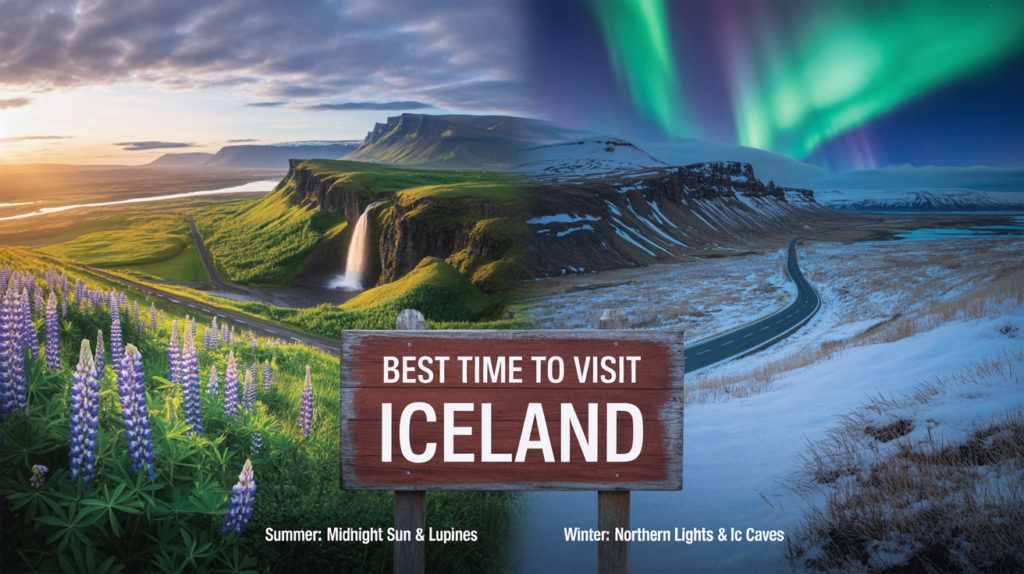
Planning a trip to Iceland? The best time to visit depends on what you want to experience. From the magical Northern Lights in winter to endless daylight during summer, Iceland offers something unique in every season. Whether you are chasing waterfalls, exploring ice caves, or relaxing in geothermal lagoons, choosing the right time can make your trip even more memorable.
In this guide, you will discover the best seasons to visit Iceland, weather conditions, travel costs, and the top activities throughout the year.
Why Timing Matters in Iceland
Iceland’s weather changes quickly, and daylight hours vary dramatically depending on the season. In summer, the sun barely sets, while winter brings long nights and snowy landscapes. Your travel experience can be completely different depending on when you go.
Some travelers visit Iceland for outdoor adventures like hiking and road trips, while others come for whale watching, glacier tours, or the Northern Lights. Knowing what each season offers helps you plan the perfect trip.
Visiting Iceland in Summer (June to August)
Summer is considered the most popular time to visit Iceland. The weather is milder, roads are easier to access, and daylight lasts almost 24 hours thanks to the Midnight Sun.
Weather in Summer
Temperatures usually range from 10°C to 15°C (50°F to 59°F), though warmer days can happen occasionally. Rain is still common, so waterproof clothing is important.
Why Visit Iceland in Summer
- Long daylight hours for sightseeing
- Best season for road trips along the Ring Road
- Easier access to the Highlands
- Great weather for hiking and camping
- Puffin watching opportunities
Summer Highlights
- Explore the famous Golden Circle
- Visit waterfalls like Seljalandsfoss and Skógafoss
- Drive through scenic coastal villages
- Enjoy festivals in Reykjavik
Downsides of Summer
- Higher hotel and flight prices
- More tourists at popular attractions
- Accommodations can sell out quickly
If you want the best overall weather and maximum flexibility, summer is the ideal time to visit Iceland.
Visiting Iceland in Winter (November to March)
Winter transforms Iceland into a snowy wonderland. This is the best season for travelers hoping to see the Northern Lights or explore natural ice caves.
Weather in Winter
Winter temperatures typically range from -1°C to 4°C (30°F to 39°F). Snow, strong winds, and icy roads are common.
Why Visit Iceland in Winter
- Best chance to see the Northern Lights
- Beautiful snowy landscapes
- Ice cave tours become available
- Fewer tourists compared to summer
- Lower airfare during certain months
Winter Highlights
- Relax at the famous Blue Lagoon surrounded by snow
- Join glacier hiking tours
- Explore frozen waterfalls
- Experience Icelandic Christmas traditions
Downsides of Winter
- Limited daylight hours
- Weather can disrupt travel plans
- Some roads and attractions may close
Winter is perfect for travelers seeking dramatic landscapes and unforgettable natural phenomena.
Visiting Iceland in Spring (April to May)
Spring is one of Iceland’s underrated travel seasons. Snow begins to melt, wildlife returns, and tourist crowds remain smaller than in summer.
Weather in Spring
Temperatures range from 0°C to 10°C (32°F to 50°F). Days become longer, and weather conditions gradually improve.
Why Visit Iceland in Spring
- Lower prices than summer
- Fewer crowds
- Longer daylight hours
- Beautiful waterfalls fueled by melting snow
Spring Highlights
- Whale watching tours begin
- Scenic photography opportunities
- Easier access to nature sites
Spring is ideal for travelers who want a balance between affordability and decent weather.
Visiting Iceland in Autumn (September to October)
Autumn brings colorful landscapes, fewer tourists, and the return of the Northern Lights season.
Weather in Autumn
Temperatures generally range from 2°C to 10°C (36°F to 50°F). Rain and wind become more frequent later in the season.
Why Visit Iceland in Autumn
- Northern Lights become visible again
- Beautiful fall colors
- Lower accommodation prices
- Fewer crowds at major attractions
Autumn Highlights
- Scenic drives through colorful landscapes
- Photography opportunities
- Relaxing geothermal spa visits
Autumn is an excellent choice for travelers who want good value and a quieter experience.
Best Time to Visit Iceland for Specific Activities
Best Time for Northern Lights
The best months are from September to March, when nights are darkest.
Best Time for Road Trips
June through August offers the safest driving conditions and open mountain roads.
Best Time for Whale Watching
April to September is ideal for spotting whales around Iceland’s coast.
Best Time for Ice Caves
Ice cave tours are typically available from November to March.
Best Time to Save Money
Spring and autumn usually offer cheaper flights and accommodations compared to peak summer months.
Month-by-Month Quick Guide
| Month | What to Expect |
|---|---|
| January | Snow, ice caves, Northern Lights |
| February | Winter adventures and festivals |
| March | Longer days and winter scenery |
| April | Fewer crowds and improving weather |
| May | Great for wildlife and sightseeing |
| June | Midnight Sun and road trips |
| July | Warmest weather and peak tourism |
| August | Outdoor adventures and festivals |
| September | Northern Lights begin returning |
| October | Autumn colors and fewer tourists |
| November | Winter conditions start |
| December | Christmas atmosphere and snowy landscapes |
What to Pack for Iceland
No matter when you visit Iceland, packing properly is essential because weather conditions change quickly.
Important Items to Bring
- Waterproof jacket
- Warm layers
- Waterproof hiking shoes
- Gloves and hat
- Swimsuit for hot springs
- Camera for landscapes and wildlife
Even in summer, temperatures can feel cool due to wind and rain.
Final Thoughts
The best time to visit Iceland depends entirely on the type of experience you want.
- Visit in summer for road trips, hiking, and endless daylight.
- Choose winter for the Northern Lights and ice caves.
- Travel in spring or autumn for fewer crowds and lower prices.
No matter when you go, Iceland’s breathtaking waterfalls, volcanic landscapes, glaciers, and geothermal lagoons create an unforgettable adventure year-round.

Hi, I’m Tanvir, the founder and author of Explore Ireland Now. With a deep love for Ireland and its rich culture, history, and landscapes, I created this site to share everything that makes this beautiful country worth exploring. Whether you’re a local looking for hidden gems or a traveler planning your next adventure, I provide insightful guides, tips, and recommendations to help you experience Ireland to the fullest.
From stunning landscapes to vibrant cities and quaint villages, Ireland is full of wonders waiting to be discovered. Through my personal experiences and research, I aim to bring you the most up-to-date information and inspiration for your journey.
Thank you for visiting Explore Ireland Now—I hope my content helps you uncover all that this incredible country has to offer! If you have any questions or need travel advice, feel free to reach out.