Planning a trip to Iceland is exciting from the very first step. From dramatic waterfalls and volcanic landscapes to glacier lagoons and charming towns, Iceland offers one of the most unforgettable travel experiences in the world. Whether you are traveling for a long weekend or planning a two-week adventure, having a well-structured Iceland travel plan can help you make the most of your time and budget.
In this guide, you will learn how to create the perfect Iceland itinerary, the best places to visit, transportation options, budgeting tips, what to pack, and practical travel advice for every season.
Why Visit Iceland?
Iceland is known for its unique natural beauty and peaceful atmosphere. The country offers a combination of glaciers, volcanoes, black sand beaches, geothermal lagoons, lava fields, and stunning mountain views.
Some of the biggest reasons travelers choose Iceland include:
- Seeing the Northern Lights
- Exploring glaciers and ice caves
- Relaxing in geothermal hot springs
- Driving the scenic Ring Road
- Visiting waterfalls like Gullfoss and Skógafoss
- Experiencing Icelandic culture and cuisine
- Watching whales and puffins
Unlike many destinations, Iceland feels untouched and wild, making it perfect for nature lovers and adventure travelers.
Best Time to Visit Iceland
The best time to visit Iceland depends on what you want to experience.
Summer (June to August)
Summer is the most popular season because of the mild weather and nearly 24 hours of daylight.
Best for:
- Road trips
- Hiking
- Camping
- Puffin watching
- Exploring the Highlands
Average temperature:
- 10°C to 15°C
Winter (November to March)
Winter transforms Iceland into a snowy wonderland.
Best for:
- Northern Lights
- Ice caves
- Snow activities
- Fewer tourists
Average temperature:
- -1°C to 4°C
Shoulder Seasons (April-May and September-October)
These months offer fewer crowds and lower accommodation prices while still providing good weather conditions.
How Many Days Do You Need in Iceland?
Your ideal trip length depends on your travel goals.
3 to 4 Days
Perfect for:
- Reykjavík
- Golden Circle
- Blue Lagoon
- South Coast highlights
5 to 7 Days
Great for:
- A more relaxed South Coast trip
- Glacier lagoon visits
- Snæfellsnes Peninsula
10 to 14 Days
Ideal for:
- Driving the entire Ring Road
- Exploring East Iceland
- Visiting the North and Westfjords
Iceland Travel Plan for 7 Days
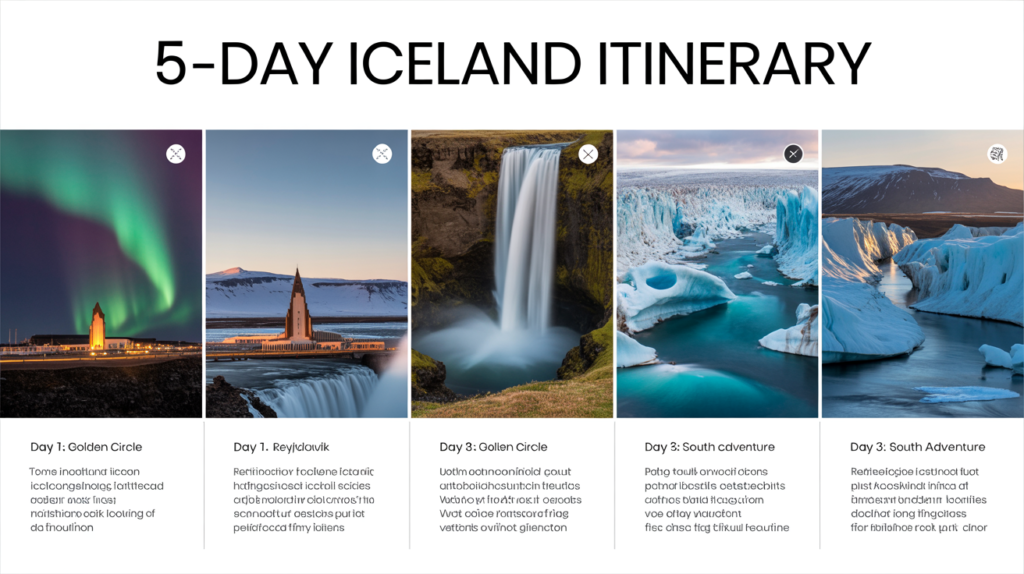
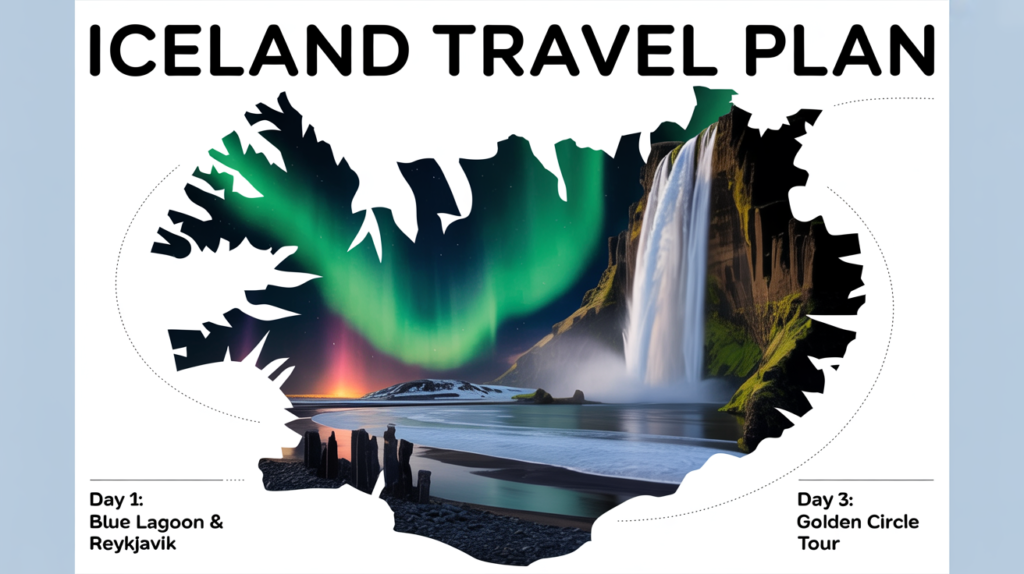
Here is a practical 7-day Iceland itinerary for first-time visitors.
Day 1: Arrive in Reykjavík
Start your journey in Reykjavík, Iceland’s capital city.
Things to do:
- Explore Hallgrímskirkja Church
- Walk along Laugavegur Street
- Visit Harpa Concert Hall
- Try Icelandic food
Optional:
- Relax at the Blue Lagoon after your flight
Day 2: Golden Circle Tour
The Golden Circle is one of Iceland’s most famous routes.
Main attractions:
- Þingvellir National Park
- Gullfoss Waterfall
- Geysir geothermal area
This route can easily be done as a day trip from Reykjavík.
Day 3: South Coast Adventure
Drive along Iceland’s beautiful South Coast.
Highlights:
- Seljalandsfoss Waterfall
- Skógafoss Waterfall
- Reynisfjara Black Sand Beach
- Vík village
Day 4: Glacier Lagoon
Continue east toward Jökulsárlón Glacier Lagoon.
Must-see spots:
- Diamond Beach
- Vatnajökull National Park
- Icebergs floating in the lagoon
This area is one of the most photogenic locations in Iceland.
Day 5: Explore East Iceland
East Iceland is quieter and less crowded.
Activities:
- Scenic coastal drives
- Small fishing villages
- Hiking trails
- Wildlife spotting
Day 6: North Iceland
Visit some of North Iceland’s famous attractions.
Popular stops:
- Lake Mývatn
- Goðafoss Waterfall
- Húsavík whale watching
Day 7: Return to Reykjavík
Drive back toward Reykjavík and enjoy any final sightseeing before your departure.
Should You Rent a Car in Iceland?
Renting a car is one of the best ways to explore Iceland, especially if you want flexibility.
Benefits of Renting a Car
- Freedom to travel at your own pace
- Easier access to remote attractions
- Ability to stop for photos anytime
Important Driving Tips
- Weather changes quickly
- Roads may close in winter
- Gravel roads are common
- Fuel stations can be far apart in rural areas
A 4×4 vehicle is recommended during winter or if you plan to visit the Highlands.
Budgeting for an Iceland Trip
Iceland is known for being expensive, but proper planning can help you save money.
Accommodation Costs
- Budget hostels: €40–€80
- Mid-range hotels: €120–€250
- Luxury hotels: €300+
Food Costs
- Budget meal: €15–€25
- Restaurant dinner: €30–€60
Transportation Costs
- Rental car: €50–€150 per day
- Fuel: Expensive compared to many countries
Money-Saving Tips
- Buy groceries
- Stay in guesthouses
- Travel during shoulder season
- Book accommodations early
- Use reusable water bottles
What to Pack for Iceland
Weather in Iceland can change within minutes, so packing correctly is important.
Essential Clothing
- Waterproof jacket
- Thermal layers
- Hiking boots
- Gloves and hat
- Warm socks
Travel Essentials
- Power bank
- Camera
- Reusable water bottle
- Swimsuit for hot springs
- Travel adapter
Even during summer, temperatures can feel cool because of the wind.
Best Places to Visit in Iceland
Reykjavík
The cultural and social heart of Iceland.
Blue Lagoon
A world-famous geothermal spa near Keflavík Airport.
Golden Circle
Perfect for first-time visitors.
South Coast
Home to waterfalls, glaciers, and black sand beaches.
Snæfellsnes Peninsula
Often called “Iceland in Miniature.”
Jökulsárlón Glacier Lagoon
One of Iceland’s most breathtaking natural attractions.
Akureyri
A beautiful northern town surrounded by mountains.
Iceland Food You Should Try
Icelandic cuisine combines seafood, lamb, and dairy products.
Popular dishes include:
- Icelandic lamb soup
- Fresh seafood
- Skyr yogurt
- Fish stew
- Icelandic hot dogs
If you enjoy trying local foods, Iceland has many unique culinary experiences.
Northern Lights Travel Tips
The Northern Lights are one of Iceland’s biggest attractions during winter.
Best Months
- September to March
Best Conditions
- Clear skies
- Low light pollution
- Strong solar activity
Helpful Tips
- Stay outside Reykjavík for darker skies
- Use weather and aurora forecast apps
- Be patient because sightings are never guaranteed
Safety Tips for Iceland Travelers
Iceland is considered one of the safest countries in the world, but nature can still be dangerous.
Stay Safe By:
- Checking weather forecasts daily
- Respecting warning signs
- Avoiding dangerous waves at black sand beaches
- Driving carefully during winter
- Wearing proper hiking gear
Always follow local travel advisories and road updates.
Final Thoughts
An Iceland travel plan helps you experience the country in a more organized and enjoyable way. Whether you are chasing waterfalls, relaxing in hot springs, exploring glaciers, or searching for the Northern Lights, Iceland offers unforgettable adventures in every season.
For first-time visitors, a 7-day itinerary covering Reykjavík, the Golden Circle, the South Coast, and Glacier Lagoon provides an excellent introduction to the country. Travelers with more time can explore the Ring Road and discover Iceland’s quieter regions.
No matter when you visit, Iceland’s landscapes, culture, and natural beauty make it a destination you will remember for a lifetime.

Hi, I’m Tanvir, the founder and author of Explore Ireland Now. With a deep love for Ireland and its rich culture, history, and landscapes, I created this site to share everything that makes this beautiful country worth exploring. Whether you’re a local looking for hidden gems or a traveler planning your next adventure, I provide insightful guides, tips, and recommendations to help you experience Ireland to the fullest.
From stunning landscapes to vibrant cities and quaint villages, Ireland is full of wonders waiting to be discovered. Through my personal experiences and research, I aim to bring you the most up-to-date information and inspiration for your journey.
Thank you for visiting Explore Ireland Now—I hope my content helps you uncover all that this incredible country has to offer! If you have any questions or need travel advice, feel free to reach out.