
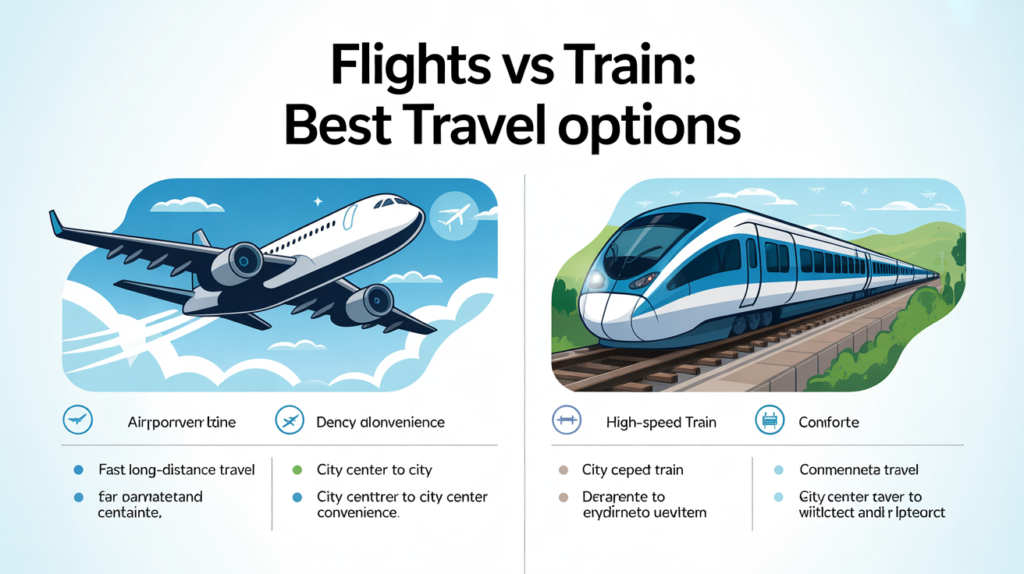
When planning a trip, one of the biggest decisions travelers face is choosing between flights and trains. Both transportation methods have unique advantages, and the best option often depends on your budget, destination, travel style, and time constraints. Some travelers value speed above everything else, while others prefer comfort, scenic views, or affordability. Understanding the differences between air travel and train travel can help you make the right decision for your next journey.
Understanding the Basics of Flight Travel
Flights are one of the fastest ways to travel long distances. Modern airlines connect cities, countries, and continents within hours, making air travel essential for international trips and cross-country journeys. Airports are designed to handle large numbers of passengers efficiently, and airlines offer a wide range of ticket classes, from budget economy to luxurious first class.
For travelers who want to save time, flights are often the most practical option. A journey that could take an entire day by train may only take a couple of hours by plane. This convenience makes flying especially appealing for business travelers, short vacations, and long-distance travel.
However, air travel also comes with challenges. Security checks, baggage restrictions, airport waiting times, and possible flight delays can make the experience stressful. Travelers usually need to arrive at the airport hours before departure, which adds extra time to the overall journey.
Understanding the Basics of Train Travel
Train travel has remained popular for decades because it offers comfort, convenience, and scenic experiences. Many people enjoy the relaxed atmosphere of train stations compared to busy airports. Trains usually have fewer security procedures, allowing passengers to board quickly and easily.
One of the biggest advantages of train travel is comfort. Passengers often enjoy larger seats, more legroom, and the freedom to move around during the trip. Many trains also provide dining cars, sleeping cabins, and beautiful window views, making the journey itself part of the travel experience.
Train travel is especially effective for medium-distance trips and travel between nearby cities. In many countries, high-speed rail networks provide fast and reliable transportation that competes directly with flights.
On the downside, trains can be slower for long distances, especially in regions without high-speed rail systems. Availability may also be limited in some countries where rail infrastructure is less developed.
Speed Comparison: Flights vs Train
When it comes to speed, flights usually win for long-distance travel. Airplanes can cover thousands of kilometers in a short amount of time, making them ideal for international and cross-country trips.
For example:
- A flight between two distant cities may take only 2–3 hours.
- The same journey by train could take 8–12 hours or more.
However, total travel time is not always as simple as the flight duration itself. Travelers must consider:
- Airport check-in times
- Security screening
- Boarding procedures
- Baggage claim
- Transportation to and from airports
Train stations are often located in city centers, reducing transfer times. In some cases, especially for shorter routes, trains can actually be faster door-to-door.
Comfort and Travel Experience
Comfort is one area where trains often outperform flights. Train passengers can:
- Walk around freely
- Enjoy spacious seating
- Use onboard dining facilities
- Work comfortably with fewer restrictions
- Enjoy scenic landscapes throughout the journey
Flights, especially economy class, can feel cramped during long journeys. Limited legroom and strict seating arrangements may make long flights tiring.
On the other hand, airlines offer premium cabins with luxury amenities, including lie-flat seats, entertainment systems, and gourmet meals. Travelers willing to spend more may find flights extremely comfortable.
Cost Comparison
Cost plays a major role when choosing between flights and trains. Budget airlines sometimes offer very cheap tickets, especially if booked early. Promotional fares can make flying surprisingly affordable.
However, hidden costs may increase the total price, such as:
- Checked baggage fees
- Seat selection fees
- Airport transfers
- Food and drinks onboard
Train tickets are often more transparent, with fewer extra charges. In many countries, rail passes can also provide excellent value for travelers planning multiple journeys.
Generally:
- Flights may be cheaper for long-distance travel.
- Trains may offer better value for short and medium distances.
Prices also depend heavily on the country, travel season, and booking timing.
Environmental Impact
Environmental concerns are becoming increasingly important for travelers. Trains are generally considered more eco-friendly than airplanes because they produce lower carbon emissions per passenger.
Electric trains, especially those powered by renewable energy, are among the most sustainable transportation options available today. Airplanes consume large amounts of fuel and contribute significantly to greenhouse gas emissions.
Travelers looking to reduce their environmental footprint often choose trains whenever possible, especially for shorter routes where rail travel is practical.
Convenience and Accessibility
Convenience varies depending on the destination and transportation infrastructure.
Flights Are Better For:
- International travel
- Remote destinations
- Long-distance journeys
- Time-sensitive trips
Trains Are Better For:
- City-center to city-center travel
- Relaxed travel experiences
- Scenic routes
- Avoiding airport stress
Airports are often located far from city centers, requiring additional transportation. Train stations are usually centrally located, making arrival and departure much easier.
Scenic Value and Enjoyment
Train journeys are often more scenic and enjoyable than flights. Travelers can watch changing landscapes, mountains, rivers, villages, and countryside throughout the trip. Famous rail routes around the world attract tourists specifically for the views.
Flights offer aerial perspectives, but passengers spend much of the journey above clouds with limited scenery. For travelers who enjoy the journey itself rather than simply reaching the destination, trains often provide a richer experience.
Safety Considerations
Both flights and trains are considered very safe forms of transportation. Air travel has strict international safety standards and advanced technology designed to minimize risks.
Train travel also maintains strong safety records in many countries, particularly those with modern rail systems. Some travelers feel more comfortable on trains because they avoid turbulence and flying anxiety.
Ultimately, safety differences are minimal for most travelers, and both methods are reliable when operated by reputable companies.
Best Option for Different Types of Travelers
Business Travelers
Flights are often the best choice for business travelers because they save time on long-distance trips. Fast travel allows professionals to attend meetings and return quickly.
Budget Travelers
Budget travelers may prefer whichever option offers the lowest fare. In some regions, trains are cheaper, while budget airlines dominate in others.
Family Travelers
Families may appreciate the extra space and flexibility offered by trains, especially when traveling with children.
Adventure and Leisure Travelers
Travelers focused on experiences and scenery often prefer trains because the journey becomes part of the adventure.
When Flights Are the Better Choice
Flights are usually the best option when:
- Traveling internationally
- Covering large distances
- Working with limited vacation time
- Visiting destinations without strong rail connections
- Finding low-cost airfare deals
Air travel remains unmatched for speed over long distances.
When Trains Are the Better Choice
Trains are usually the better option when:
- Traveling between nearby cities
- Seeking comfort and relaxation
- Avoiding airport procedures
- Enjoying scenic routes
- Traveling sustainably
Rail travel can transform transportation into an enjoyable experience rather than just a necessity.
Combining Flights and Trains
Many experienced travelers combine both transportation methods to maximize convenience. For example:
- Take a flight between countries
- Use trains for regional exploration
This approach provides speed for long distances and comfort for local travel. Europe and parts of Asia are especially suitable for combining flights and rail travel efficiently.
Final Thoughts
The debate between flights and trains does not have a single correct answer because the best choice depends on individual priorities. Flights provide unmatched speed and global connectivity, while trains offer comfort, convenience, and scenic experiences.
If your main goal is saving time on long journeys, flying is usually the smarter option. If you value relaxation, affordability for shorter trips, and environmental sustainability, train travel may be the better choice.
Before booking your next trip, consider your budget, destination, schedule, and personal travel style. Choosing the right transportation method can greatly improve your overall travel experience.

Hi, I’m Tanvir, the founder and author of Explore Ireland Now. With a deep love for Ireland and its rich culture, history, and landscapes, I created this site to share everything that makes this beautiful country worth exploring. Whether you’re a local looking for hidden gems or a traveler planning your next adventure, I provide insightful guides, tips, and recommendations to help you experience Ireland to the fullest.
From stunning landscapes to vibrant cities and quaint villages, Ireland is full of wonders waiting to be discovered. Through my personal experiences and research, I aim to bring you the most up-to-date information and inspiration for your journey.
Thank you for visiting Explore Ireland Now—I hope my content helps you uncover all that this incredible country has to offer! If you have any questions or need travel advice, feel free to reach out.