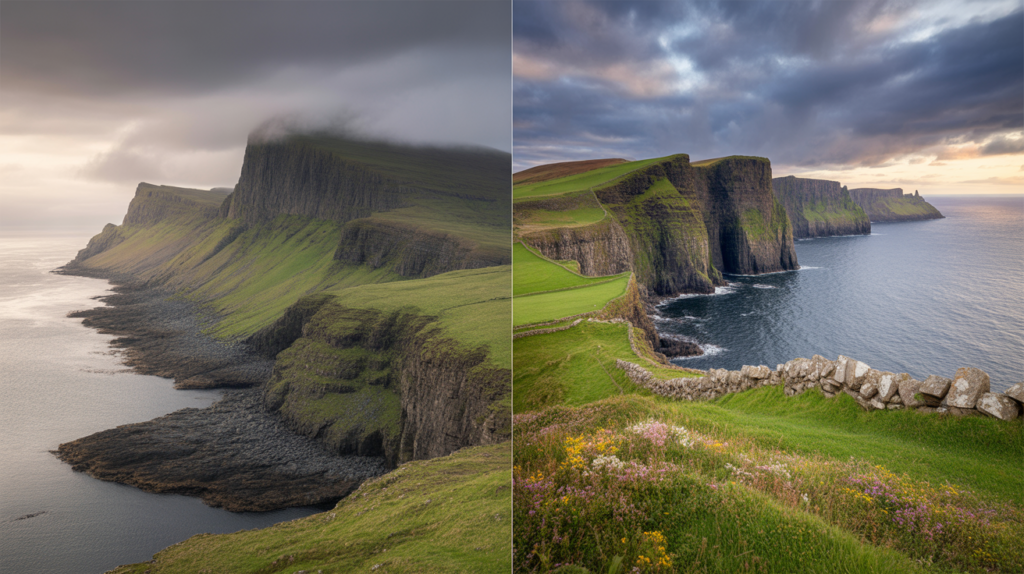
Few landscapes in the world feel as dramatic and unforgettable as the coastal cliffs of Scotland and Ireland. Both countries are famous for rugged shorelines, crashing Atlantic waves, ancient legends, and breathtaking sea views. Yet despite their similarities, the cliffscapes of these Celtic neighbors offer surprisingly different experiences.
Some travelers fall in love with Scotland’s wild, misty cliffs that feel almost untouched by time. Others prefer Ireland’s greener, softer coastlines filled with charm, folklore, and postcard-perfect scenery. Choosing between them is less about which country is “better” and more about what kind of coastal magic you want to experience.
The Overall Atmosphere
Scotland’s coastal cliffs often feel raw, moody, and untamed. The weather changes quickly, fog rolls in without warning, and the sea can look dark and powerful even on calm days. There’s a sense that nature is completely in charge.
Places like the Isle of Skye or the cliffs along the North Coast 500 feel cinematic in the best possible way. You stand at the edge of the world with wind slapping your jacket while seabirds glide below. Scotland has a talent for making you feel wonderfully small.
Ireland’s cliffs, meanwhile, feel a little warmer and more welcoming. The landscapes are still dramatic, but there’s often a softness to the green hills surrounding them. Stone walls, sheep-covered fields, and nearby villages add a human touch to the scenery.
If Scotland feels like an epic fantasy movie, Ireland sometimes feels like a heartfelt folk song.
Scotland’s Most Famous Coastal Cliffs
The Cliffs of Neist Point
Located on the Isle of Skye, Neist Point is one of Scotland’s most iconic coastal viewpoints. The lighthouse sitting on the edge of towering cliffs creates a scene that almost looks unreal at sunset.
The walk down to the lighthouse is steep but worth every step. On clear days, you can spot whales, dolphins, and endless stretches of ocean.
What makes Neist Point special is its atmosphere. Even when other visitors are around, the place still feels isolated and ancient.
Kilt Rock
Kilt Rock is another Skye favorite. The cliffs resemble the pleats of a Scottish kilt, which is how they got their name. Waterfalls plunge directly into the sea below, creating one of the most photographed coastal scenes in Scotland.
There’s something strangely hypnotic about hearing the wind echo through the cliffs while waves crash beneath you.
Dunnottar Castle Cliffs
Scotland has a unique advantage when it comes to combining cliffs with history. Dunnottar Castle sits dramatically atop steep coastal rock formations near Stonehaven. The ruins look like they were built specifically for fantasy novels.
Standing there, you get both natural beauty and the eerie feeling of centuries of stories lingering in the air.
Ireland’s Most Famous Coastal Cliffs
Cliffs of Moher
The Cliffs of Moher are Ireland’s superstar attraction, and honestly, they deserve the hype. Stretching for miles along County Clare, these cliffs rise dramatically above the Atlantic Ocean and create one of Europe’s most recognizable landscapes.
On stormy days, the waves slam against the rocks with incredible force. On sunny days, the cliffs glow green and gold under the light.
One of the best things about the Cliffs of Moher is accessibility. You don’t need to be an experienced hiker to enjoy spectacular views.
Slieve League Cliffs
Many travelers say Slieve League in County Donegal feels even more impressive than Moher because it’s less crowded and significantly higher.
These cliffs deliver that “edge of the earth” feeling in a huge way. The roads leading there twist through remote landscapes that make the journey feel like an adventure itself.
Ireland’s northwest coast especially has a quiet beauty that sneaks up on you.
Loop Head Cliffs
Loop Head offers a more peaceful coastal experience compared to Ireland’s famous tourist hotspots. You get rugged cliffs, ocean views, and a lighthouse without massive crowds.
There’s a calmness here that many travelers end up loving even more than the famous sites.
Which Country Has More Dramatic Cliffs?
If “dramatic” means towering, rugged, and intense, Scotland probably wins by a narrow margin. Scotland’s cliffs often feel harsher and more extreme, especially in the Highlands and islands.
The weather plays a big role too. Scottish cliffs under dark clouds can feel almost mythical.
But Ireland competes strongly with emotional beauty. Irish coastal scenery often feels more balanced and colorful, blending cliffs with green countryside and charming villages nearby.
Scotland gives you drama.
Ireland gives you romance.
And yes, I know that sounds like something written on a candle in a tiny seaside gift shop, but it’s still true.
Best for Hiking
Scotland is incredible for adventurous hikers. Trails can be rugged, steep, and remote. The Isle of Skye especially attracts travelers who enjoy challenging walks and wild scenery.
Ireland’s coastal hikes tend to be more approachable for casual travelers. You can still find difficult routes, but many famous cliff walks are easier to access and navigate.
If your dream hike includes muddy boots, sudden rain, and questioning your life choices while staring at a magnificent ocean, Scotland may be your place.
If you want dramatic views with slightly less chaos, Ireland is wonderfully rewarding.
Wildlife and Nature
Both countries are excellent for wildlife lovers.
In Scotland, you may spot:
- Puffins
- Dolphins
- Seals
- Golden eagles
- Whales
Ireland also offers amazing wildlife experiences, especially along the western coastline. Puffins are particularly popular near the Cliffs of Moher during certain seasons.
Scotland’s landscapes often feel more rugged and mountainous, while Ireland’s coastal areas mix cliffs with rolling green fields.
The result is two completely different moods despite similar geography.
Weather Differences
Here’s the part where both countries gently laugh at tourists who packed only light jackets.
Weather along the coasts changes constantly in both Scotland and Ireland. Rain, mist, and strong winds are common.
However, Scotland generally feels colder and moodier overall, especially in the north and on the islands.
Ireland tends to have slightly milder conditions and brighter stretches between rain showers.
That said, coastal weather has a mischievous personality. A sunny morning can become a dramatic storm by lunchtime in either country.
The Atlantic Ocean loves plot twists.
Photography Opportunities
Photographers will adore both destinations, but each offers different aesthetics.
Scotland delivers:
- Dark, moody skies
- Jagged cliffs
- Dramatic light changes
- Epic mountain-and-sea combinations
Ireland offers:
- Vibrant green landscapes
- Softer lighting
- Charming villages near cliffs
- Sweeping ocean panoramas
Scotland’s coast can feel like a fantasy film.
Ireland’s coast can feel like poetry with sheep.
An important distinction.
Accessibility and Tourism
Ireland’s major cliff attractions are generally easier to access for average travelers. Roads, parking, visitor centers, and facilities are often more straightforward.
Scotland’s most spectacular coastal locations sometimes require longer drives, ferry rides, or more demanding hikes.
That challenge is part of the appeal for many travelers. Scotland often rewards effort with solitude and unforgettable scenery.
Ireland, meanwhile, excels at combining beauty with comfort and hospitality.
Which Should You Choose?
Choose Scotland if you want:
- Wild, rugged landscapes
- Dramatic mountain-and-sea scenery
- Remote adventures
- Moody atmospheres
- Challenging hikes
Choose Ireland if you want:
- Green coastal beauty
- Easier accessibility
- Charming villages
- Softer landscapes
- A balance of drama and warmth
Honestly though, this feels a bit like comparing thunder to music. They create different emotional experiences.
Some travelers stand on Scottish cliffs and feel awe.
Others stand on Irish cliffs and feel peace.
And some lucky people eventually visit both and become completely insufferable about coastal scenery forever.
Final Thoughts
Scotland and Ireland both offer some of the most beautiful coastal cliffs in the world, but they leave very different impressions on the heart.
Scotland’s cliffs are wild, ancient, and intense. They make you feel like nature is telling a very old story.
Ireland’s cliffs feel soulful and inviting, blending dramatic scenery with warmth and quiet charm.
Neither destination disappoints. In fact, the real danger is returning home and suddenly finding ordinary coastlines emotionally underwhelming.
A small price to pay for standing at the edge of the Atlantic while the wind attempts to rearrange your entire personality.

Hi, I’m Tanvir, the founder and author of Explore Ireland Now. With a deep love for Ireland and its rich culture, history, and landscapes, I created this site to share everything that makes this beautiful country worth exploring. Whether you’re a local looking for hidden gems or a traveler planning your next adventure, I provide insightful guides, tips, and recommendations to help you experience Ireland to the fullest.
From stunning landscapes to vibrant cities and quaint villages, Ireland is full of wonders waiting to be discovered. Through my personal experiences and research, I aim to bring you the most up-to-date information and inspiration for your journey.
Thank you for visiting Explore Ireland Now—I hope my content helps you uncover all that this incredible country has to offer! If you have any questions or need travel advice, feel free to reach out.