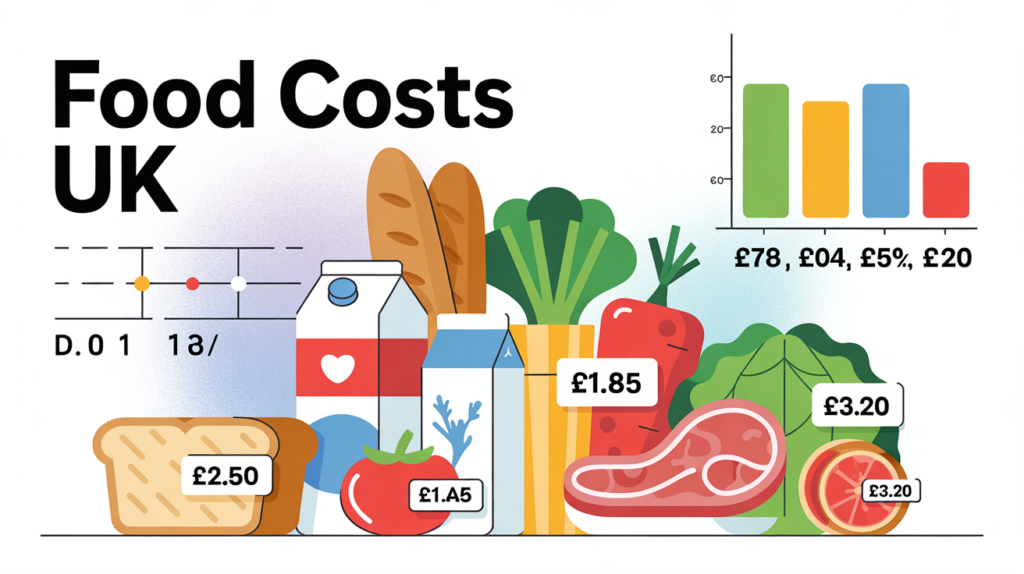
Food costs in the UK can vary a lot depending on where you live, your lifestyle, and how often you eat out. Someone living in central London will usually spend much more on food than a person living in a smaller town in Wales or Northern Ireland. Grocery habits, family size, dietary choices, and shopping strategies also play a major role.
Whether you are planning to move to the UK, visit for an extended period, study abroad, or simply want to understand the average cost of living, knowing the typical food costs in the UK can help you budget more effectively.
In this guide, you will learn:
- Average grocery costs in the UK
- Monthly food expenses for individuals and families
- Restaurant and takeaway prices
- Cheap supermarkets in the UK
- How food prices vary across regions
- Tips to save money on groceries
- Common food prices in the UK
Let’s take a closer look.
Average Food Costs in the UK
The average food bill in the UK depends on household size and spending habits. A single person who cooks most meals at home may spend significantly less than someone who frequently orders takeaway or eats at restaurants.
Here is a rough estimate of average monthly grocery costs in the UK:
| Household Type | Average Monthly Grocery Cost |
|---|---|
| Single adult | £150–£300 |
| Couple | £250–£500 |
| Family of 4 | £450–£900 |
| Student | £100–£250 |
These figures mainly include groceries and basic household food items. Eating out regularly can increase your monthly food spending considerably.
How Much Does Food Cost Per Week in the UK?
Weekly grocery spending is often easier to track than monthly spending. Here is a general estimate:
| Household Type | Weekly Food Budget |
|---|---|
| Single person | £35–£70 |
| Couple | £60–£120 |
| Family of 4 | £100–£220 |
Budget-conscious shoppers who use discount supermarkets and meal planning can often spend less.
Average Grocery Prices in the UK
To better understand food costs in the UK, it helps to know the prices of common grocery items.
Milk
A 2-litre bottle of milk usually costs around £1.40–£1.80.
Bread
A loaf of standard bread typically costs between £1 and £2.
Eggs
A dozen eggs generally cost around £2–£4 depending on quality and brand.
Chicken
Chicken breast usually costs about £6–£10 per kilogram.
Rice
A 1kg bag of rice often costs between £1.50 and £3.
Pasta
Basic pasta can cost as little as £1 per pack.
Cheese
Cheddar cheese generally costs around £2.50–£5 per block.
Apples
A bag of apples may cost around £1.50–£3.
Potatoes
A large bag of potatoes usually costs between £2 and £5.
Tea
Tea is extremely popular in the UK, and a box of tea bags often costs around £2–£5.
Prices may increase in convenience stores and city centres.
Cheapest Supermarkets in the UK
Where you shop can make a major difference in your food budget.
Aldi
Aldi is known for low prices and good-quality own-brand products. Many UK residents use Aldi to reduce their weekly grocery bills.
Lidl
Lidl is another discount supermarket with competitive prices. Fresh bakery items and weekly deals are especially popular.
Asda
Asda offers affordable groceries and often has good multi-buy deals.
Tesco
Tesco is one of the largest supermarket chains in the UK. Prices vary depending on whether you shop in Tesco Express or larger Tesco stores.
Sainsbury’s
Sainsbury’s is slightly more expensive than discount supermarkets but offers a wide selection of products.
Morrisons
Morrisons is known for fresh produce and reasonably priced meat and bakery items.
Waitrose
Waitrose is generally considered one of the more expensive supermarkets in the UK. However, many shoppers believe the quality is excellent.
Food Costs in London vs Other UK Cities
London is usually the most expensive place in the UK for food and dining.
London
- Higher restaurant prices
- More expensive convenience stores
- Premium pricing in tourist areas
- Larger selection of international foods
Manchester
Food costs are generally lower than London while still offering a wide variety of restaurants.
Birmingham
Birmingham has many affordable grocery stores and budget-friendly restaurants.
Glasgow
Glasgow often has slightly cheaper living costs compared to southern England.
Belfast
Food prices in Belfast can sometimes be lower than in major English cities.
Average Restaurant Prices in the UK
Dining out can quickly increase your monthly food spending.
Here are common restaurant price ranges:
| Meal Type | Average Price |
|---|---|
| Fast food meal | £6–£12 |
| Casual restaurant meal | £12–£25 |
| Mid-range dinner for two | £40–£80 |
| Coffee | £2.50–£5 |
| Pizza takeaway | £10–£20 |
| Fish and chips | £8–£15 |
London restaurants are usually more expensive than those in smaller towns.
Student Food Costs in the UK
Students often try to keep food spending low due to tight budgets.
A student in the UK may spend:
- £25–£60 per week on groceries
- £100–£250 per month on food
Many students save money by:
- Cooking at home
- Buying supermarket own-brand products
- Sharing meals with flatmates
- Using student discounts
- Avoiding expensive takeaway meals
Meal planning can make a huge difference for students trying to manage living costs.
Family Food Costs in the UK
Families usually spend much more on food due to larger grocery needs.
Monthly food costs for a family of four can range from £450 to £900 or more depending on:
- Children’s ages
- Eating habits
- Dietary restrictions
- Organic food preferences
- Frequency of takeaway meals
Families often save money by:
- Buying in bulk
- Shopping during sales
- Using loyalty cards
- Cooking larger meals
- Freezing leftovers
Is Food Expensive in the UK?
Compared to some countries, food in the UK can feel expensive, especially after inflation and rising living costs in recent years.
However, the UK also has many budget supermarkets and discount stores that help people reduce expenses.
Food costs in the UK are generally:
- More expensive in large cities
- Lower in smaller towns
- Higher for imported products
- Higher for organic and specialty foods
People who cook at home regularly usually spend far less than those who eat out frequently.
Factors That Affect Food Costs in the UK
Several things influence how much people spend on food in the UK.
Location
London and southern England are usually more expensive.
Lifestyle
People who eat takeaway meals often spend much more.
Dietary Preferences
Organic, vegan, gluten-free, and imported foods may cost extra.
Household Size
Larger households naturally spend more overall.
Inflation
Food prices can rise due to inflation, fuel costs, and supply chain issues.
Shopping Habits
People who compare prices and use discounts often save a significant amount.
How to Save Money on Food in the UK
Food costs can add up quickly, but there are many ways to reduce spending.
Use Discount Supermarkets
Shopping at Aldi and Lidl can lower grocery bills considerably.
Buy Store Brands
Supermarket own-brand items are often much cheaper than branded products.
Meal Plan
Planning meals helps reduce waste and unnecessary purchases.
Avoid Shopping Hungry
People often buy extra snacks and impulse items when hungry.
Use Loyalty Cards
Tesco Clubcard, Nectar Card, and other reward programs can help save money.
Buy in Bulk
Rice, pasta, frozen foods, and canned goods are often cheaper in larger quantities.
Cook at Home
Preparing meals at home is usually much cheaper than takeaway food.
Look for Reduced Items
Many supermarkets discount fresh items near closing time.
Typical Monthly Food Budget in the UK
Here is a simple example of a moderate monthly food budget for one person:
| Expense | Estimated Cost |
|---|---|
| Groceries | £180 |
| Coffee/snacks | £40 |
| Occasional takeaway | £60 |
| Restaurant meals | £70 |
| Total | £350 |
People who rarely eat out may spend much less.
UK Food Prices Compared to Other Countries
Food prices in the UK are generally:
- Higher than some Eastern European countries
- Lower than countries like Switzerland or Norway
- Similar to many Western European countries
Imported products and international brands may cost more than locally produced foods.
The Impact of Inflation on UK Food Costs
Food prices in the UK have increased in recent years due to:
- Inflation
- Energy price increases
- Transportation costs
- Global supply chain disruptions
- Weather-related agricultural problems
Many households have adjusted by:
- Buying fewer luxury foods
- Choosing cheaper supermarket brands
- Cooking more meals at home
- Reducing restaurant visits
Vegetarian and Vegan Food Costs in the UK
Plant-based eating can sometimes reduce food costs, especially when meals rely on:
- Beans
- Lentils
- Rice
- Vegetables
- Pasta
However, specialty vegan products such as meat substitutes may be expensive.
Most UK supermarkets now offer a wide range of vegetarian and vegan products.
Food Delivery Costs in the UK
Apps like Deliveroo, Uber Eats, and Just Eat are widely used in the UK.
However, delivery fees, service charges, and higher menu prices can make food delivery expensive.
A takeaway meal that costs £10 in a restaurant may cost:
- £12–£15 through delivery apps
- Plus delivery and service fees
Regular food delivery can significantly increase monthly food expenses.
My Thoughts on Food Costs in the UK
Food costs in the UK can seem manageable or expensive depending on your lifestyle. People who cook most meals at home and shop at discount supermarkets can maintain a reasonable food budget. On the other hand, frequent dining out and food delivery can quickly become costly.
One thing many people appreciate about the UK is the large variety of supermarkets, international foods, and budget-friendly shopping options. Even during periods of inflation, there are still many ways to eat well without overspending.
Final Thoughts
Food costs in the UK vary widely depending on location, shopping habits, and personal lifestyle. A single person may spend around £150–£300 per month on groceries, while families often spend much more.
The good news is that there are many ways to reduce expenses, including meal planning, shopping at discount supermarkets, cooking at home, and using loyalty programs.
If you are planning to move to the UK, study there, or simply manage your finances better, understanding average food prices can help you build a realistic monthly budget.
With smart shopping habits, it is possible to enjoy good food in the UK without spending excessively.

Hi, I’m Tanvir, the founder and author of Explore Ireland Now. With a deep love for Ireland and its rich culture, history, and landscapes, I created this site to share everything that makes this beautiful country worth exploring. Whether you’re a local looking for hidden gems or a traveler planning your next adventure, I provide insightful guides, tips, and recommendations to help you experience Ireland to the fullest.
From stunning landscapes to vibrant cities and quaint villages, Ireland is full of wonders waiting to be discovered. Through my personal experiences and research, I aim to bring you the most up-to-date information and inspiration for your journey.
Thank you for visiting Explore Ireland Now—I hope my content helps you uncover all that this incredible country has to offer! If you have any questions or need travel advice, feel free to reach out.