
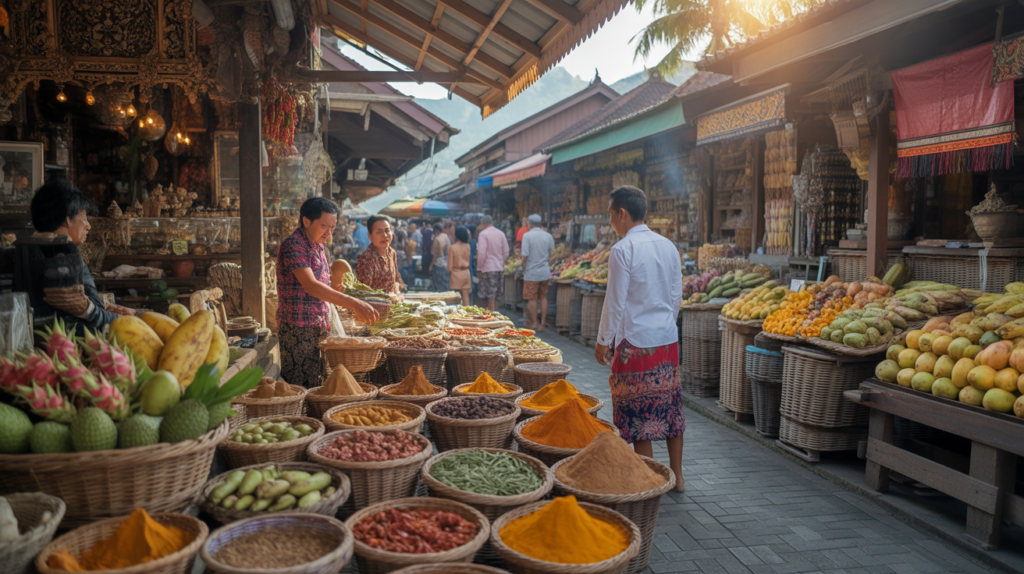
When most people think of Bali, they picture golden beaches, jungle swings, and stunning temples. But there’s another side of Bali that often becomes the most memorable part of a trip—the markets.
I still remember my first walk through a Balinese market. The air smelled like incense and grilled satay, vendors greeted me with warm smiles, and every stall felt like a hidden treasure chest. It wasn’t just shopping—it felt like stepping into the rhythm of everyday life in Bali.
If you want to experience the island beyond the tourist hotspots, visiting local markets is a must. In this guide, I’ll take you through the best markets in Bali, what makes each one special, and how to make the most of your visit.
Why Bali’s Markets Are Worth Your Time
Markets in Bali are more than places to buy things—they are living, breathing cultural spaces.
Here, you’ll find:
- Handmade goods created by local artisans
- Fresh produce used in daily Balinese cooking
- Religious offerings being prepared and sold
- Street food that reflects generations of tradition
Unlike shopping malls, every purchase here has a story. And honestly, that’s what makes it so special.
1. Ubud Art Market – A Cultural Icon
Right in the center of Bali’s cultural hub, Ubud Art Market is one of the most famous markets on the island—and for good reason.
Walking through it feels like exploring a maze of creativity. Every corner is packed with handcrafted items, from woven bags to detailed wood carvings.
What Makes It Special
This market showcases the artistic soul of Bali. Many items are made in nearby villages and brought here to sell.
What to Buy
- Handwoven rattan bags
- Lightweight sarongs
- Handmade jewelry
- Decorative home pieces
My Experience
I bought a simple handmade bag here, and the vendor explained how it was made in her village. That small conversation made the purchase feel meaningful.
Tip
Go early in the morning—it’s quieter, cooler, and vendors are more open to giving good prices.
2. Sukawati Art Market – Budget-Friendly Finds
If you love finding great deals, Sukawati Art Market will quickly become your favorite.
It’s less polished than Ubud, but that’s part of its charm. This is where many local shop owners actually buy their stock.
What Makes It Special
Lower prices and a more local atmosphere.
What to Buy
- Paintings
- Traditional clothing
- Home décor items
My Experience
This was the first place I felt confident bargaining. The vendors expect it, and once you get the hang of it, it becomes fun.
Tip
Start by offering about half the initial price and negotiate politely.
3. Kuta Art Market – Easy and Accessible
Located close to the beach, Kuta Art Market is perfect if you want a quick and convenient shopping experience.
What Makes It Special
You can shop, grab food, and head back to the beach—all within walking distance.
What to Buy
- Casual souvenirs
- T-shirts
- Beachwear
My Experience
After a long day in the sun, I wandered through this market in the evening. It was relaxed and easy—no pressure, just browsing.
4. Seminyak Flea Market – Stylish and Modern
Seminyak is known for its upscale vibe, and its flea market reflects that perfectly.
This isn’t your typical crowded market. It’s more curated, with neatly displayed items and a boutique feel.
What Makes It Special
A mix of traditional craftsmanship and modern design.
What to Buy
- Boho-style clothing
- Chic accessories
- Minimalist home décor
My Experience
I noticed the difference immediately—prices were higher, but so was the quality and presentation.
5. Love Anchor Market – Trendy and Fun
In the heart of Canggu, Love Anchor Market is where creativity meets a laid-back beach vibe.
It’s colorful, lively, and perfect for younger travelers.
What Makes It Special
A mix of handmade goods and trendy items you won’t easily find elsewhere.
What to Buy
- Handmade jewelry
- Eco-friendly products
- Unique fashion pieces
My Experience
This market felt more like a social space. People weren’t just shopping—they were hanging out, chatting, and enjoying the atmosphere.
6. Sanur Night Market – A Food Lover’s Dream
If you want to taste real Bali, Sanur Night Market is the place to go.
As the sun sets, the market transforms into a buzzing food paradise.
What Makes It Special
Authentic street food at very affordable prices.
What to Eat
- Grilled satay
- Fried noodles
- Rice dishes with local spices
- Sweet desserts
My Experience
I tried multiple dishes in one night because everything was so cheap—and delicious. It felt like a mini food adventure.
7. Badung Market – A Glimpse Into Local Life
Badung Market, located in Denpasar, is the largest traditional market in Bali.
This is not a tourist attraction—it’s where locals shop daily.
What Makes It Special
A raw and authentic look at Balinese life.
What You’ll See
- Fresh fruits and vegetables
- Spices and herbs
- Flowers for temple offerings
My Experience
Walking through this market early in the morning felt like stepping into a completely different world. It was busy, loud, and incredibly real.
8. Kreneng Night Market – Lively and Affordable
Kreneng Market offers a mix of shopping and street food, especially in the evening.
What Makes It Special
A lively atmosphere with a local crowd.
What to Expect
- Cheap clothing
- Food stalls
- Busy energy
My Experience
It felt less touristy and more like a local hangout spot.
9. La Brisa Sunday Market – Eco-Friendly and Relaxed
This market is held once a week near the beach and focuses on sustainability.
What Makes It Special
A calm, eco-conscious shopping experience.
What to Buy
- Organic food
- Handmade crafts
- Natural skincare
My Experience
It felt completely different from other markets—peaceful, organized, and beautifully set up by the ocean.
What Should You Buy in Bali Markets?
With so many options, it can be hard to choose. Here are some of the best things to bring home:
- Handmade bags – Lightweight and stylish
- Batik fabrics – Traditional and colorful
- Wooden carvings – Perfect for decoration
- Silver jewelry – Affordable and unique
- Local snacks and coffee – Great for gifts
Tips to Make the Most of Your Visit
1. Don’t Be Afraid to Bargain
It’s expected in most markets. Just stay polite and friendly.
2. Bring Cash
Small vendors usually don’t accept cards.
3. Go Early or Late
Avoid the midday heat and crowds.
4. Take Your Time
The best finds often come when you’re not rushing.
5. Respect the Culture
Remember, these markets are part of daily life for locals.
A Personal Reflection
What surprised me most about Bali’s markets wasn’t the shopping—it was the connection.
Every smile, every conversation, every small purchase felt personal. It reminded me that travel isn’t just about places—it’s about people.
Even now, when I look at the items I bought, I don’t just see souvenirs. I remember the stories behind them.
Final Thoughts
The best markets in Bali offer far more than things to buy. They give you a chance to experience the island in its most authentic form.
Whether you’re exploring the artistic lanes of Ubud, bargaining in Sukawati, or tasting street food in Sanur, each market has its own personality.
If you truly want to understand Bali, don’t just visit the beaches—walk through its markets. That’s where the island truly comes alive.

Hi, I’m Tanvir, the founder and author of Explore Ireland Now. With a deep love for Ireland and its rich culture, history, and landscapes, I created this site to share everything that makes this beautiful country worth exploring. Whether you’re a local looking for hidden gems or a traveler planning your next adventure, I provide insightful guides, tips, and recommendations to help you experience Ireland to the fullest.
From stunning landscapes to vibrant cities and quaint villages, Ireland is full of wonders waiting to be discovered. Through my personal experiences and research, I aim to bring you the most up-to-date information and inspiration for your journey.
Thank you for visiting Explore Ireland Now—I hope my content helps you uncover all that this incredible country has to offer! If you have any questions or need travel advice, feel free to reach out.