1. Acropolis of Athens
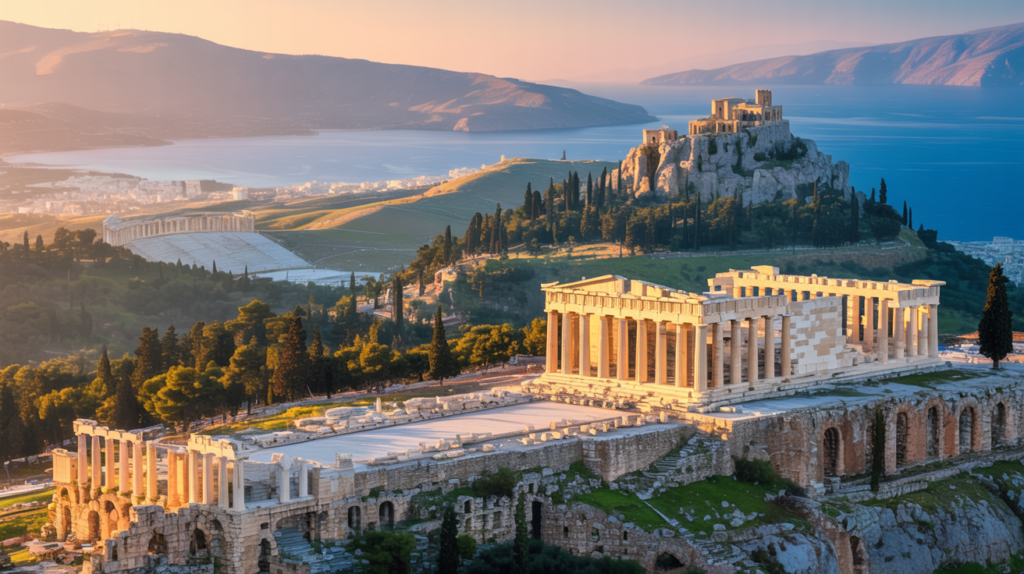
No list can begin anywhere else. The Acropolis stands as the ultimate symbol of ancient Greece and Western civilization.
Perched high above Athens, this ancient citadel dates back to the 5th century BCE. Its most famous structure, the Parthenon, was dedicated to Athena, the city’s patron goddess.
Walking through the Acropolis feels surreal. The worn marble steps, towering columns, and panoramic views make it easy to imagine life during the Golden Age of Athens.
Why visit:
- Iconic symbol of ancient Greece
- Incredible city views
- Deep connection to philosophy, democracy, and art
2. Delphi
Once believed to be the center of the world, Delphi was home to the famous Oracle who advised kings and warriors.
Set on the slopes of Mount Parnassus, this site combines natural beauty with spiritual history. The Temple of Apollo is the main highlight, where the Oracle delivered cryptic prophecies.
What makes Delphi special is the atmosphere—it’s peaceful, mysterious, and deeply spiritual even today.
Don’t miss:
- Temple of Apollo
- Ancient theater with mountain views
- Delphi Archaeological Museum
3. Meteora
Meteora is one of the most visually stunning historic sites in the world. Massive rock pillars rise dramatically from the earth, topped with centuries-old monasteries.
Built by monks seeking isolation and spiritual connection, these monasteries date back to the 14th century. Today, several are still active and open to visitors.
Why it stands out:
- Unique combination of nature and history
- UNESCO World Heritage Site
- Breathtaking photo opportunities
4. Ancient Olympia
This is where the Olympic Games began in 776 BCE.
Walking through Olympia, you’ll see the remains of stadiums, training areas, and temples dedicated to Zeus. It’s fascinating to stand on the original track where athletes competed thousands of years ago.
Highlights:
- Ancient Olympic Stadium
- Temple of Zeus
- Rich sports history
5. Knossos Palace
Knossos is tied to one of the most famous Greek myths—the legend of the Minotaur and the Labyrinth.
This Bronze Age palace was the center of the Minoan civilization, one of Europe’s earliest advanced cultures. The colorful frescoes and reconstructed sections give you a glimpse of ancient life.
Why it’s unique:
- Oldest civilization in Europe
- Mythological significance
- Vibrant architecture and art
6. Mycenae
Mycenae was a powerful kingdom during the late Bronze Age and is linked to legends like King Agamemnon and the Trojan War.
The famous Lion Gate, with its massive stone carvings, is one of the earliest examples of monumental sculpture in Europe.
Key attractions:
- Lion Gate
- Royal tombs
- Cyclopean walls (huge stone fortifications)
7. Epidaurus
Epidaurus is home to one of the best-preserved ancient theaters in the world—and its acoustics are legendary.
Even today, you can hear a whisper from the stage while sitting at the top row. The site was also a healing center dedicated to Asclepius, the god of medicine.
Why visit:
- Perfect acoustics
- Still hosts performances
- Unique blend of medicine and art history
8. Rhodes Old Town
Step into a completely different era—medieval Greece.
Rhodes Old Town is one of Europe’s best-presederved medieval cities, built by the Knights of St. John. Its cobblestone streets, fortifications, and palaces feel like a living museum.
Top sights:
- Palace of the Grand Master
- Medieval walls
- Street of the Knights
9. Corinth
Corinth was one of the most important cities in ancient Greece, known for its wealth and strategic location.
The ruins include temples, marketplaces, and the famous Acrocorinth—a fortress overlooking the city.
Interesting facts:
- Major trade hub in ancient times
- Mentioned in early Christian history
- Stunning hilltop fortress views
10. Santorini Akrotiri
Often called the “Greek Pompeii,” Akrotiri was buried under volcanic ash after a massive eruption around 1600 BCE.
The ash preserved buildings, streets, and even artwork, offering a rare look into ancient urban life.
Why it’s fascinating:
- Exceptionally preserved ruins
- Insight into daily life in ancient times
- Located on the beautiful island of Santorini
11. Delos
According to mythology, Delos is the birthplace of Apollo and Artemis.
This small island is packed with ruins, including temples, houses, and marketplaces. It was once a major religious and commercial center.
Highlights:
- Terrace of the Lions
- Sacred temples
- Mythological significance
12. Sparta
Sparta is famous for its military strength and disciplined society.
While the ruins are not as visually grand as others, the historical importance is immense. This is the land of legendary warriors and strict training systems.
Why it matters:
- Unique social system
- Famous in history and pop culture
- Insight into ancient warfare
Tips for Visiting Historic Sites in Greece
If you’re planning to explore these places, here are a few practical tips:
1. Go Early or Late
Greek historic sites can get crowded, especially in summer. Early mornings or late afternoons are best.
2. Wear Comfortable Shoes
You’ll walk a lot, often on uneven stone surfaces.
3. Stay Hydrated
The Greek sun can be intense, especially around open archaeological sites.
4. Combine History with Local Experience
Many sites are near charming towns, beaches, or cafes—take time to enjoy both.
Final Thoughts
Exploring historic sites in Greece isn’t just about seeing old ruins—it’s about connecting with the roots of modern civilization. From the philosophical heights of Athens to the mystical landscapes of Delphi and the breathtaking monasteries of Meteora, each place tells a story that still resonates today.
If I had to give one piece of advice, it would be this: don’t rush. Greece rewards slow travel. Sit, observe, and imagine the lives that once filled these spaces.
Because in Greece, history doesn’t just exist—it surrounds you.
If you want, I can turn this into a fully SEO-optimized article (with keywords, meta description, headings structure, and internal linking) tailored for your website.

Hi, I’m Tanvir, the founder and author of Explore Ireland Now. With a deep love for Ireland and its rich culture, history, and landscapes, I created this site to share everything that makes this beautiful country worth exploring. Whether you’re a local looking for hidden gems or a traveler planning your next adventure, I provide insightful guides, tips, and recommendations to help you experience Ireland to the fullest.
From stunning landscapes to vibrant cities and quaint villages, Ireland is full of wonders waiting to be discovered. Through my personal experiences and research, I aim to bring you the most up-to-date information and inspiration for your journey.
Thank you for visiting Explore Ireland Now—I hope my content helps you uncover all that this incredible country has to offer! If you have any questions or need travel advice, feel free to reach out.