
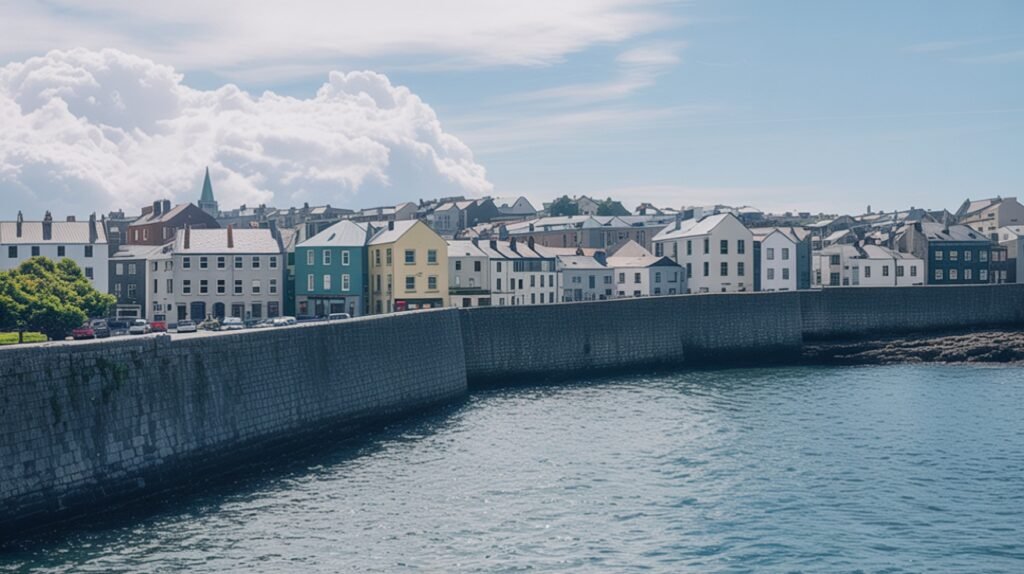
If you’ve ever wandered through the lively streets of Galway and felt like you were walking through layers of history, you’re not imagining it. Hidden between colorful shopfronts, busy pubs, and modern buildings are the remains of the Old Galway City Walls — silent witnesses to centuries of trade, conflict, and culture.
In this guide, I’ll walk you through the history, where to find the remaining sections, and why they’re still worth seeing today.
The History of the Old Galway City Walls
The Old Galway City Walls date back to the 13th century, shortly after the Anglo-Normans established control over the area.
Galway was officially chartered as a town in 1232 by Richard de Burgh, also known as “The Red Earl.” As the town grew in importance — especially as a trading hub with Spain and France — it needed protection. So, stone walls were built around the settlement to defend against attacks from rival clans and other threats.
By the 14th century, Galway was a fortified medieval town.
Why Were the Walls Built?
The walls had three main purposes:
- Defense – To protect the merchant families of Galway from Irish clans in the surrounding countryside.
- Trade Control – To regulate goods entering and leaving the city.
- Security at Night – Gates were closed after dark to prevent unwanted entry.
At one point, the city walls stretched roughly 1 mile (1.6 km) around the town.
The Famous Galway Gates
The walls included several gates that controlled access to the town. Some of the most well-known were:
- West Gate
- North Gate
- East Gate
- Water Gate
The gates were heavily guarded and played a major role in the city’s economy. Goods like wine, salt, fish, and cloth passed through these entrances daily.
The Spanish Arch: The Most Famous Remaining Section
Spanish Arch
If there’s one surviving section of the old walls you’ll definitely recognize, it’s the Spanish Arch.
Built in 1584, the Spanish Arch was an extension of the city walls designed to protect ships docked along the River Corrib. Despite its name, it wasn’t actually built by the Spanish — but Galway had strong trading links with Spain, which is how it got the name.
Today, it’s one of the most photographed spots in the city. When I visited, I was surprised by how seamlessly it blends into modern Galway life — street performers nearby, students relaxing on the grass, and the River Corrib flowing quietly past.
Right next to it is the Galway City Museum, which is well worth a visit if you want deeper insight into the city’s medieval past.
Where Else Can You See the Old City Walls?
While much of the original wall was demolished in the 18th and 19th centuries to allow the city to expand, you can still find hidden fragments around town.
1. Eyre Square Area
Eyre Square (officially known as John F. Kennedy Memorial Park) contains remnants of the old walls. If you walk carefully through the park, you’ll notice stone sections that once formed part of the defensive structure.
2. The Browne Doorway
Although not a wall itself, the Browne Doorway is a preserved medieval stone entrance from a merchant’s townhouse. It reflects the same era and architectural style as the city walls.
3. Shop Street & Quay Street
As you stroll through Shop Street and Quay Street, look closely at certain buildings — parts of the old walls are integrated into newer structures. Some pubs and shops literally sit on top of medieval foundations.
The Decline of the City Walls
By the 1700s, the walls were no longer necessary. Galway was expanding, and the fortifications were seen as obstacles to growth rather than protection.
Large sections were dismantled, and stones were reused in other buildings. What survives today is only a fraction of the original structure.
Still, even in fragments, they tell a powerful story.
The Walls and the “Tribes of Galway”
The famous “Tribes of Galway” were 14 merchant families who dominated trade and politics in medieval Galway. These families operated from within the protection of the city walls.
The term “Tribes” was originally meant as an insult by Oliver Cromwell’s forces, but the families embraced it with pride.
Visiting Tips
If you’re planning to explore the Old Galway City Walls, here are a few practical tips:
- Start at Spanish Arch – It’s the most obvious landmark.
- Combine it with Galway City Museum – It adds historical context.
- Walk slowly through the Latin Quarter – Keep your eyes open for stonework embedded in buildings.
- Visit during daylight – You’ll spot more architectural details.
There’s no entrance fee — the walls are simply part of the city landscape.
Why the Old Galway City Walls Still Matter
What I personally love about the Old Galway City Walls is how unpretentious they are. They’re not towering ruins like you might see elsewhere in Europe. Instead, they quietly exist within the rhythm of daily life.
You might be holding a coffee, listening to buskers, and leaning against stones that are 600–700 years old.
That contrast is what makes Galway special.
Final Thoughts
The Old Galway City Walls may not be fully intact, but they remain one of the most important pieces of Galway’s heritage. They remind us that this vibrant, artistic city was once a tightly guarded medieval stronghold.
If you’re exploring Galway, don’t just stick to the pubs and music (though those are fantastic too). Take a moment to look around — the history is literally built into the walls.
And when you stand beneath the Spanish Arch watching the River Corrib flow by, you’re standing where merchants, soldiers, and sailors once stood centuries ago.
That’s the magic of Galway.

Hi, I’m Tanvir, the founder and author of Explore Ireland Now. With a deep love for Ireland and its rich culture, history, and landscapes, I created this site to share everything that makes this beautiful country worth exploring. Whether you’re a local looking for hidden gems or a traveler planning your next adventure, I provide insightful guides, tips, and recommendations to help you experience Ireland to the fullest.
From stunning landscapes to vibrant cities and quaint villages, Ireland is full of wonders waiting to be discovered. Through my personal experiences and research, I aim to bring you the most up-to-date information and inspiration for your journey.
Thank you for visiting Explore Ireland Now—I hope my content helps you uncover all that this incredible country has to offer! If you have any questions or need travel advice, feel free to reach out.